

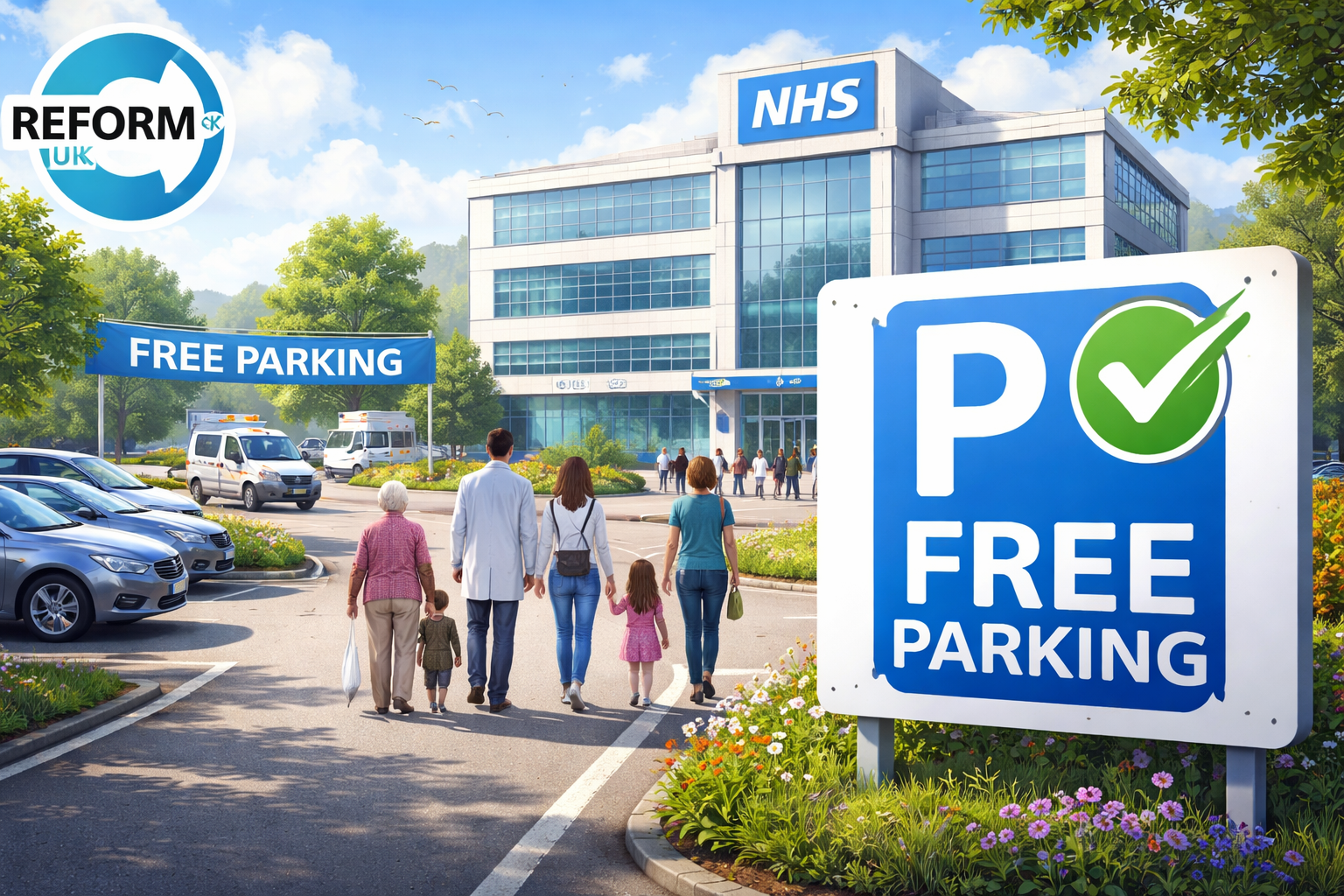
Reform UK has announced a plan to eliminate parking fees at National Health Service (NHS) hospitals throughout England for patients, visitors, and staff. The party pledged to implement this policy if it gains power in the next general election, aiming to address what it describes as unfairly high parking charges that can reach up to £20 per day at some hospitals.
The proposal aims to offset the approximately £300 million annual revenue hospital trusts currently receive from parking fees. Reform UK intends to compensate for this lost income by increasing charges on foreign visitors using NHS services and expanding billing to certain categories of care.
Compensating NHS Trusts Through Foreign Visitor Charges
Reform UK’s plan includes raising fees for overseas visitors to 200% of the national tariff for NHS services, up from the current 150%. This increase would extend to Accident & Emergency visits, ambulance usage, and general practitioner care. In addition, the party proposes mandating travel insurance for foreign visitors from countries without reciprocal healthcare agreements with the UK, which would facilitate more rigorous collections of NHS-related costs.
The policy assumes savings of around £25 million annually by cutting costs associated with parking fee collection. However, analysts caution that the administrative costs of managing increased charges on foreign patients and ensuring free parking spaces for eligible users might offset some of these savings.
Context of Hospital Parking Fees and Policy Impact
Unlike England, NHS hospital parking is largely free in Wales and Scotland. In England, hospital trusts have discretion to charge and set parking regulations, with exemptions for disabled individuals, frequent outpatients, parents of children staying overnight, and night-shift NHS staff. Day-shift staff and most visitors are generally required to pay.
The UK Health Department emphasizes that parking fees are intended to be reasonable and are used to maintain facilities or support health services financially. It also describes parking charges as a significant tool to manage limited parking space capacity in hospital areas.
Reactions and Challenges Ahead
Experts from health policy organizations, such as the King’s Fund, acknowledge that parking fees can burden hospital visitors, but they question whether Reform UK’s approach will fully compensate NHS trusts for lost revenue. They also note potential complications in dismantling contracts with private firms operating hospital car parks, a process that can be lengthy and costly based on Scottish experience.
Reform UK’s announcement is part of a broader strategy to strengthen its credibility on NHS issues. The party plans to appoint a health spokesperson with NHS experience, aiming to repair its reputation following previous support for an insurance-based healthcare model. Additionally, Reform UK seeks to improve its political standing by addressing perceived weaknesses on defense, Russia, and now healthcare.