

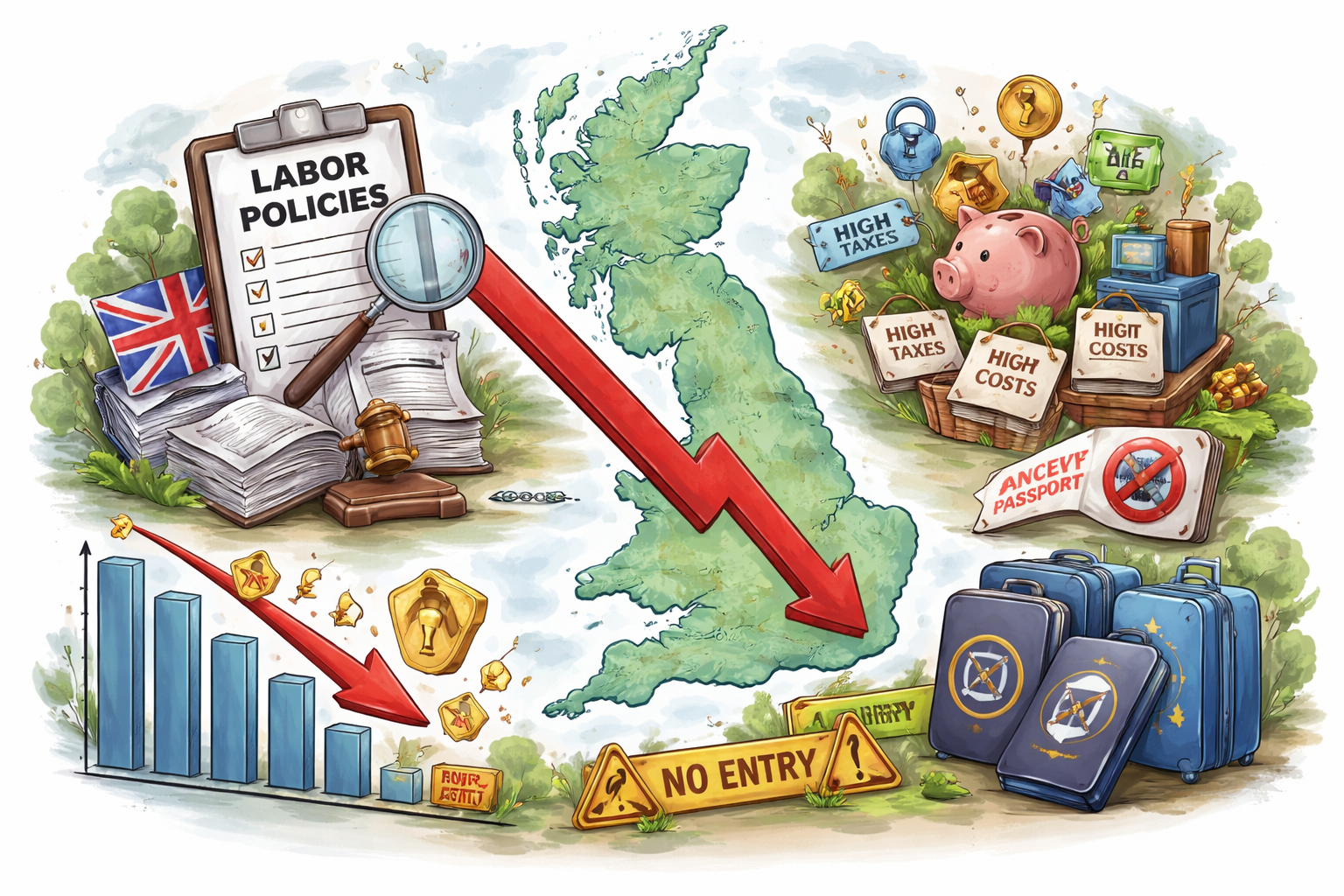
The United Kingdom has recorded its lowest net migration figures since 1997, excluding the pandemic years, leading to debate about how much credit should be given to the current Labor government’s policies. While Labor celebrates reducing net migration to below six figures, experts caution that multiple factors beyond government control heavily influenced the decline.
Net migration levels into the UK have fluctuated widely over the past decade, with Conservative leaders David Cameron, Theresa May, Boris Johnson, and Rishi Sunak all promising lower numbers. However, net migration remained high during Conservative rule, largely due to the UK’s status as an EU member until recently, which limited its control over EU migration flows.
Policy Changes and New Estimation Methods
The Migration Observatory at the University of Oxford notes that several changes contributed to the recent drop. These include the UK’s exit from the EU, which has led to negative net migration from EU countries since 2022. Additionally, the current government introduced visa schemes for care workers, mid-skilled workers, Ukrainians, Hongkongers, and international students. These liberal policies offset some restrictions while shaping migrant patterns.
But changes in official migration estimation methodology by the Office for National Statistics also played a significant role, reducing reported net migration by tens of thousands. Moreover, higher non-EU immigration numbers under Johnson’s government resulted in a temporary increase in non-EU emigration under Labor, further lowering net migration.
Political Context and Challenges
Throughout the 2010s, Conservative governments faced pressure from businesses and their party to manage migration in a way that supported economic growth and tax policies, which may have contributed to less aggressive controls on migration. Meanwhile, Labor claims credit for restoring border control after net migration neared 1 million during Conservative leadership.
Future Outlook
Experts warn that the current low net migration numbers may not be permanent. The methodological adjustments and increased emigration resulting from prior higher immigration are unusual circumstances. Migration figures could still rise again, even if government policies remain constant. This suggests that while Labor policies contributed to the decline, they are only part of a complex mix of causes affecting UK immigration trends.