

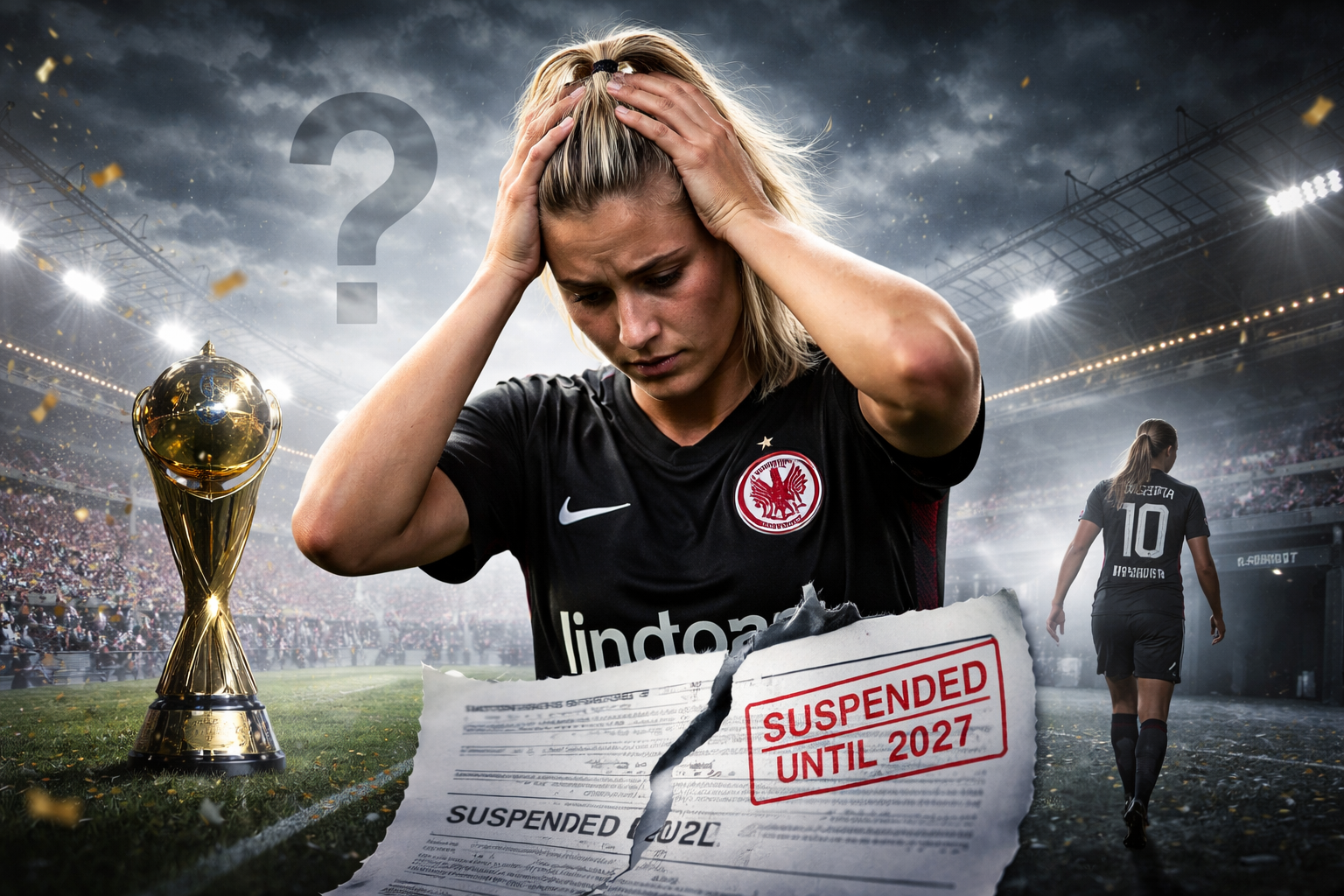
Laura Freigang, a prominent German international soccer player, will be suspended from competition until October 7, 2027, after missing doping tests. The suspension effectively rules her out of participating in the 2027 Women’s World Cup in Brazil. The German Football Association (DFB) announced the ban in a statement on Thursday.
Freigang, who has earned 45 caps for the German national team and scored 17 goals, accepted a settlement involving the DFB, the World Anti-Doping Agency (WADA), and Germany’s National Anti-Doping Agency (NADA). Her ban is retroactive to June 8, 2026, the date she was notified of the sanction.
Details of the Suspension and Freigang’s Response
The suspension stems from three missed doping controls between March 2025 and February 2026, where Freigang was not at the location she had reported for testing. She has stated that the missed tests were due to “inconsistencies or misunderstandings” relating to the daily updating of whereabouts information required of national team players.
Freigang emphasized on Instagram that she was never suspected of doping. She expressed that agreeing to the settlement was a difficult decision made to avoid lengthy legal battles and the associated mental and financial stress. The forward expressed heartbreak over being sidelined from the sport that has shaped her life.
Impact on National Team and Club Career
The suspension’s timing eliminates any chance of Freigang representing Germany in the 2027 Women’s World Cup. DFB Sporting Director Nia Künzer acknowledged the personal toll on Freigang and affirmed the association’s continued support for her.
Freigang’s club future is similarly uncertain. She plays for Eintracht Frankfurt, where her contract is valid until June of next year. According to Katharina Kiel, director of women’s football at Frankfurt, the settlement provides clarity and certainty through a process unique to both the club and player. Negotiations are expected to follow to determine the future shape of Freigang’s contract.
Background of the Case
This case has been ongoing for several months, drawing attention since concerns arose over repeated missed doping tests rather than positive doping results. Freigang’s explanation centered on the complexity and frequency of updating her whereabouts, a requirement for out-of-competition testing compliance. Despite her defense, authorities proceeded with the suspension after a settlement was reached among all involved anti-doping organizations.