

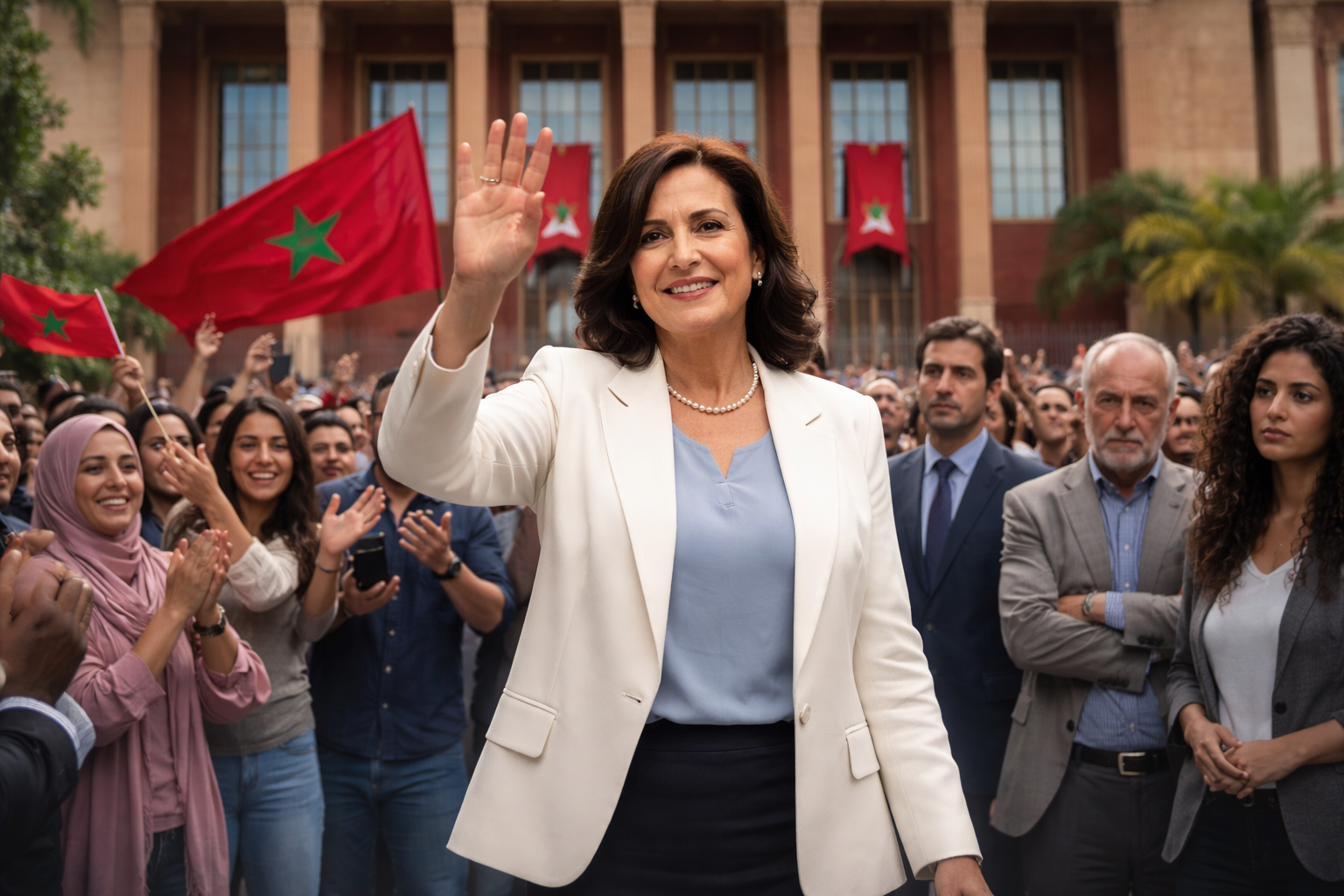
Morocco has named Fatima Zahra Mansouri as its first female head of government, a historic step that has drawn both admiration and skepticism among citizens and observers. Mansouri, who is currently the mayor of Marrakech and minister of planning, was chosen by King Mohammed VI to lead the cabinet following the Authenticity and Modernity Party’s (PAM) parliamentary election win in September.
This appointment places Mansouri among the few women to lead Arab governments, following Tunisia’s Najla Bouden and Sara Zaafarani. Her leadership comes at a critical time as Morocco prepares to host the 2030 football World Cup alongside Spain and Portugal, a project expected to attract billions in investments.
Public Perspectives and Symbolism Versus Substance
Local reactions to Mansouri’s appointment are varied. Several Moroccans interviewed by local media expressed hope and pride in seeing a woman take the helm, viewing it as a break from tradition and a boost for women’s representation. However, some questioned practical matters such as her role in official events traditionally attended only by men, while others doubted how much authority she would wield given the king’s ultimate executive powers.
Observers like Anja Freudenreich of Germany’s Friedrich Ebert Foundation note the appointment’s symbolic value but caution that Mansouri is unlikely to initiate sweeping reforms. Her party’s electoral platform offers limited focus on advancing women’s rights, and she is regarded as a pragmatic figure rather than a radical reformer.
Impact on Women’s Rights and Social Attitudes
Advocates see potential in Mansouri’s role sparking public dialogue on women’s leadership and challenging societal taboos. Stephanie Willman Bordat, co-founder of the advocacy group Mobilizing for Rights Associates, highlighted increased conversations about women’s leadership since the announcement, considering it a positive sign amid global setbacks in women’s rights.
Yet, legal reforms, especially regarding Morocco’s family code (moudawana), remain unresolved despite government discussions initiated by the king in 2023. Human Rights Watch emphasizes that symbolism alone will not advance women’s rights without concrete legal changes. The Carnegie Endowment for International Peace acknowledges the king’s support for gender reforms but underscores that activists largely work within government frameworks, suggesting limited space for independent activism.
Looking Ahead: Measuring Impact and Reform Potential
Morocco awaits the formation of Mansouri’s governing coalition, including the representation of women ministers and their influence. Civil society organizations and citizens are expected to play a crucial role in holding the government accountable to advance women’s rights genuinely rather than settling for symbolic progress.
While Mansouri’s appointment is a landmark moment for Morocco and the Arab region, her leadership’s real test will be measured by tangible policy outcomes and societal changes that go beyond symbolism.