
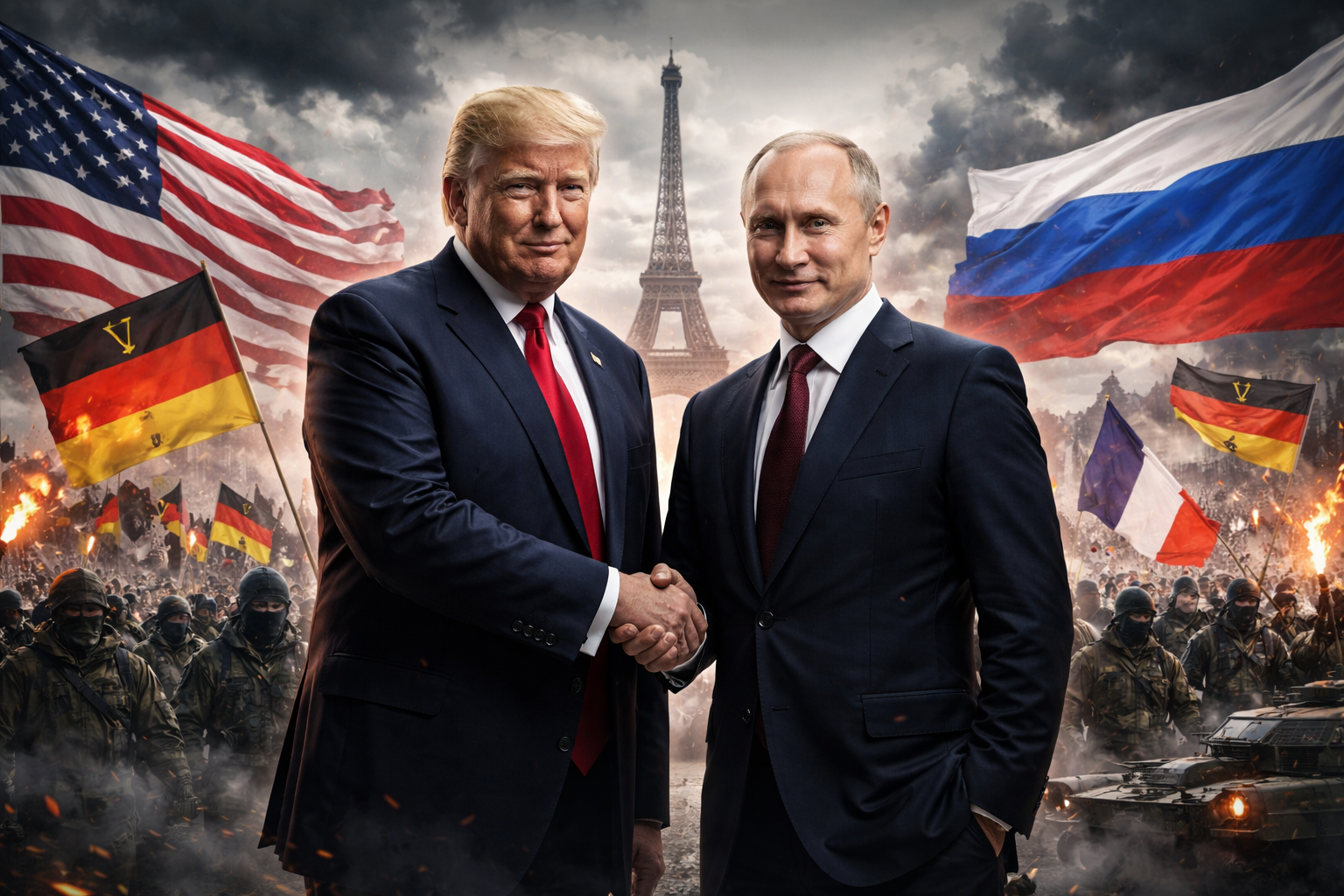
Europe faces a mounting threat as the alliance between former U.S. President Donald Trump and Russian President Vladimir Putin challenges the continent’s security and sovereignty. According to current assessments, this partnership could undermine NATO protections for smaller nations, particularly in Eastern Europe, while right-wing and far-right politicians in major European countries increasingly echo Putin’s views or openly sympathize with Russia.
The alliance gained renewed attention following a recent summit in Shenzhen where Trump enthusiastically referred to Putin as “my friend,” underscoring a shared worldview that opposes Western intervention in Eastern Europe and criticizes migration’s effects on Europe’s identity.
Heightened Risks for Baltic Nations
Estonia serves as a stark example of vulnerability amid this dynamic. The small Baltic country, with a population of 1.4 million, has endured decades of Soviet occupation and now faces ongoing interference, cyberattacks, and propaganda campaigns targeting its Russian-speaking minority. The Estonian foreign minister emphasized that without NATO membership, Estonia’s independence would be untenable and its security entirely compromised.
Putin’s demands include NATO retracting to its 1997 borders, which would strip away military support from 16 member states, including the Baltic nations that would be left without air defenses. Simultaneously, he calls for Britain and France to renounce the use of nuclear weapons in defense of other European countries, framing any resolution to the conflict in Ukraine as part of broader negotiations affecting the entire continent.
Populist Support in Western Europe
Political leaders in several European countries reflect the growing influence of pro-Russian populism. In France, Marine Le Pen has pledged to end financial aid to Ukraine if elected, distancing herself from Kyiv despite past overtures. Germany’s Alternative für Deutschland (AfD), led by Alice Weidel, openly expresses skepticism about Ukrainian democracy and supports considering Russia’s security interests.
Italy faces a political challenge from Roberto Vannacci, a far-right candidate who questions Russian actions and favors Putin over Ukrainian President Volodymyr Zelenskyy. In the United Kingdom, figures like Nigel Farage have blamed Ukraine for provoking the war and criticized Western aid, despite Putin’s general unpopularity among the British public.
Rising Concerns Amid European Elections
These populist trends coincide with elections in major European nations where far-right parties could gain governmental influence or become coalition partners. This change threatens unified Western support for Ukraine and the continuation of European security frameworks. Germany’s Christian Democrats have proposed procedural changes to EU aid voting to prevent single countries from blocking military and financial support to Ukraine.
With the ongoing cost of living crisis in Europe, public opinion may become increasingly malleable to simpler, populist narratives that downplay the threat posed by Russia and favor closer ties with Putin’s Russia. Estonian officials warn that the continent’s future will be shaped not only on Ukraine’s battlefield but critically at the ballot box, where electing leaders aligned with the Trump-Putin vision could jeopardize European independence.