
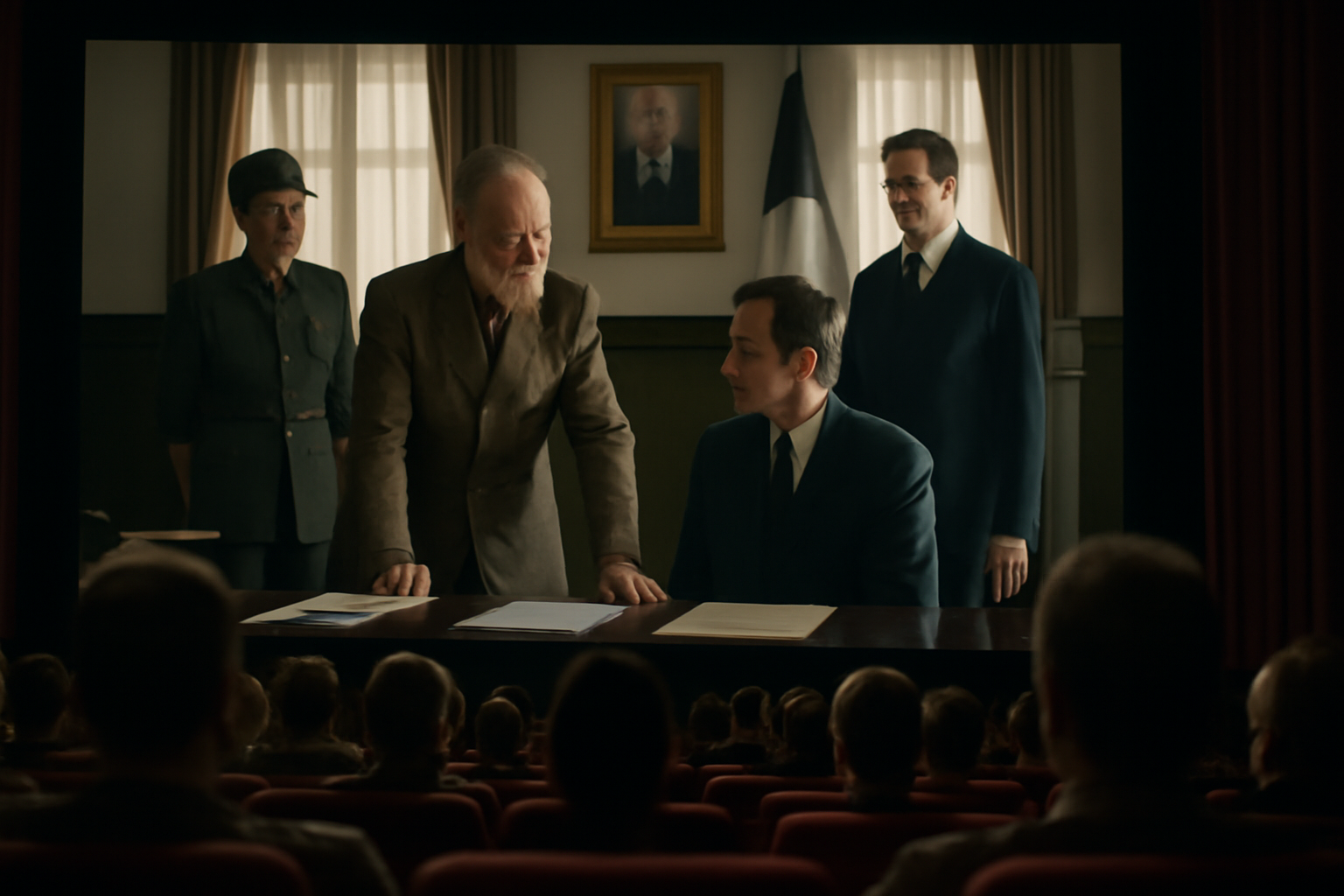
A new French film, “Notre Salut” (Our Salvation), is drawing significant attention for its portrayal of everyday individuals participating in the Vichy regime’s collaboration with Nazi Germany. The movie, which debuted strongly in French cinemas, focuses on how a low-level state administrator became involved in the authoritarian machinery that deported tens of thousands of Jews during World War II.
Unlike typical historical dramas about the era, “Notre Salut” features modern elements such as improvised scenes and an 1980s Europop soundtrack, offering a fresh perspective on a troubling chapter of French history. The story centers on Henri Marre, inspired by the director Emmanuel Marre’s great-grandfather, who worked as an administrator within the puppet government led by Marshal Philippe Pétain.
Insights into Ordinary Bureaucratic Complicity
Historians note that the film highlights the banal bureaucracy behind the deportations, capturing scenes where officials debate the costs of providing straw and chamber pots for Jews transported in cattle cars. Marc Olivier Baruch, a specialist in Vichy administration, emphasized that Henri Marre never reflects on his complicity, illustrating how ordinary officials became parts of a deadly system without questioning their roles.
Resonance with Modern French Society
The film arrives at a time when France faces political unease ahead of the 2027 presidential election. Marine Le Pen’s far-right National Rally continues to lead in polls despite controversies including antisemitism allegations against some party members. Historians observing the film’s reception suggest it offers a lens to understand the current rise of far-right politics by revisiting a period when such forces held governmental power in France.
Emmanuel Marre drew from personal family archives of letters that had remained hidden for decades, aiming to open what he described as “drawers” of France’s phantom memory of collaboration. He stresses the importance of examining the ambiguous human emotions between resistance and collaboration rather than simplifying judgments.
Growing Interest in World War II Narratives
“Notre Salut” is part of a broader surge in French cinema exploring World War II, joining recent hits like the Charles de Gaulle biopic and films about notable resistance figures and collaborators. Critics and historians see this trend as reflective of societal attempts to grapple with complex aspects of history that shaped France’s current political and social fabric.