
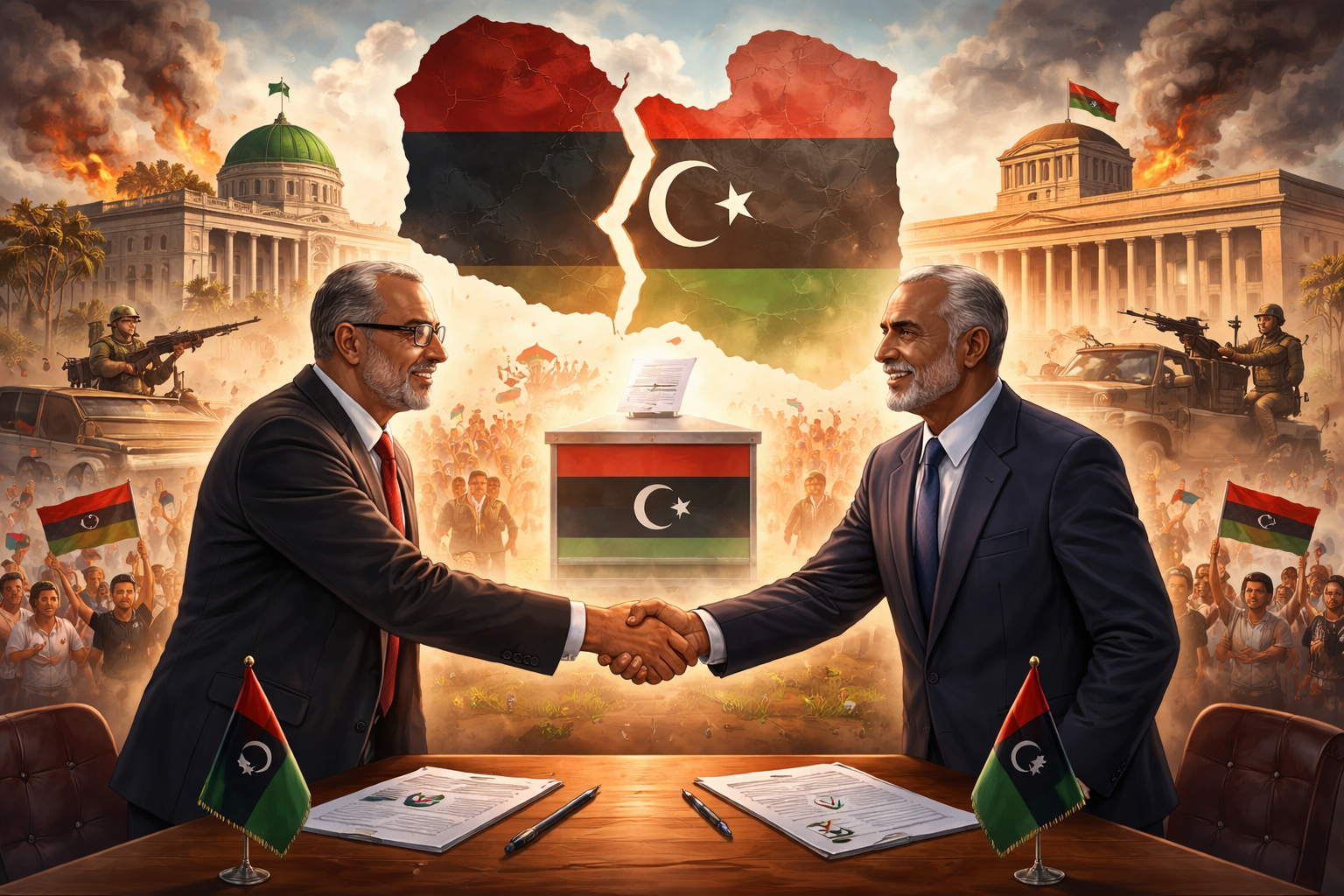
Libya’s two main opposing governments have agreed to hold parliamentary and presidential elections within the next two years, marking a significant step toward national unity after more than a decade of division. The agreement was facilitated by the United Nations Support Mission in Libya (UNSMIL), which emphasized that it advances the country toward ending its transitional period.
Since the overthrow of dictator Moammar Gadhafi in 2011, Libya has been split between rival administrations—with the Government of National Unity based in western Tripoli and the House of Representatives operating from eastern Tobruk. Both sides have been supported by local militias and foreign powers, perpetuating conflict and political fragmentation.
Key Elements of the Agreement
The UN-backed deal includes restructuring Libya’s electoral commission and resolving previously contentious legal frameworks surrounding the electoral process. During so-called “Structured Dialogues,” key issues such as leadership, security, economy, and reconciliation were discussed to create a foundation for trusted elections.
UN officials hope the newly united government will be responsible for organizing transparent elections and strengthening public institutions to restore state functionality. However, past attempts at political agreements in Libya have consistently failed to yield lasting results, raising questions about implementation and enforcement of this latest accord.
Challenges to Political Stability
Experts express cautious optimism but highlight serious obstacles. The eastern faction, spearheaded by former warlord Khalifa Haftar, risks losing power given that much of Libya’s population is concentrated in the west, especially around Tripoli. This power imbalance complicates prospects for truly democratic elections.
Further complications arise from foreign involvement—Russia’s growing presence in the east and Turkey’s support for the western government deepen external influence over domestic affairs. Additionally, concerns exist that political elites may seek to divide resources and maintain patronage networks rather than foster genuine national reconciliation.
International Efforts and Outlook
Alongside UN efforts, the United States has engaged in parallel diplomatic initiatives, attempting to reconcile influential families connected to both factions. Despite these efforts, some analysts doubt that deals made between elites will align with genuinely free and fair elections, as predetermined outcomes could undermine legitimacy.
The agreement faces a critical test in the coming years: to produce elections accepted by rival factions and to enable functioning public institutions capable of addressing Libya’s ongoing issues, including infrastructure challenges and power shortages. The success of this political milestone depends on more than setting an election date; it requires a foundation where elected leaders can govern effectively and inclusively.