
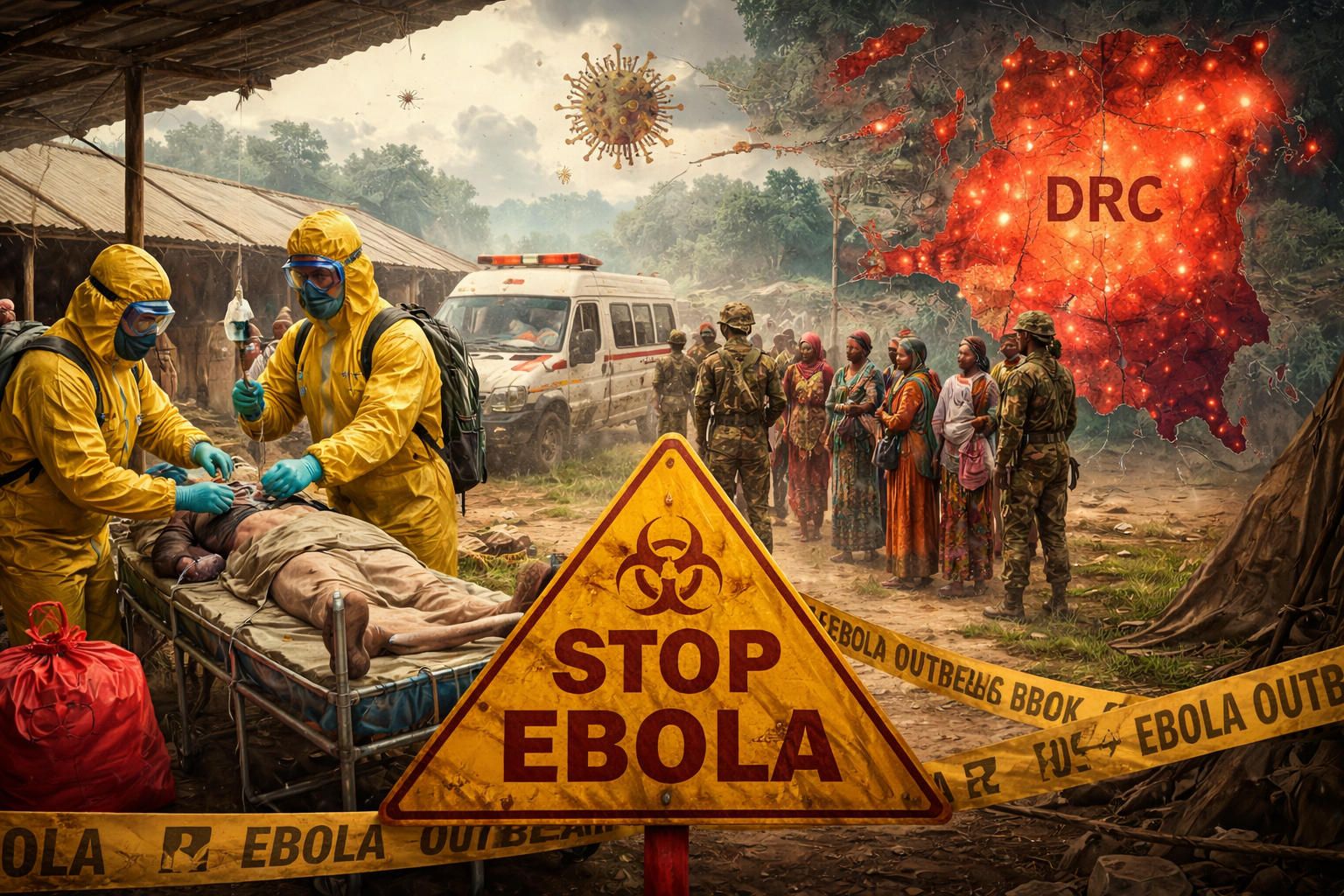
The Democratic Republic of Congo is confronting a rapidly expanding Ebola outbreak with confirmed cases surpassing 6,000 and the death toll reaching 2,911, according to government reports. The outbreak is caused by the Bundibugyo strain of the virus and has spread to approximately 60 health zones across six provinces, raising serious concerns about containment efforts.
The epidemic’s epicenter lies in Ituri province, where insecurity and violent attacks are hampering response teams’ ability to reach affected communities. DW correspondent Jonas Gerding noted the growing list of affected zones each week, coupled with initial local resistance that gradually shifts into acceptance.
Fastest growing Ebola epidemic on record
UN Secretary-General Antonio Guterres described the outbreak as the fastest-growing Ebola epidemic ever recorded, with transmission outpacing response measures despite ongoing efforts. He emphasized that the outbreak can still be stopped but warned the world is facing “another virus — the virus of indifference,” highlighting the need for increased international funding and political attention.
In response, Congolese health authorities have launched a vaccination campaign targeting frontline health workers. Though the vaccine was developed for a different Ebola variant, officials hope it offers some protection against the Bundibugyo strain. Over 50,000 vaccine doses have been received, and vaccination efforts are focusing on provinces surrounding Ituri.
Community concerns and vaccination efforts
Community members in affected regions express willingness to receive the vaccine if properly informed, while some call for broader access including for children returning to school. Concerns about vaccine supply shortages have also been raised by residents urging authorities to increase doses for areas like Tshopo.
Challenges from violence and economic strain
The outbreak unfolds amid ongoing violence and mass displacement in eastern DRC, which complicates disease control operations. Ebola response teams have faced attacks, including during efforts to safely manage Ebola-related deaths, prompting calls for improved security.
The epidemic also worsens economic hardships, with local businesses like stationery shops reporting collapsing demand as families focus on basic needs. The government has proposed radio-based learning to support children unable to attend school, but infrastructure challenges limit its effectiveness in sensitive areas.
Despite these difficulties, health officials highlight a hopeful sign: more than 1,360 people have recovered from Ebola so far. This offers a cautious optimism that with strengthened support, expanded vaccination, and improved security, the outbreak in eastern DRC can eventually be brought under control.