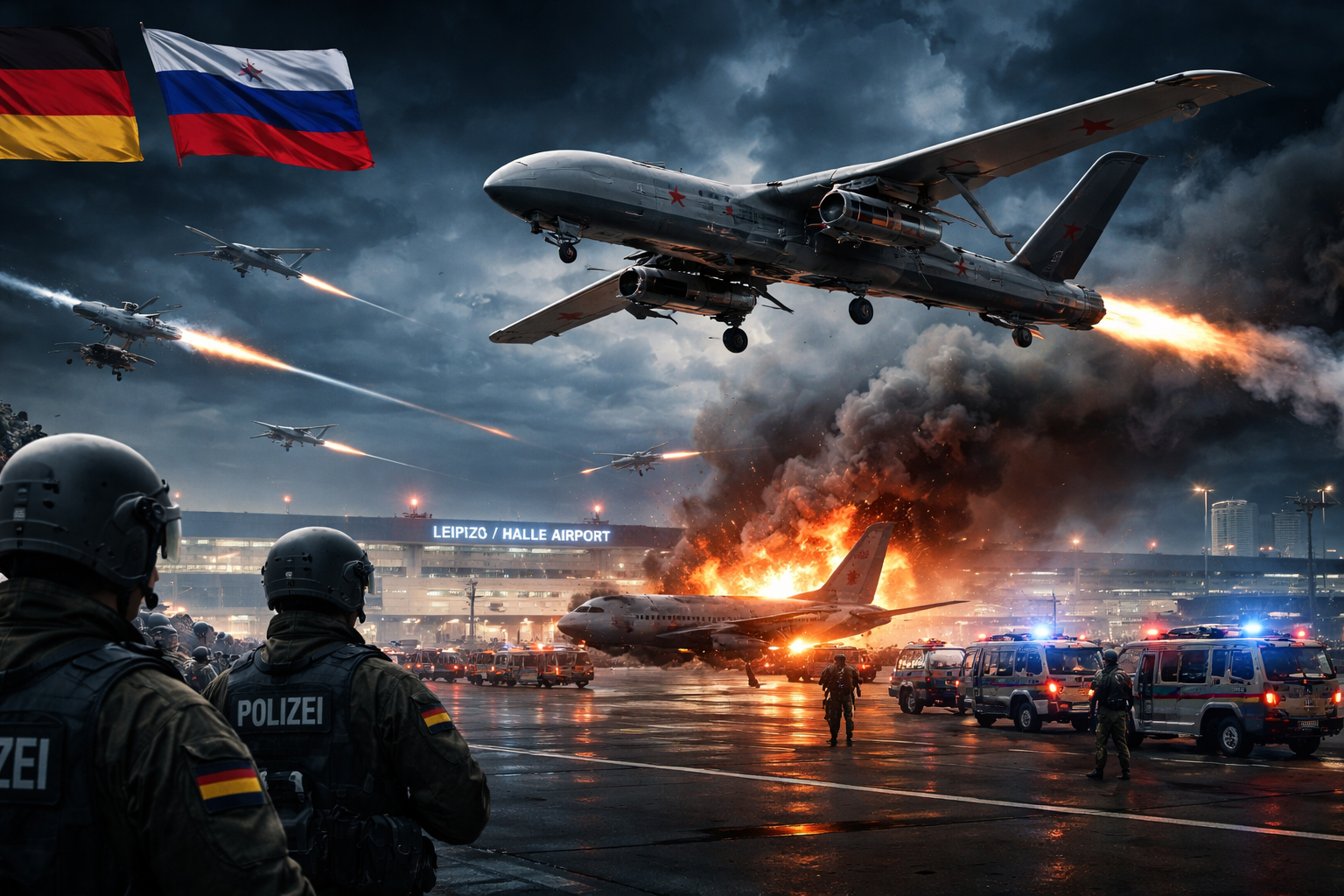

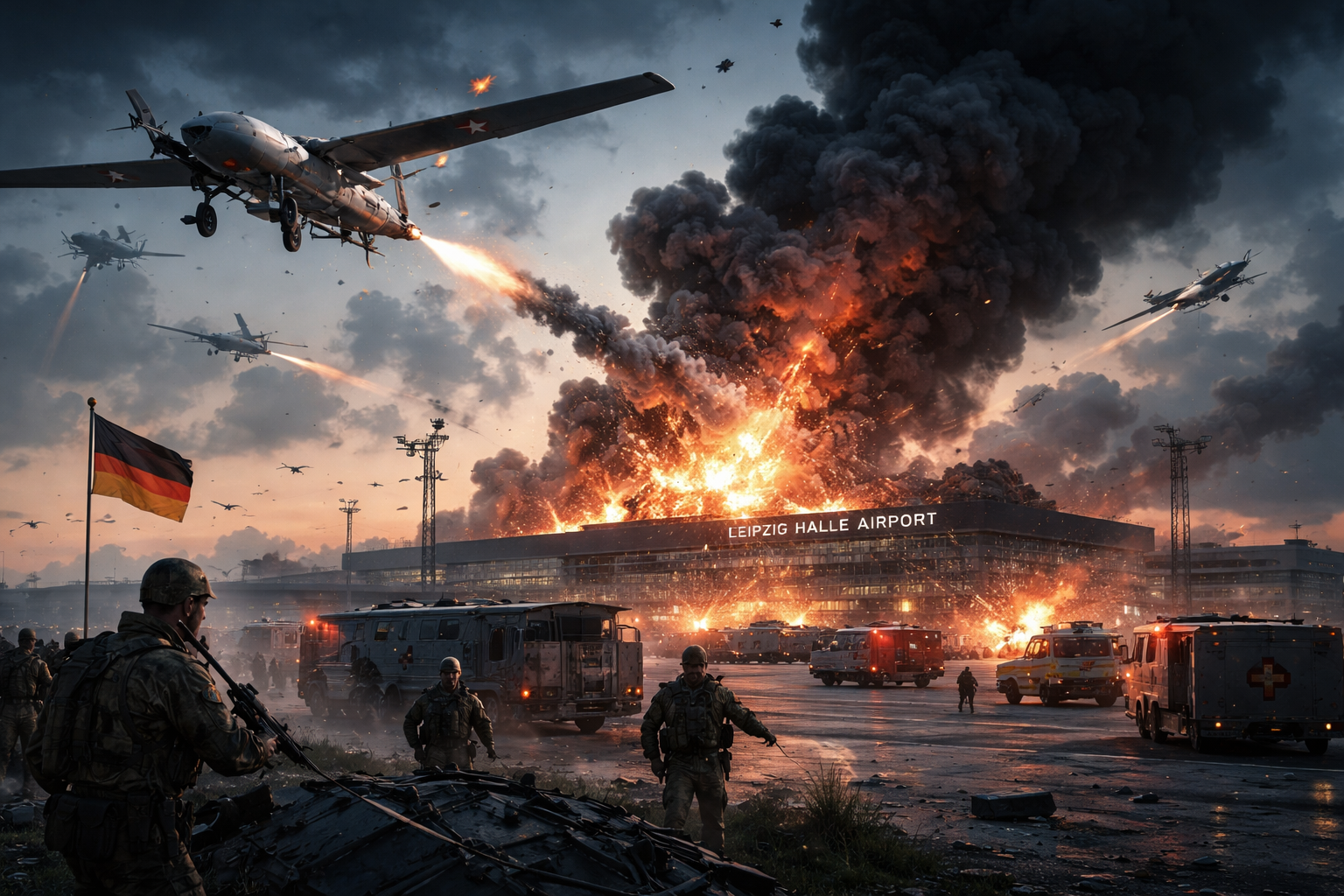
The German government officially blamed Russia for the attempted drone attack at Leipzig/Halle airport on August 4, labeling it as a dangerous act within a sustained campaign of hybrid warfare. Officials announced that the Russian state was responsible for supplying expertise and equipment, with operatives recruited for the mission.
The drone, carrying 600 grams of explosives, was found near a Ukrainian Antonov cargo plane used to transport weapons to Ukraine. While the device failed to detonate, authorities stressed it could have caused a major catastrophe.
Details of the Incident and Government Response
During a succinct briefing in Berlin, Interior Minister Alexander Dobrindt and Foreign Minister Johann Wadephul affirmed that the attack was a calculated effort by Russia to inflict significant harm through hybrid means, including sabotage, threats, and disinformation. They outlined planned punitive measures against Russia, such as closing the Russian consulate in Bonn and evicting the Russian cultural and science institute in Berlin, suspected of harboring spies and facilitating hybrid attacks.
Additional measures include tightening border controls on Russians entering Germany, compiling new blacklists, and cracking down on illegal Russian oil transport vessels operating in German economic zones in the Baltic and North Seas. Germany also backs the European Commission’s latest sanctions package targeting about 1,600 Russian-linked companies and organizations.
International Support and Russian Reaction
The European Union expressed full solidarity with Germany, while NATO assured Berlin of member defense support. Leaders across Europe and North America condemned the attack and endorsed unified responses. French President Emmanuel Macron emphasized the need for unity and stronger support for Ukraine, describing hybrid attacks as escalating threats requiring firm answers. Italian Prime Minister Giorgia Meloni and Canadian Prime Minister Mark Carney also voiced concern over attempts to destabilize the alliance and weaken collective defense.
In contrast, Russian President Vladimir Putin dismissed the sanctions as a serious mistake motivated by electoral politics and asserted that such measures were against German interests. Meanwhile, the Russian ambassador was summoned to receive a formal protest and notification of diplomatic consequences.
Investigation and Political Context
Investigators found military-grade explosive residues and a second drone at the airport in the days following the failed attack. Connections have been drawn between this incident and other drone and explosive discoveries across Europe, including in Romania, Italy, Poland, Bulgaria, and the United Kingdom, indicating a coordinated pattern of hybrid operations allegedly linked to Russia.
The announcement marks the first time Germany has publicly attributed the drone attack to Russia, deepening an already fraught relationship following Moscow’s invasion of Ukraine. The attack has also influenced domestic politics in eastern German states, where upcoming elections have spotlighted the government’s approach to Russia amid right-wing parties pushing pro-Russian platforms and calling for balanced investigations.
Calls for Government Action
Criticism from both opposition and within Chancellor Friedrich Merz’s own party has urged stronger government responses. Security experts have criticized prior hesitance in confronting Russia and called for decisive measures against ongoing hybrid threats. The government has informed NATO and European partners of the situation, securing agreement on the response strategy, though it refrained from invoking collective defense provisions.