
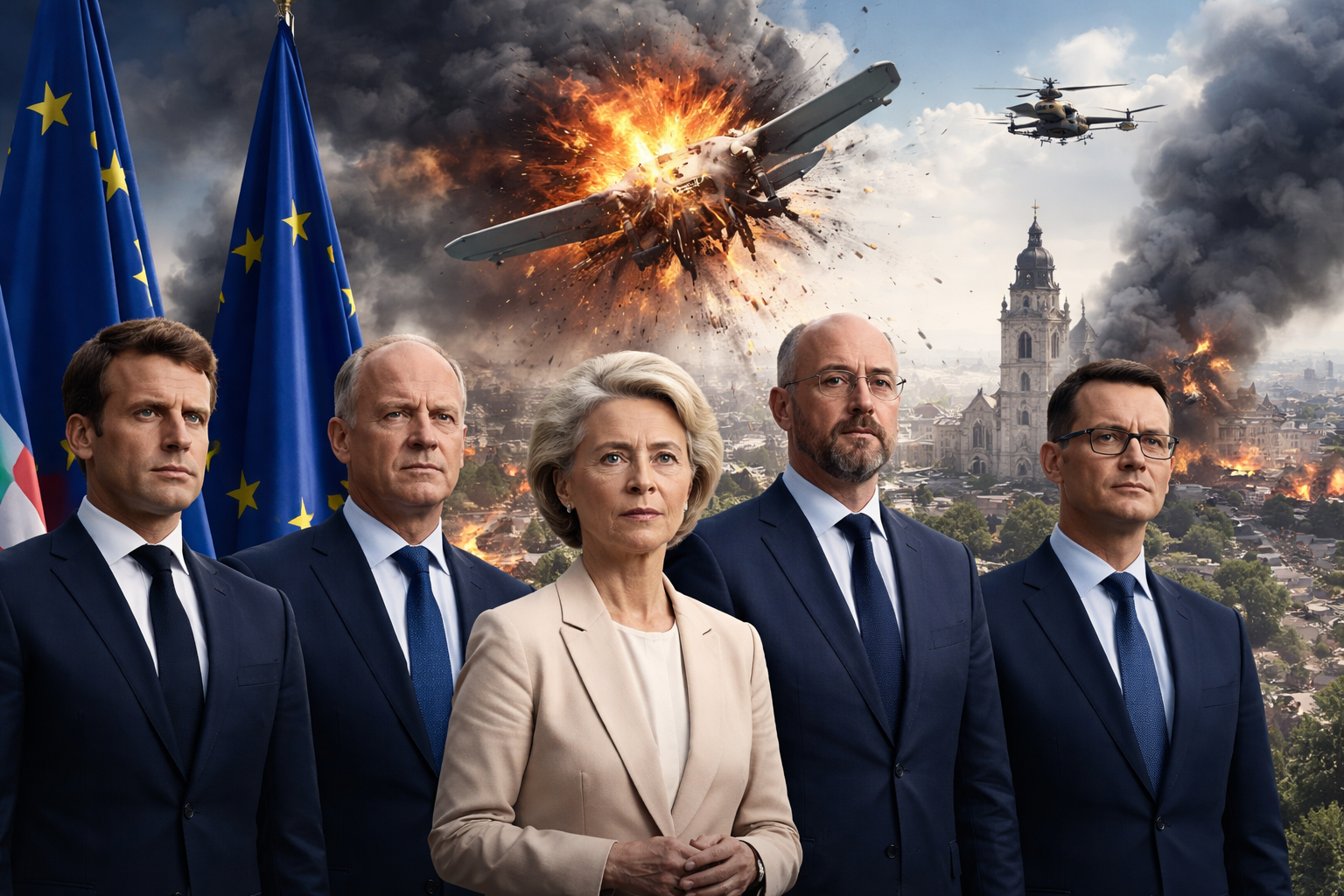
European Union leaders strongly condemned Russia amid escalating security concerns after a drone incident in Leipzig, Germany, which German authorities attributed to Moscow. EU foreign policy chief Kaja Kallas characterized the attack as bearing the “hallmarks of state-sponsored terrorism” and affirmed that Moscow’s attempts to intimidate Europe “will fail.”
The incident, which targeted a power substation near Brandenburg, has prompted intensified investigations and a call for greater coordination among EU member states and allies to address the security threats posed by Russia.
EU’s Response and Sanctions Strategy
Speaking after a meeting of EU foreign ministers in Ireland, Kallas confirmed ongoing discussions on tightening sanctions against Russia, including proposals to restrict visas for Russian nationals, particularly targeting ex-combatants and tourists. She stressed the need to curb visa issuance, citing concerns over the abuse of tourist visas by individuals aiming to harm the EU.
EU Commission president Ursula von der Leyen described the Leipzig drone attack as a “new escalation on EU soil” that fits into a “broader pattern of increasingly dangerous incidents” linked to Russia. Von der Leyen emphasized that the EU will intensify pressure on Russia rather than maintain the status quo.
Divergent Views on Using Frozen Russian Assets
A contentious issue remains regarding the use of frozen Russian assets to support Ukraine. While countries such as Italy, Poland, and Spain advocate for revisiting proposals to deploy these funds, Belgium opposes the move over legal and financial concerns. Belgium’s foreign minister warned of significant risks tied to confiscating frozen assets without guarantees of reimbursement in case of successful Russian legal claims.
Russia’s Denial and Broader Security Concerns
Russian President Vladimir Putin dismissed Germany’s attribution of the attack as “a grave mistake,” challenging the evidence behind the claims. Meanwhile, German police have expanded their terrorism-related investigation into the power substation disruption.
The escalating conflict has also affected Ukrainian airspace safety, leading Ukraine to inform the International Civil Aviation Organization that Russian airspace is no longer safe for civilian flights. This development suggests a potential escalation in aggression.
Despite the tensions, EU leaders reiterated their commitment to supporting Ukraine, supplying defensive aid including missile interceptors, and addressing security challenges in coordination with global partners such as Canada, Norway, the United Kingdom, Iceland, and Switzerland.