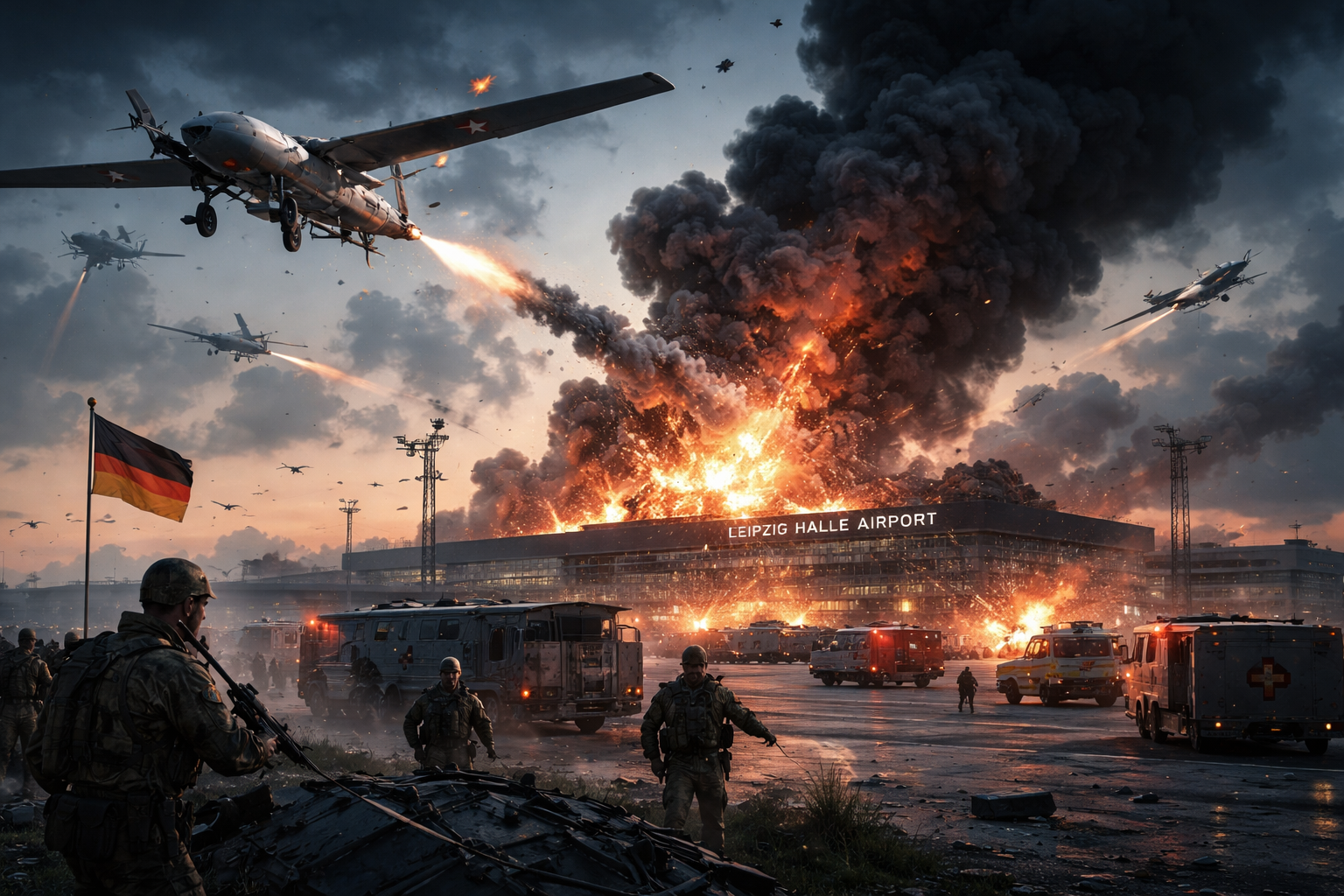

Germany has taken several punitive steps against Russia, including closing the Russian consulate in Bonn, terminating the Russian House cultural center’s contract in Berlin, and tightening visa controls. These actions followed the attempted drone attack on Leipzig/Halle Airport, which German authorities publicly attributed to Moscow.
However, experts suggest these measures primarily carry symbolic weight and are unlikely to compel a significant strategic shift from Russian leadership. According to Dmitry Oreshkin, a Russian political analyst, the measures serve more as a statement of intent than an effective deterrence against President Vladimir Putin.
Former diplomat Boris Bondarev added that while these steps might complicate Russian activities in Germany, they do not address the broader issue and will not necessarily dissuade Russia from continuing provocations without coordinated, wider European Union actions.
Limited Impact and Risk of Escalation
The response from the Kremlin included labeling Germany’s moves as a serious mistake with promises of reciprocal action. Security expert Wolfgang Richter noted the confrontation remains likely confined to diplomatic and cultural arenas, such as potential closures of institutions like the Goethe-Institut in Russia or limits on diplomatic staff.
Bondarev emphasized the unpredictability of Moscow’s retaliation, which could range from outright expulsions of German diplomats to passive monitoring. Still, both experts highlighted the potential for a cycle of reciprocal restrictions, which could heighten tensions.
Deeper Strategic Disagreements
The debate over institutions like the Goethe-Institut reveals a broader mistrust on Moscow’s part toward Western cultural organizations, often perceived as intelligence fronts. Oreshkin noted that Russian security officials project their own worldview onto similar Western institutions, fueling suspicion.
Despite existing tensions and acts of subversion attributed to Russia, such as support for alternative political movements in Germany, experts agree that direct military escalation by Moscow on German soil is unlikely.
The Shadow Fleet and Future Sanctions
Germany’s foreign minister has indicated plans for further sanctions targeting Russia’s so-called shadow fleet—vessels used to circumvent fuel sanctions. While this could disrupt financial networks behind Russian maritime operations, experts warn that maritime laws protecting freedom of navigation may limit effectiveness and raise the risk of maritime incidents.
Richter underscored the necessity of direct communication between Germany, Europe, and Russia to prevent misunderstandings that could escalate into broader conflict. The current environment requires careful management to avoid unintended confrontation.