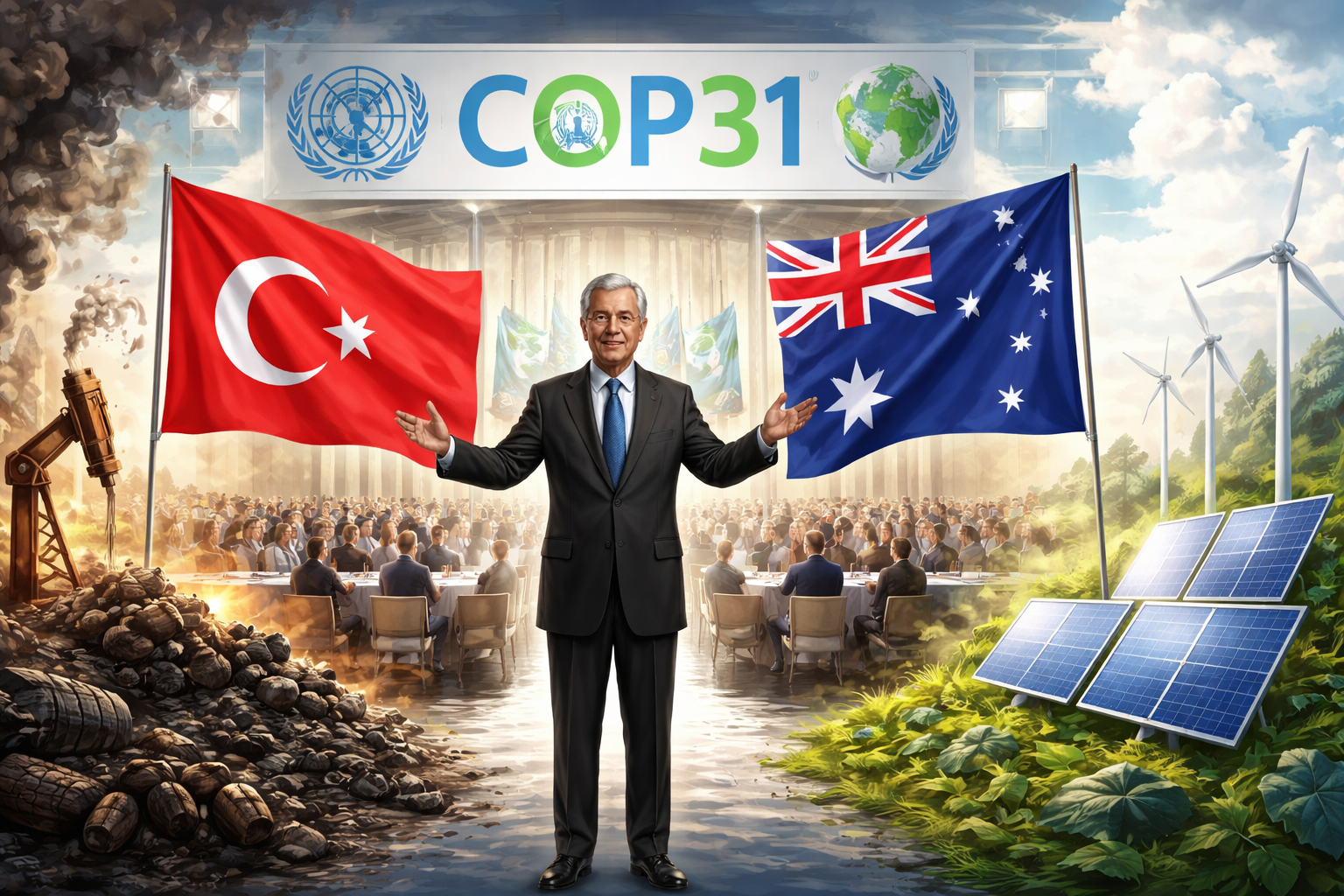
United Nations Secretary-General António Guterres has called on Turkey and Australia, the co-hosts of the COP31 climate talks, to urgently shift from merely discussing the phase-out of fossil fuels to organizing and financing its implementation. His remarks came during the second day of the climate conference, highlighting the need for decisive action in transitioning away from fossil fuels.
The appeal is particularly significant as both Turkey and Australia are major exporters of fossil fuels. Despite preparing for his participation in the summit, Turkish president Recep Tayyip Erdoğan spoke in support of his country’s oil production, drawing attention to the tension between economic interests and climate commitments.
Roadmap for Fossil Fuel Transition Presented
Earlier at COP31, Brazil introduced a new roadmap outlining steps to accelerate the global transition from fossil fuels. The plan, first announced at COP30 in Dubai, aims to stimulate economic growth and reduce poverty through a clean energy shift. Guterres, supported by climate figures including former U.S. Secretary of State John Kerry and UN chief climate negotiators, emphasized the urgency of turning this roadmap into action.
Kerry underscored the importance of concrete measures, stating, “Words in conversation don’t cut a single tonne of emissions — action does.” He described the roadmap as arriving at a pivotal moment in climate negotiations.
Political and Public Pressure Mounting at COP31
As the conference gathered nearly 100,000 participants, challenges such as severe traffic congestion demonstrated the event’s scale and urgency. Greta Thunberg, the Swedish climate activist, attended COP31 for the first time since 2021, criticizing the summits for becoming “greenwashed circuses.” Meanwhile, more than 700 organizations worldwide called for a “just transition” that protects workers and vulnerable communities amid the shift to clean energy.
These groups urged delegates to support the Belém-Antalya Mechanism (BAM), a proposal for a framework ensuring human rights, gender equality, Indigenous rights, and good jobs are prioritized in climate policies. Advocates expressed concern over delays and resistance, particularly from northern governments, in fully operationalizing the mechanism.
Expectations for Co-Host Leadership
Climate experts and negotiators are closely watching Turkey and Australia to see how they will take on the leadership role following Brazil’s presidency and roadmap presentation. Alden Meyer, a veteran climate adviser, described the situation as a “challenge to this presidency” to maintain momentum on fossil fuel transition discussions.
An Australian government spokesperson reiterated the message of international cooperation as essential for addressing climate change and related crises, emphasizing the opportunity to enhance national prosperity and energy security alongside climate protection. Turkish officials were contacted for comment but no response was noted.