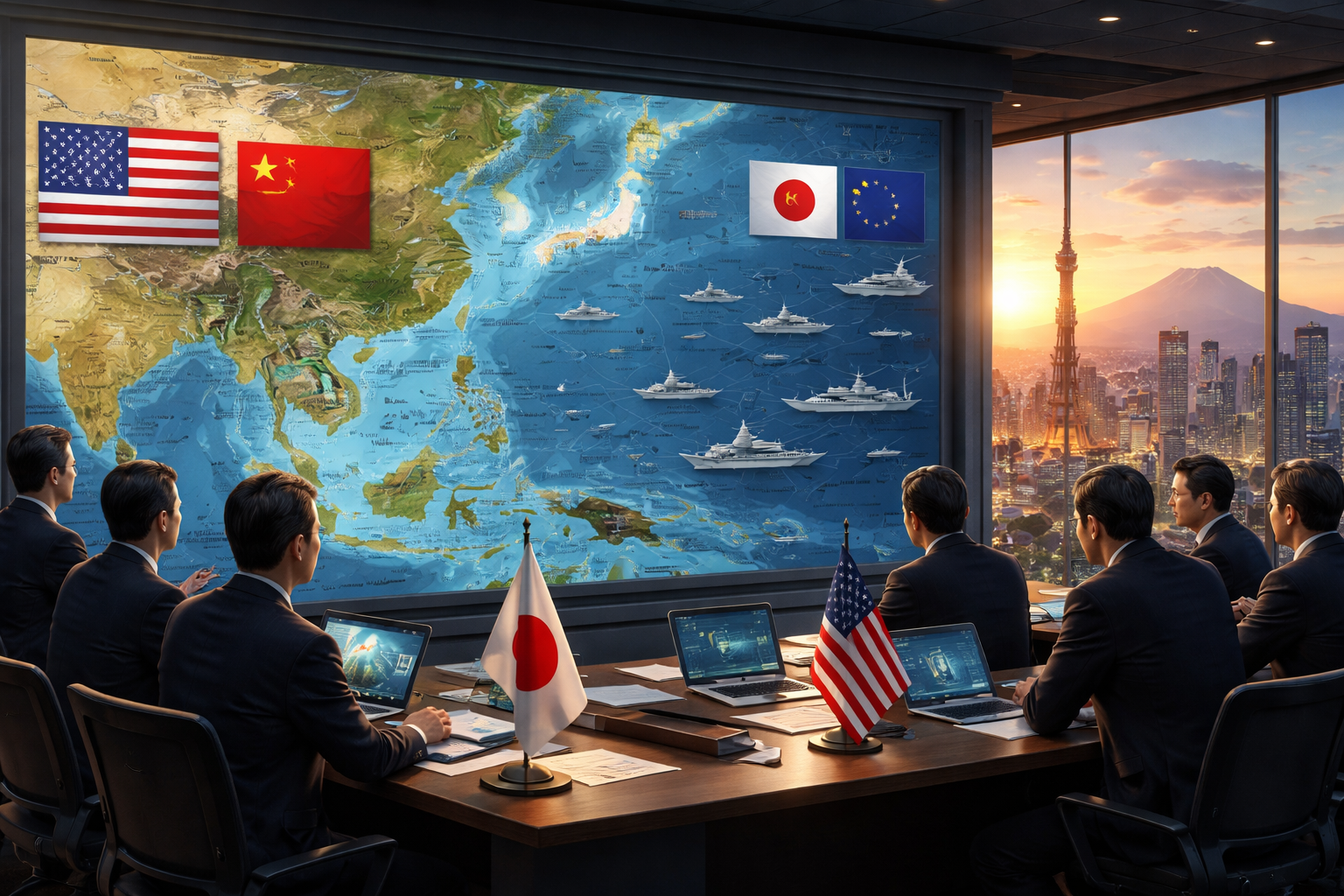
With the Asia-Pacific Economic Cooperation (APEC) summit in Shenzhen scheduled for November 18-19, Japan is intently observing signs of any alteration in U.S. foreign policy under President Donald Trump, especially toward the Indo-Pacific region.
Japan’s concern grew following the recent U.S. midterm elections, where Trump experienced setbacks, raising fears that he might pursue diplomatic bargains with China and Russia that overlook Japan’s regional security interests. Tokyo is particularly wary that Trump may use the remainder of his term to achieve quick foreign policy wins without adequately supporting longtime allies.
Diplomatic Engagement and Security Cooperation
In response to these concerns, Japanese Foreign Minister Toshimitsu Motegi engaged in discussions with U.S. Secretary of State Marco Rubio during the G7 foreign ministers’ meeting in Paris. The Japanese Foreign Ministry stated that both parties committed to advancing security cooperation to bolster the deterrence and response capabilities of the U.S.-Japan alliance. They also agreed to maintain close communication on developments in the Indo-Pacific, though details were limited.
Underlying Worries about U.S. Policy Shifts
Experts highlight multiple issues fueling Japan’s apprehension. Sebastian Maslow, a University of Tokyo politics professor, noted fears that a politically weakened Trump might prioritize foreign policy deals, such as with China, potentially empowering Beijing to pressure Japan amid already strained Sino-Japanese relations.
Additionally, Margarita Estévez-Abe from Syracuse University emphasized anxiety over a transactional approach toward Taiwan, referencing Trump’s past comments describing U.S. arms sales to Taiwan as a bargaining chip with China. Japan is also frustrated by the U.S. response to restrictions China imposed on rare earth exports to Japan after political tensions involving Taiwan.
Concerns Beyond China: North Korea and Russia
Tokyo is uneasy about Trump’s outreach toward North Korea and Russia. While the U.S.-Japan alliance remains intact compared to strain on NATO, there are worries that softer U.S. postures toward these countries could expose Japan to heightened threats. Given Japan’s role as a key U.S. military base in the region, any emboldenment of adversaries stands to undermine the alliance’s security foundation.
Japan’s Strategic Imperative and Adaptation
Preserving regional geopolitical balance remains a priority for Japan, which bases its security strategy on defending the liberal international order and countering China’s influence. However, its heavy reliance on the U.S. alliance leaves Tokyo without viable alternatives if the partnership weakens.
Efforts to strengthen Japan’s military capabilities continue within the alliance framework. Though there are calls for autonomous defense capacity, short-term development is constrained by industrial and resource limitations. Over the past decade, Tokyo has diversified security partnerships by enhancing cooperation with EU nations, NATO, Australia, and regional Indo-Pacific frameworks.
Japan hopes for a stable regional security environment during the remainder of Trump’s presidency and anticipates a successor administration that may be more strategically aligned with its interests. Still, experts caution that hope must be backed by tangible measures, including increased defense spending and economic security safeguards.