
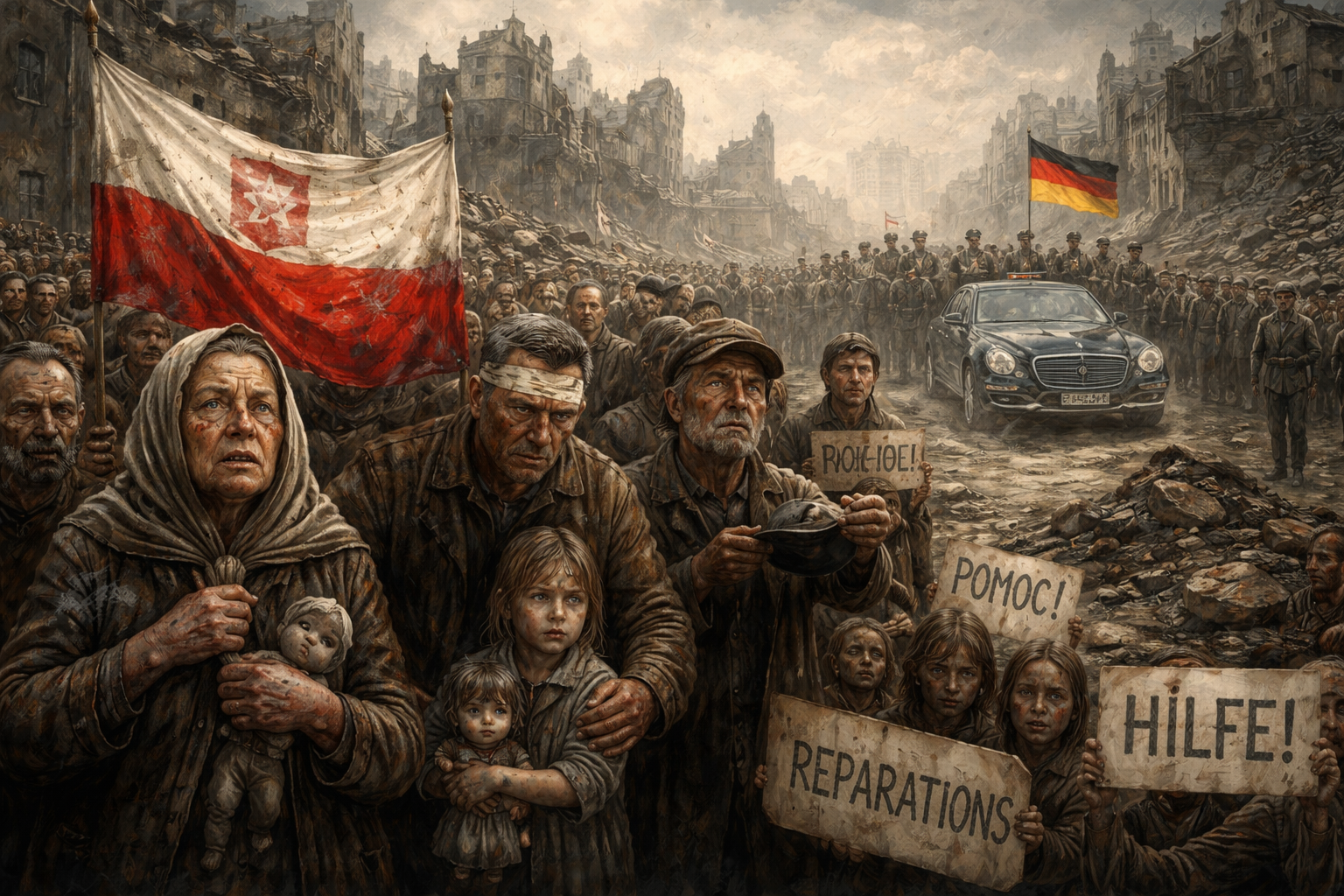
Polish organizations representing survivors of Nazi persecution have issued a plea for immediate humanitarian assistance from German civil society, emphasizing the urgent needs of the approximately 50,000 remaining survivors still living in Poland. Their open letter, published on November 5 by the Foundation for Polish–German Reconciliation, highlights the advanced age and fragile health of many survivors, who are struggling with illness and rising living costs.
The appeal addresses German businesses, foundations, associations, and private citizens, encouraging donations while noting that Germany has acknowledged moral responsibility but that the German federal government has not yet made a final decision regarding reparations. Officials and politicians in both countries continue to negotiate reparations decades after World War II, but no comprehensive agreement has been reached.
Background on War Reparations and Historical Context
In the aftermath of Germany’s reunification and Central and Eastern Europe’s democratic transitions, the German government provided 500 million deutschmarks to Holocaust victims living in Poland, supporting over 1 million people. Additional payments were made through the EVZ Foundation to former forced laborers. Still, many in Polish society view these reparations as inadequate, given the scale of atrocities committed during the Nazi occupation, which claimed approximately 6 million Polish lives, including about 3 million Polish Jews.
The German occupation led to widespread abuses such as the “Intelligenzaktion,” targeting Polish elites, and the deportation of roughly 2.5 million Poles to forced labor camps under brutal conditions. These historical actions remain central to the ongoing reparations discussion.
Recent Political Developments and Negotiations
Initially, Poland’s right-wing conservative party, Law and Justice (PiS), stressed war reparations as a key diplomatic issue, estimating Poland’s losses at 6.2 trillion zloty (roughly €1.3 trillion or $1.58 trillion) and formally demanding compensation in October 2022. However, since the center-left government led by Donald Tusk took office in December 2023, official demands have softened, focusing instead on seeking a “creative solution” from Germany.
Before his summer 2024 visit to Poland, German officials, including former Chancellor Olaf Scholz, offered €200 million ($224 million) in support, a proposal rejected as insufficient by Tusk. Subsequent talks have yet to produce a clear resolution.
Current Status and Calls for Action
Following government consultations in December 2025, the German government stated it would explore options for additional aid to Polish Nazi victims, but there is currently no approved humanitarian gesture in the budget plan. Germany’s Federal Foreign Office confirmed this status as of September 2026.
Meanwhile, opposition parties such as Germany’s Greens continue to advocate for funding a humanitarian gesture, despite budget committee rejections. Co-chair Franziska Brantner expressed hope that the coalition government might reverse this decision.
According to the Foundation for Polish–German Reconciliation, civic donations from Germans have begun to provide some relief, with more than €35,000 collected so far. Yet the sum is modest compared to needs, and the urgency is heightened by the advanced age of survivors. The late Jerzy Tarasiewicz, a longtime leader of a Polish victims’ association, was quoted earlier this year stating that Germans seem to “wait for us to die,” underscoring concerns that aid is overdue.
Frequently Asked Questions
Who are the survivors calling for support?
The survivors include former concentration camp and prison inmates, people deported to Germany for forced labor, and others who suffered Nazi repression during World War II, with many now over 90 years old.
What reparations has Germany provided to Polish victims so far?
Germany provided 500 million deutschmarks after reunification to Holocaust victims in Poland and made additional payments through the EVZ Foundation to former forced laborers. However, many in Poland consider these reparations insufficient.
What is the current status of reparations negotiations between Poland and Germany?
Negotiations continue without a final agreement. Germany offered €200 million in 2024, rejected by Poland’s current government. The German government pledged to consider additional support but has not yet allocated funds.
How has German civil society responded to the appeal?
Several hundred Germans have donated amounts ranging from €50 to several hundred euros to the Foundation for Polish–German Reconciliation’s victims fund, totaling over €35,000, providing some direct assistance to survivors.