
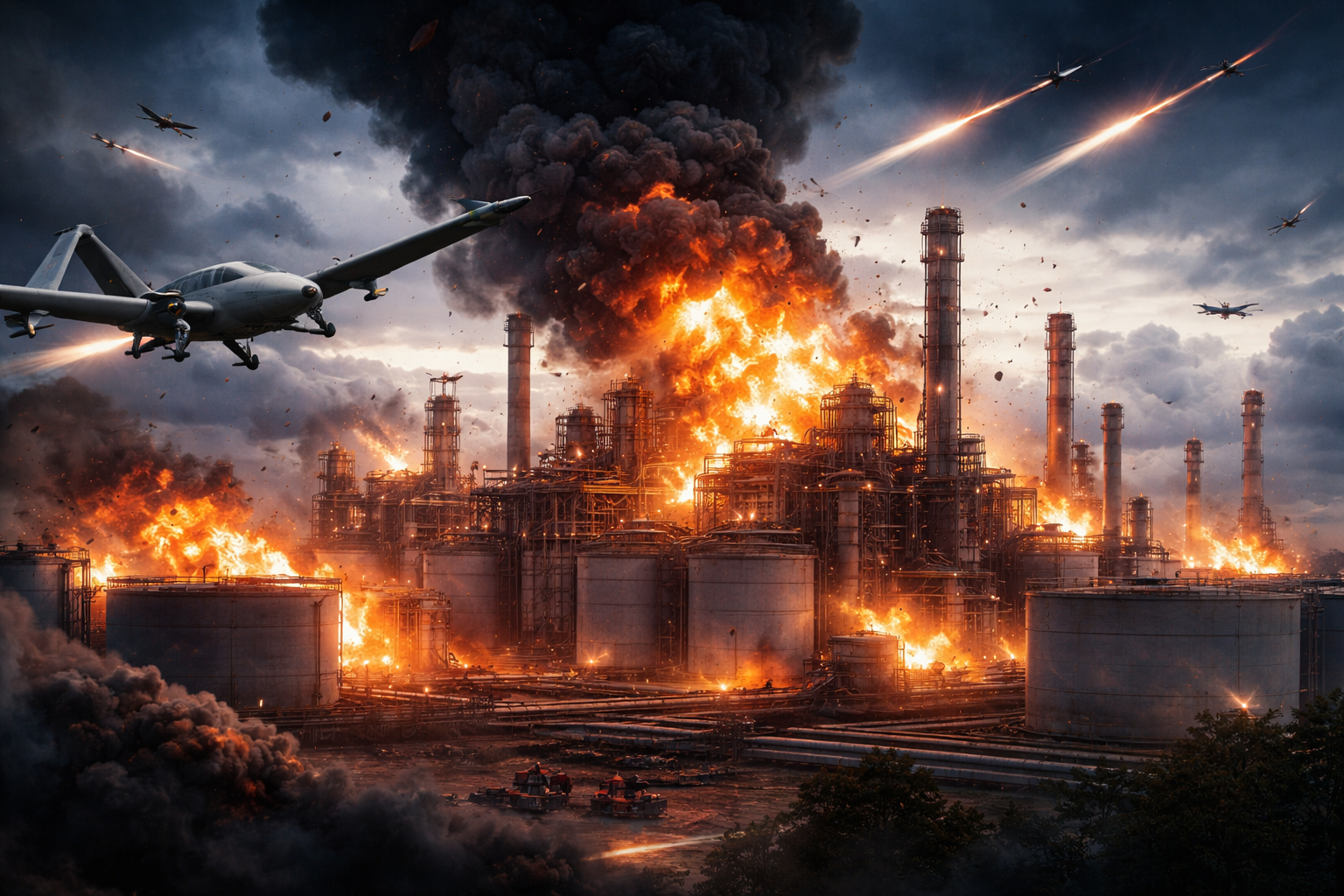
Ukraine has resumed its offensive against Russian oil refineries, disregarding demands from Donald Trump and others aimed at halting strikes ahead of the U.S. midterm elections. The resumption followed the scheduled end of a six-day ceasefire in the occupied town of Oleshky, where both sides facilitated evacuations, according to reports.
Russian state media reported overnight drone attacks on the Kstovo refinery in the Nizhny Novgorod region and a recent major strike on a large refinery in the Samara region, owned by Russia’s state oil giant Rosneft. These strikes contradict earlier reports that Ukraine had agreed to a White House request, reportedly made by Jared Kushner, to pause attacks on Russia’s energy infrastructure for 30 days. Ukrainian officials denied any such agreement, telling the Kyiv Independent that Ukraine never consented to Kushner’s demand.
Russian and Ukrainian Perspectives on Recent Strikes
Kremlin officials expressed frustration, accusing Kyiv of ignoring U.S. wishes. Meanwhile, Ukrainian President Volodymyr Zelenskyy did not confirm the refinery attacks publicly, likely to avoid provoking U.S. backlash. Instead, Zelenskyy announced strikes on Russia’s defense industry in Rostov region, specifically destroying a Pantsir missile system as part of continued “long-range sanctions.” He defended the attacks as retaliation against persistent Russian drone and ballistic missile strikes targeting Ukrainian energy infrastructure, which have caused widespread power outages.
According to Zelenskyy’s statements on Telegram, Russia has been intensifying missile attacks that exploit Ukraine’s shortage of ballistic missile interceptors. Ukraine’s power grid suffered blackouts lasting up to 10 hours after damage to a critical thermal power plant. Zelenskyy also highlighted Ukraine’s military gains, reporting the recapture of over 96 square kilometers of territory in October and significant Russian losses numbering over 54,400 killed and wounded in the same month.
Oleshky Ceasefire and Future Outlook
The recent truce in Oleshky, brokered by former U.S. First Lady Melania Trump, allowed hundreds of residents to reunite with family members amid difficult conditions. Observers noted that Russian forces used the ceasefire to strengthen their positions and rotate exhausted troops in this strategically important town on the Dnipro River opposite Kherson, which Ukraine reclaimed in 2022. Analysts suggest that renewed Russian attacks in the area are likely to resume.
The pope expressed hope that cooperation during the Oleshky ceasefire could lead to broader peace efforts, emphasizing a desire for dialogue between Russia and Ukraine. Trilateral talks involving the U.S. are anticipated later this month, with Kremlin officials indicating President Vladimir Putin’s willingness to speak directly with Zelenskyy by phone, excluding European leaders from such discussions.
Stalemate and Russian Demands
Despite these diplomatic gestures, prospects for a major breakthrough remain limited. Russia continues to insist on maximalist territorial demands, requiring Ukraine to cede the entire eastern Donetsk region and additional areas in Kherson and Zaporizhzhia provinces—territory Moscow claims to have annexed but does not fully control.