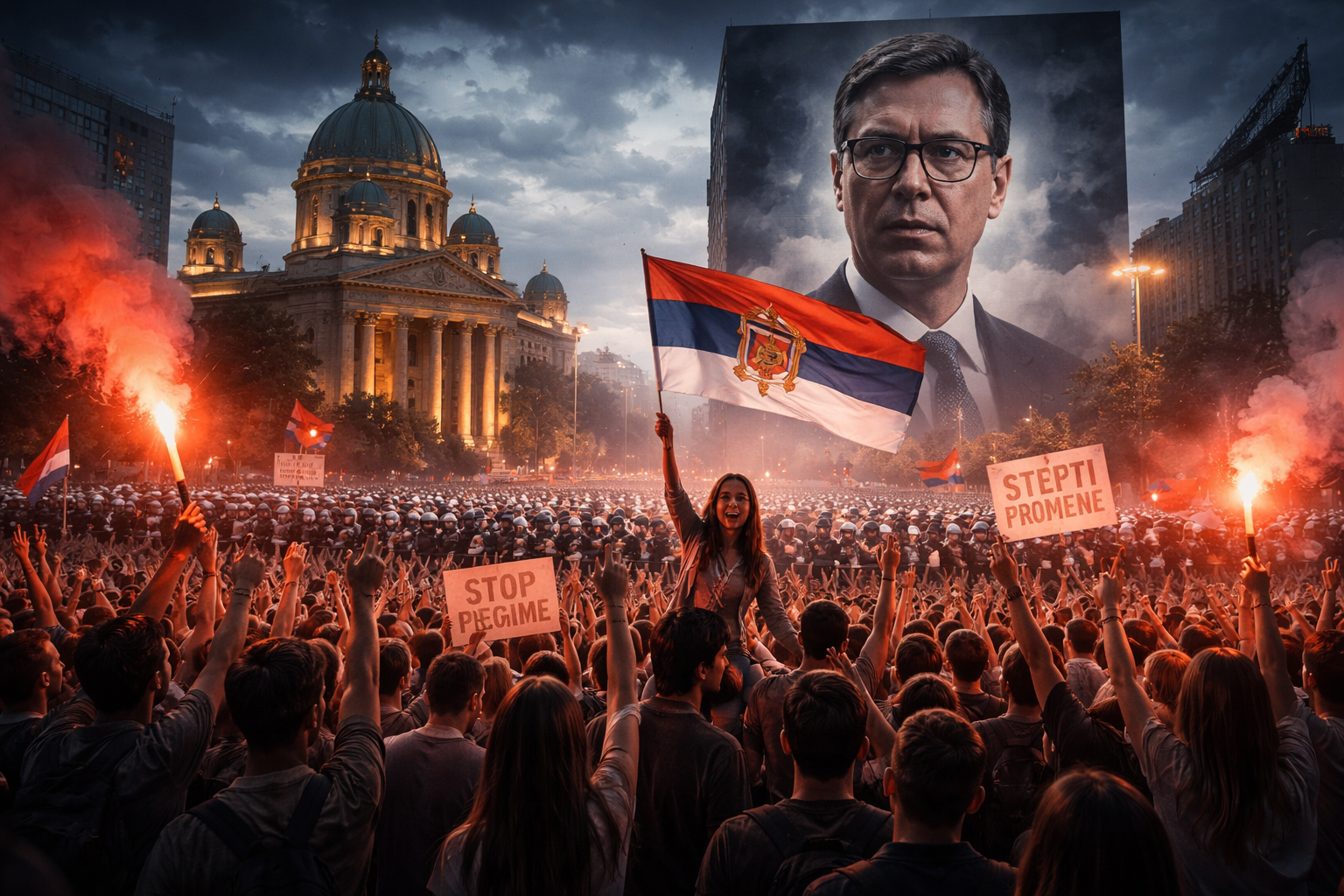
On October 25, a political shift unfolded in Serbia as the Student List, a coalition of professors, activists, and artists emerging from student protests, secured 53% of the vote, surpassing the Serbian Progressive Party’s 39% support. This electoral upset has led to rapid developments in the country’s political landscape.
Former President Aleksandar Vucic, long accustomed to dominating Serbia’s political spotlight, responded with accusations that the new victors are practicing “revolutionary terror.” At a press conference marked by a notably reduced media presence, Vucic warned of organizing resistance if the new authorities continue actions such as violence or destruction against dissenters. He cited the resignation of the director and dismissals of senior editors at the state broadcaster RTS as examples of this alleged intimidation.
Immediate Actions and Investigations
Following the election, citizens in multiple cities peacefully removed Vucic’s portraits from public buildings, signaling a desire to move beyond his administration’s influence. Additionally, the public prosecutor’s office for organized crime has launched probes into alleged election fraud, and a special commission is evaluating the conduct of the Higher Public Prosecutor’s Office in Belgrade amid accusations that it previously served Vucic’s interests and targeted political opponents.
Protests have intensified, including an incident where demonstrators briefly occupied the Informer TV station, a media outlet known for demonizing critics of Vucic. This action led journalists’ associations to call for the revocation of Informer’s broadcasting license. Interestingly, some tabloid media previously loyal to Vucic have softened their rhetoric, refraining from labeling the Student List with terms like “terrorists” or “mercenaries.”
Power Struggles and Societal Expectations
Despite the Student List’s electoral success, the Serbian Progressive Party continues to control several power mechanisms, prolonging uncertainty. Sociologist Dejan Bursac pointed out the growing impatience in a society long dominated by a party acting like a “feudal lord,” with citizens anticipating justice and tangible reforms during this transitional period.
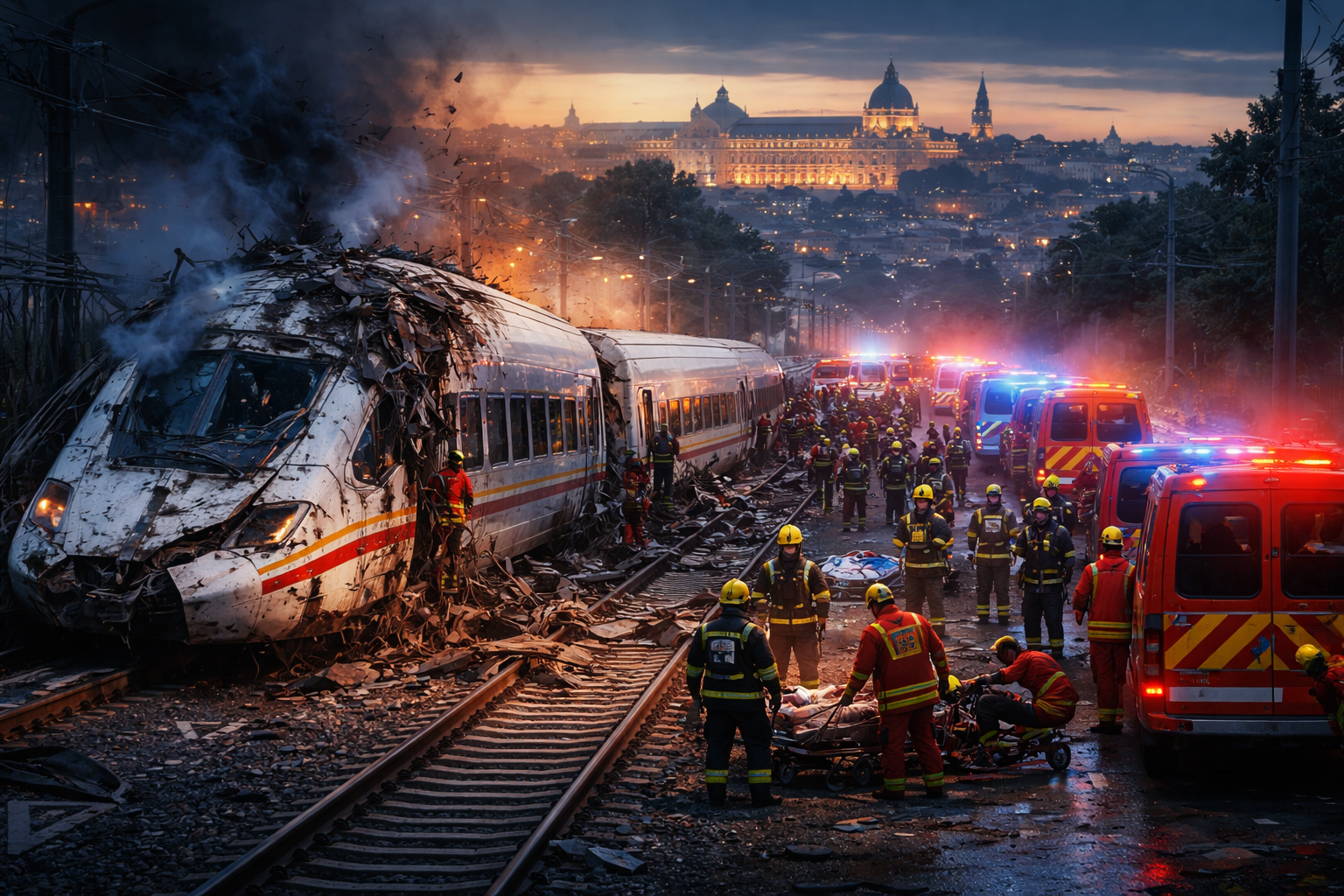
Meanwhile, Vucic and his affiliates have vowed to function as a strong opposition, anticipating a political comeback after the new government’s perceived failures. Critics, however, urge comprehensive investigations into Vucic’s controversial tenure, which was marked by accusations of media manipulation, favoritism in state contracts, and ties to organized crime. The collapse of a concrete canopy at Novi Sad’s railway station two years earlier, which tragically killed 16 people, remains a catalyst symbolizing alleged corruption and mismanagement under Vucic’s regime.
Challenges Ahead and Foreign Policy Continuity
The question remains how much influence the outgoing administration can exert to undermine the new leadership. Political allegiance shifts are common in Serbia, with officials often aligning according to power dynamics. Some insiders predict officials could still commit acts like awarding contracts or financial obligations, possibly complicating the transition without necessarily crossing legal boundaries.
Nevertheless, the Student List reportedly maintains contacts within police and administrative sectors hostile to Vucic’s style of governance, enabling some preventive measures. The List has called for resignations of key police and judicial officials and urged whistleblowers to expose any attempts by outgoing officials to destroy incriminating documents.
On foreign policy, the Student List holds diverse views, combining left and right-wing as well as pro-European and pro-Russian stances. It aims at advancing European Union accession through substantive reforms without abrupt shifts in foreign relations. The coalition opposes sanctions on Russia and the recognition of Kosovo, positions that reflect broad public consensus in Serbia.
Student List representatives have expressed intentions to stabilize domestic politics and improve relations with neighbors like Croatia and Kosovo, signaling a potential reduction in regional tensions. Early gestures include dialogues between the List’s lead candidate and the Croatian prime minister as well as openness to discussions with Pristina’s government.
Next Steps in Serbia’s Political Transition
The electoral process is not yet fully complete. Due to irregularities, voting will be repeated on November 1 in about 50 polling stations. Only after finalizing these results can parliament be convened and a new government formed. While leadership names have not been publicly shared, the formation of the new government is expected to proceed quickly once the process concludes.