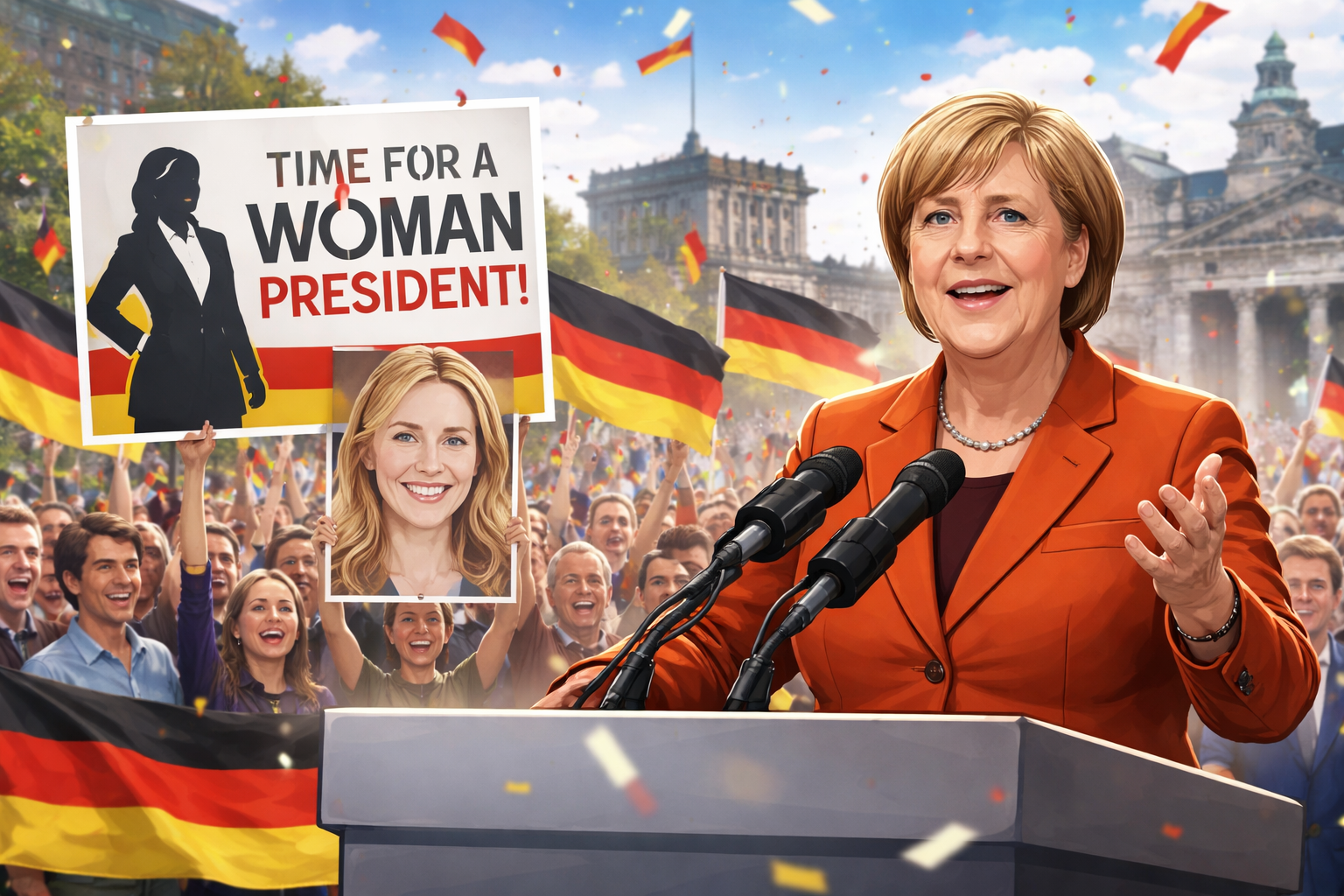
Angela Merkel has called for a woman to become Germany’s next head of state, pointing out that the country has never had a female president in its 77-year history. Merkel made this appeal in an interview with MagentaTV, suggesting it could be time for a change in this largely ceremonial role. The Federal Convention is scheduled to elect Germany’s next head of state on January 30, as the current president, Frank-Walter Steinmeier, cannot seek a third consecutive term.
Merkel did not name any potential candidates but acknowledged she knew women qualified for the position. The proposal aligns with discussions within Merkel’s former party, the Christian Democratic Union (CDU), and its Bavarian sister party, the Christian Social Union (CSU), which are considering female candidates for the role, including Bundestag president Julia Klockner, Education Minister Karin Prien, former Defense Minister Annegret Kramp-Karrenbauer, and Ilse Aigner, who currently has the backing of the CSU leader Markus Söder.
The debate over the presidency has drawn Merkel’s criticism for having an unpleasant tone and being somewhat strange. She emphasized that the CDU’s identity should extend beyond economic policy to include building bridges across society.
Context of the Presidency and Candidates
The presidency in Germany is largely ceremonial, but it carries symbolic weight. With President Steinmeier stepping down after two terms, a new election will take place early next year. The CDU and CSU, conservative parties that Merkel previously led, are discussing female candidates to potentially become the first woman in this role.
Merkel’s Critical Perspective on Party Direction
Merkel described the internal debate around the CDU’s future as odd and criticized its tone. She stressed that the CDU historically focused on uniting various parts of society, suggesting this approach should reemerge strongly.
Broader Political Developments in Germany
Meanwhile, in Berlin, the socialist Left Party is poised to enter coalition talks with the Greens and the Social Democrats, potentially marking the first time the Left Party would lead the city government. These political changes underscore shifting dynamics in German politics as Merkel’s call for progress on female leadership in a national role adds to ongoing transformations.