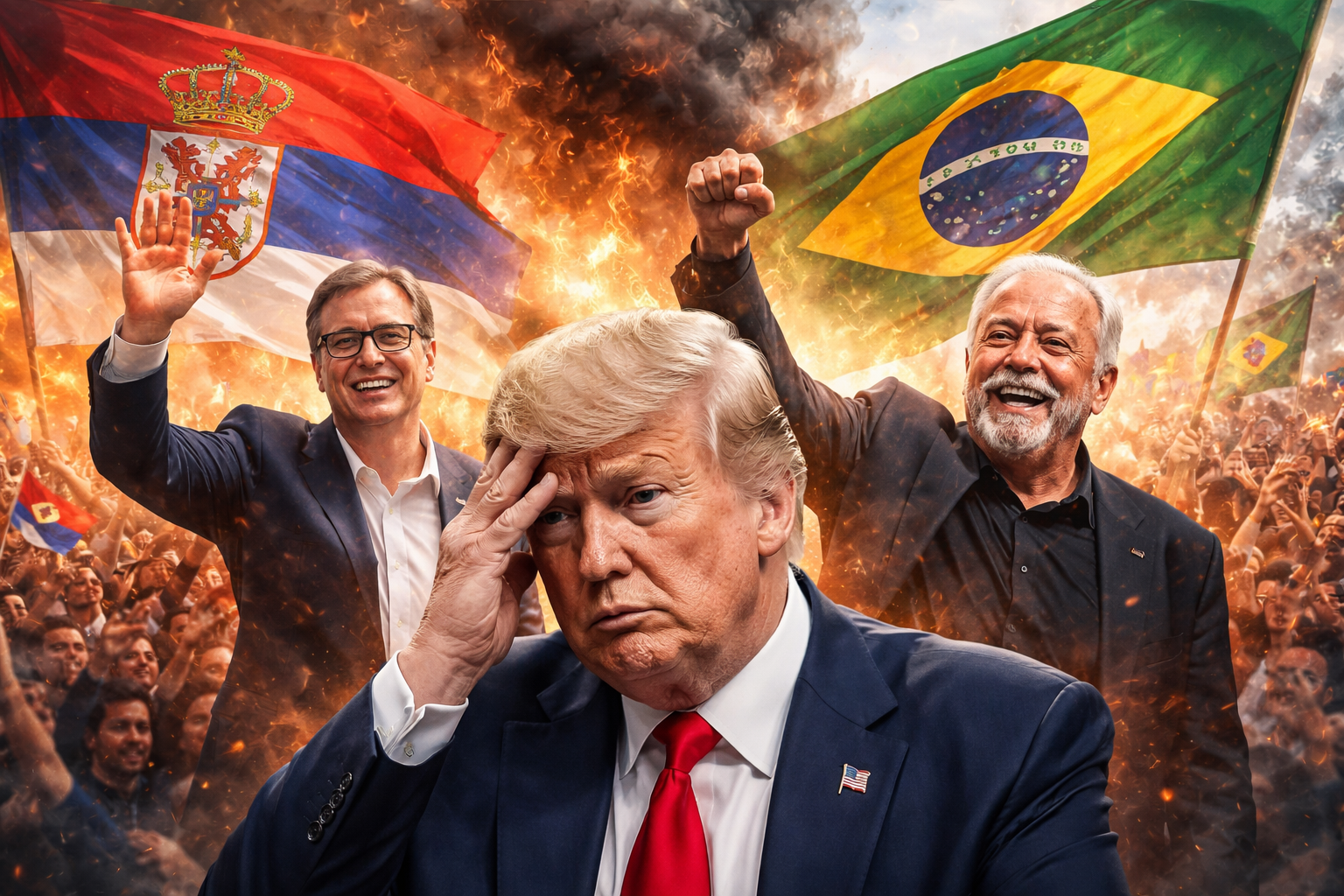
Recent elections in Serbia and Brazil have resulted in significant setbacks for U.S. President Donald Trump as key allies aligned with his right-wing agenda suffered defeats. Although these international results will not directly influence the upcoming U.S. midterm elections scheduled for November 3, they mark a weakening of Trump’s global political support.
In Serbia, President Aleksandar Vucic, an ally who had expressed ideological alignment with Trump and shared a favorable view of Russian President Vladimir Putin, lost power in recent elections. Vucic had served as Serbia’s president since 2017 and was closely connected to Trump’s MAGA movement. His resignation ahead of the elections and the consequent shift in Serbian politics mean that Trump loses one of his few European allies who had resisted EU sanctions on Russia following its invasion of Ukraine.
Brazilian Election Results Challenge Trump’s Allies
Meanwhile, Brazil witnessed the reelection of Luiz Inacio “Lula” da Silva, a left-wing incumbent president whose victory dashed hopes for Trump supporters backing Flavio Bolsonaro, son of former President Jair Bolsonaro. Trump had strongly supported Jair Bolsonaro, who was often compared to Trump himself, and his son in their political efforts. Flavio Bolsonaro, however, lost the election and subsequently left Brazil for Florida amid ongoing investigations into alleged corruption and money laundering. Despite pending legal issues, the U.S. State Department granted visas to him and his family.
Trump expressed skepticism about the Brazilian electoral process, echoing his own unfounded claims about the 2020 U.S. presidential election by calling it “another rigged election.” Bolsonaro’s refusal to concede and allegations of irregularities resemble Trump’s earlier responses to electoral defeats.
Broader Implications for Trump’s Foreign Relations
The loss of these allies diminishes Trump’s influence abroad, particularly as relations with Luiz Inacio Lula da Silva remain strained. Lawrence J. Haas, a senior fellow for U.S. foreign policy, noted that Trump does not feel favorably toward Lula. While these international developments have no impact on the U.S. midterms, they reflect challenges in Trump’s foreign alliances and global standing.
The situation remains fluid in Israel, where Prime Minister Benjamin Netanyahu, also a Trump ally, has lost his parliamentary majority—raising uncertainty about future U.S.-Israel relations depending on coalition outcomes.
Outlook Ahead of U.S. Midterm Elections
Despite the losses abroad, midterm voters in the United States are primarily expected to focus on domestic concerns such as affordability and opposition to U.S. involvement in an Iran conflict. Haas observed that Trump has the lowest approval rating of any U.S. president on the eve of a midterm election since 1946. The setbacks in Serbia and Brazil represent broader difficulties for Trump in maintaining his political coalition globally, even as the U.S. electorate prepares to vote on November 3.