
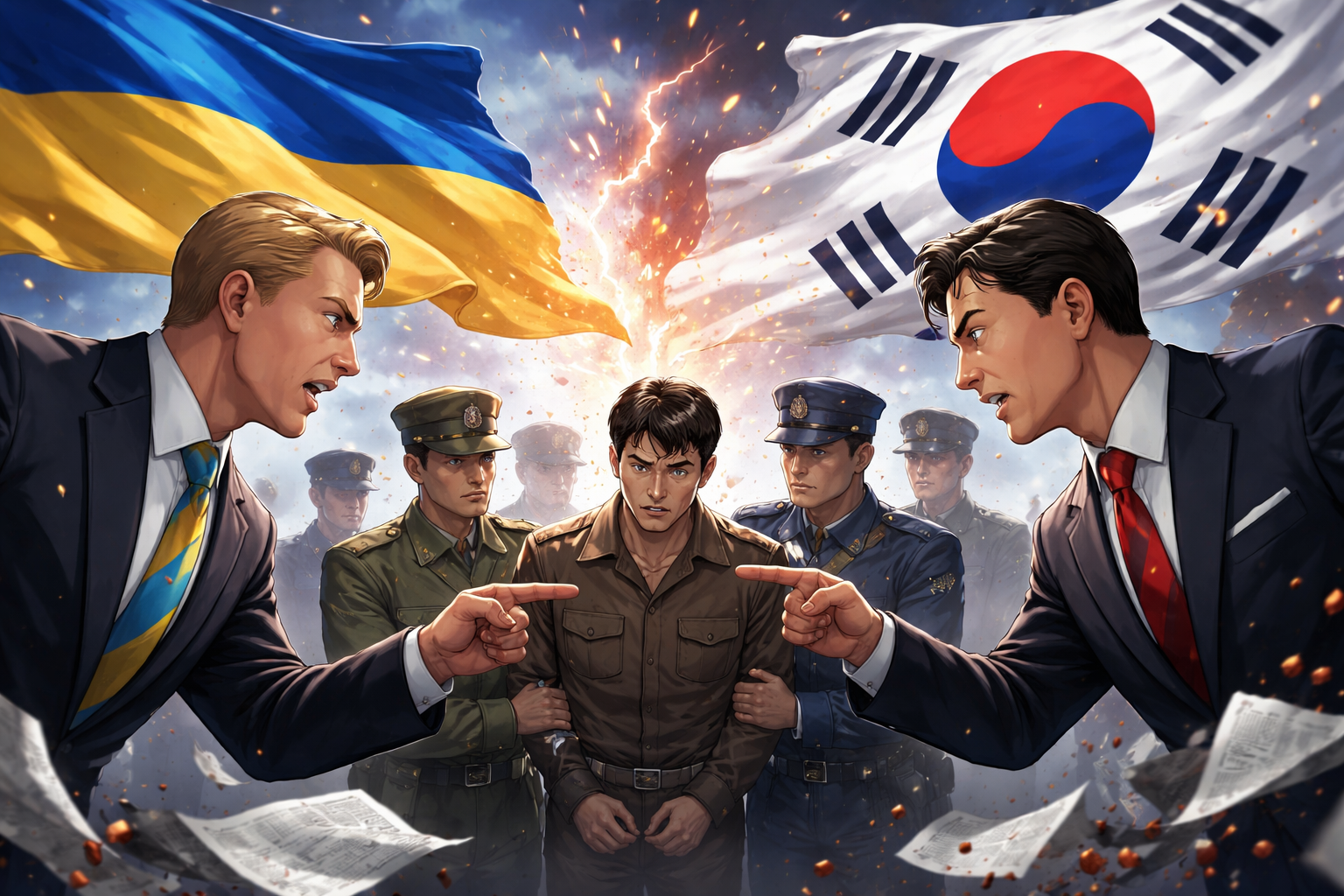
Ukraine’s announcement at the United Nations General Assembly that it transferred two North Korean prisoners of war to South Korea has sparked a diplomatic backlash. The prisoners were captured by Ukrainian forces in the Kursk region of Russia earlier in 2025 and expressed a desire to resettle in South Korea, Ukrainian President Volodymyr Zelenskyy said during his speech on September 23.
Following the announcement, South Korea’s Foreign Ministry summoned Ukraine’s ambassador and demanded an explanation, criticizing Ukraine for disclosing the transfer unilaterally and violating an alleged confidentiality agreement. South Korean President Lee Jae Myung highlighted the sensitivity of the prisoner transfer, emphasizing its potential implications for diplomacy and national security on the Korean Peninsula.
Conflicting Claims Over Secrecy Agreement
Ukraine’s spokesperson Dmytro Lytvyn denied that any secrecy agreement existed regarding the transfer, deeming it inappropriate to conceal the prisoners’ destination. However, South Korean presidential spokesperson Kim Sung-wan contested this denial, stating that Ukraine had requested confidentiality out of concerns about domestic criticism if the prisoners were not swapped for Ukrainians held by Russia. Seoul agreed to keep the transfer secret to safeguard diplomatic efforts and protect the prisoners’ families still living in North Korea, according to Kim.
Impacts on Ukraine-South Korea Relations
Experts point to a lack of sustained trust and dialogue between Kyiv and Seoul, complicating what could have been an opportunity to strengthen bilateral ties amid shared concerns about North Korea. Nataliya Butyrska of the New Europe Center in Kyiv noted that despite facing a common adversary in the North Korean regime, cooperation has been hindered by mistrust. She also noted that Russia demanded the return of the North Korean prisoners and had refused prisoner swaps for an extended period, underscoring the strategic weight of the transfer.
The episode has been exploited by South Korean opposition parties, who question President Lee’s decision to maintain secrecy and suspect him of favoring reconciliation with North Korea. Analysts in Seoul suggest that the administration is prioritizing engagement with North Korea and possibly reopening ties with Russia over deeper military cooperation with Ukraine, despite potential benefits for South Korean forces.
Future of Military and Diplomatic Cooperation
As a result, further cooling in Kyiv-Seoul relations appears likely. Butyrska suggested Ukraine might have better pursued quiet diplomacy rather than public disclosures to secure support such as military technology indirectly through third countries. Even so, experts like Mykola Polishchuk see continued trade and humanitarian aid from South Korea, with military collaboration unlikely amid current tensions.
South Korea continues to navigate complex domestic politics and diplomatic tightropes regarding its North Korean neighbors, while Ukraine deals with unexpected fallout from the prisoner transfer announcement. The situation remains fluid, with both countries managing differing priorities amid broader geopolitical concerns.