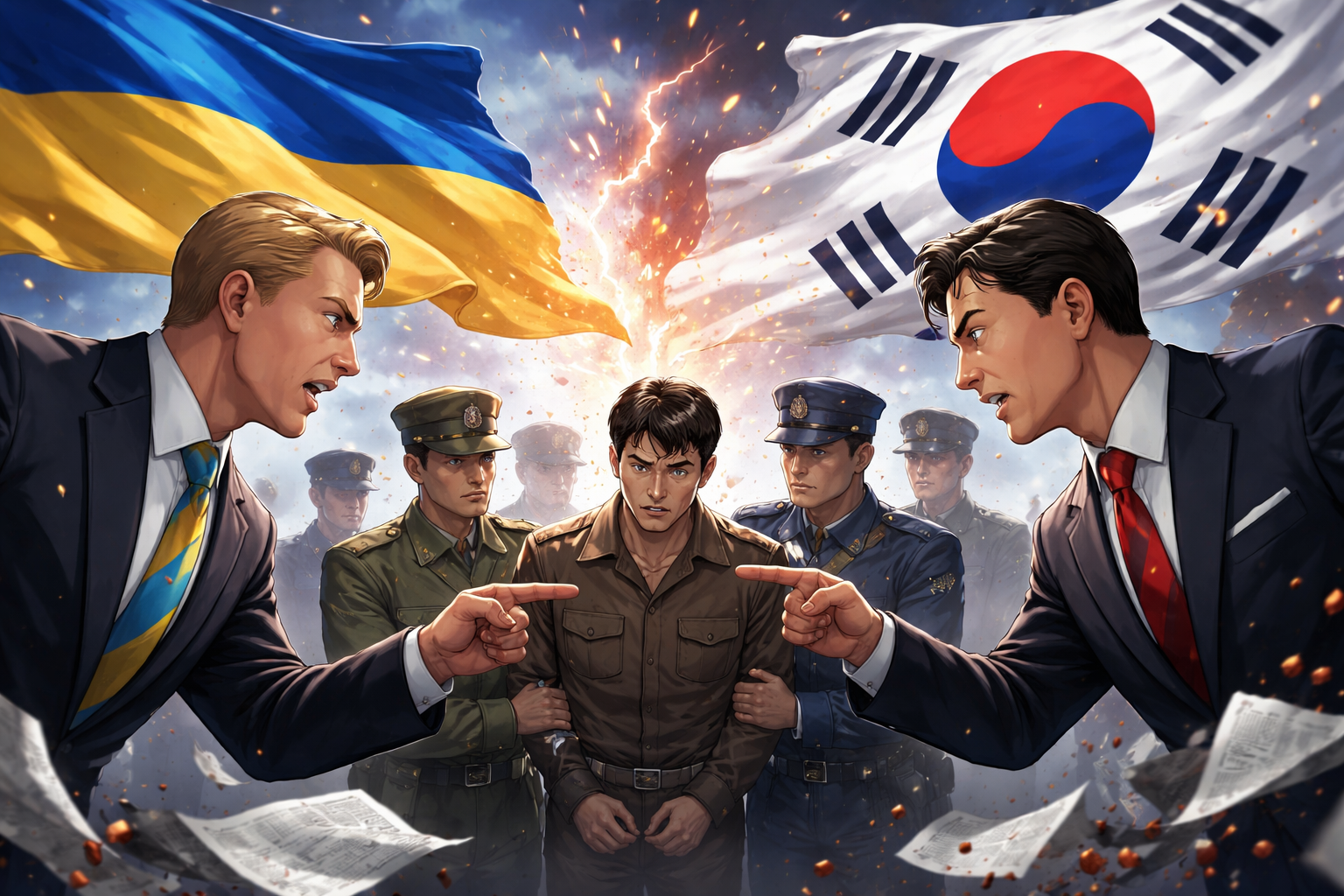

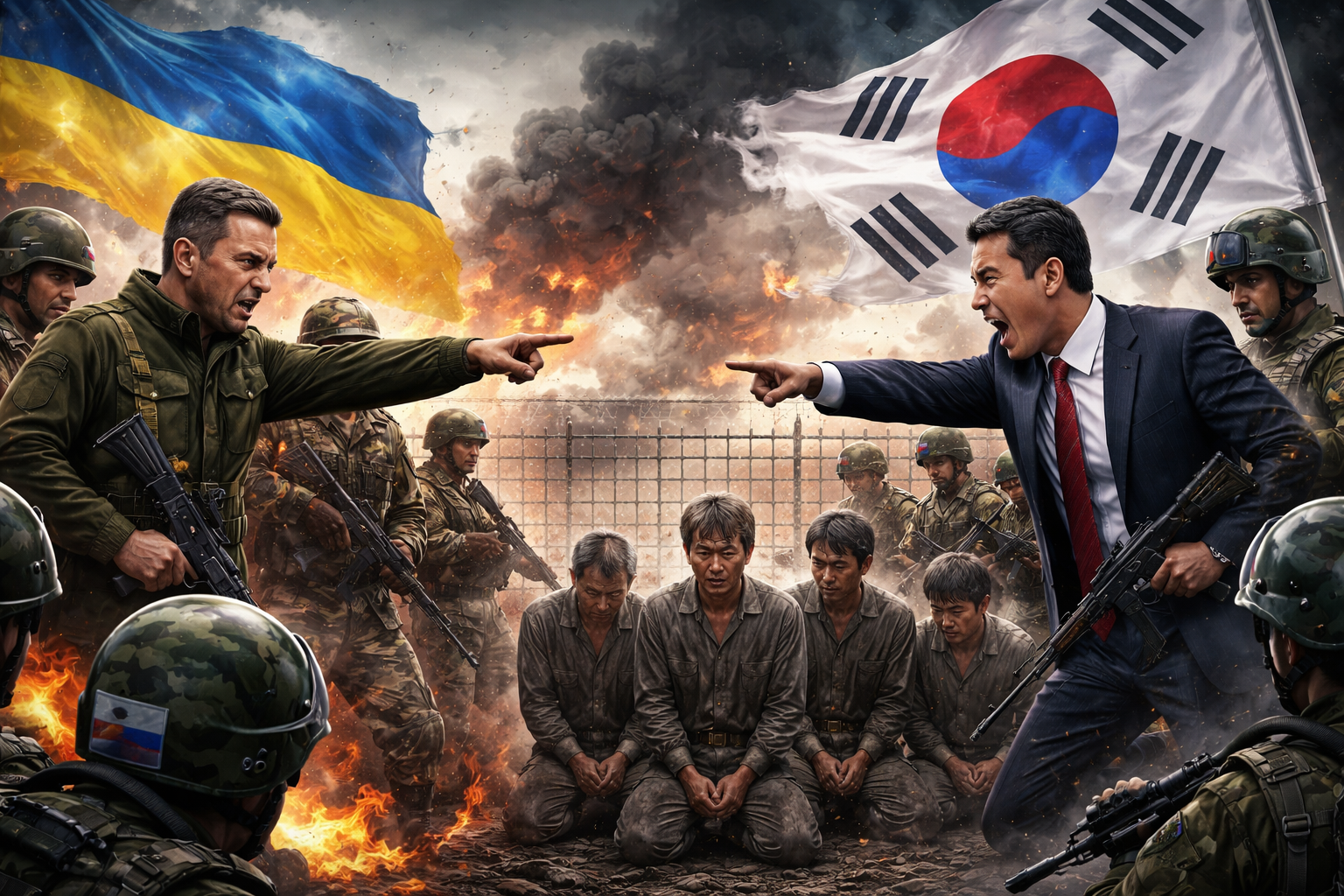
A diplomatic conflict has emerged between Ukraine and South Korea following a public disclosure by Ukraine about the transfer of two North Korean prisoners of war (POWs) to South Korea. The announcement, made by Ukrainian leadership at the United Nations General Assembly on September 23, surprised South Korean officials and led to demands for explanations and apologies.
The two prisoners had been captured by Ukrainian forces during fighting in Russia’s Kursk region in January 2025 and had requested resettlement in South Korea. The fallout reflects differing views over the handling and confidentiality of the transfer.
According to reports, Ukraine denied that there was any confidentiality agreement concerning the prisoners’ transfer. In contrast, South Korean officials assert that Kyiv agreed to keep the transfer secret due to diplomatic sensitivities and concerns for the prisoners’ families in North Korea.
Disagreement over confidentiality and diplomatic sensitivities
The Ukrainian spokesperson stated on social media that no secret arrangement was made and contested the claim that information should have been withheld. South Korean presidential spokespersons, however, insisted that Ukraine previously requested confidentiality to avoid domestic criticism and to safeguard the prisoners and their families still in North Korea.
This divergence has deepened mistrust, as experts note the absence of a sustained, trust-based dialogue between Ukraine and South Korea. The issue has also prompted strong reactions within South Korea’s political arena, where opposition figures criticize the government’s handling of the matter.
Implications for bilateral relations and military cooperation
Analysts highlight that the prisoner transfer could have been an opportunity for Kyiv and Seoul to improve ties, but the public dispute undermined that potential. South Korea’s constitution considers North Koreans citizens, adding complexity to the situation. The transfer has been used as a political issue domestically, with concerns that it may affect South Korea’s ongoing efforts to engage with North Korea.
Some observers suggest that Seoul’s government is inclined toward reestablishing ties with Russia over deepening military cooperation with Ukraine, which may affect South Korea’s willingness to support Ukraine militarily. Nonetheless, experts believe trade and humanitarian aid between Ukraine and South Korea are likely to continue.
Outcome and future prospects
The controversy has left Ukraine entangled in an unintended diplomatic scandal as South Korea seeks to manage domestic and security concerns. Experts anticipate a possible cooling of relations with South Korea maintaining a cautious distance.
While South Korea does not currently supply weapons to Ukraine directly, it contributes through other countries and explores integration with European military supply chains. However, direct military collaboration between Ukraine and South Korea seems improbable under current circumstances.