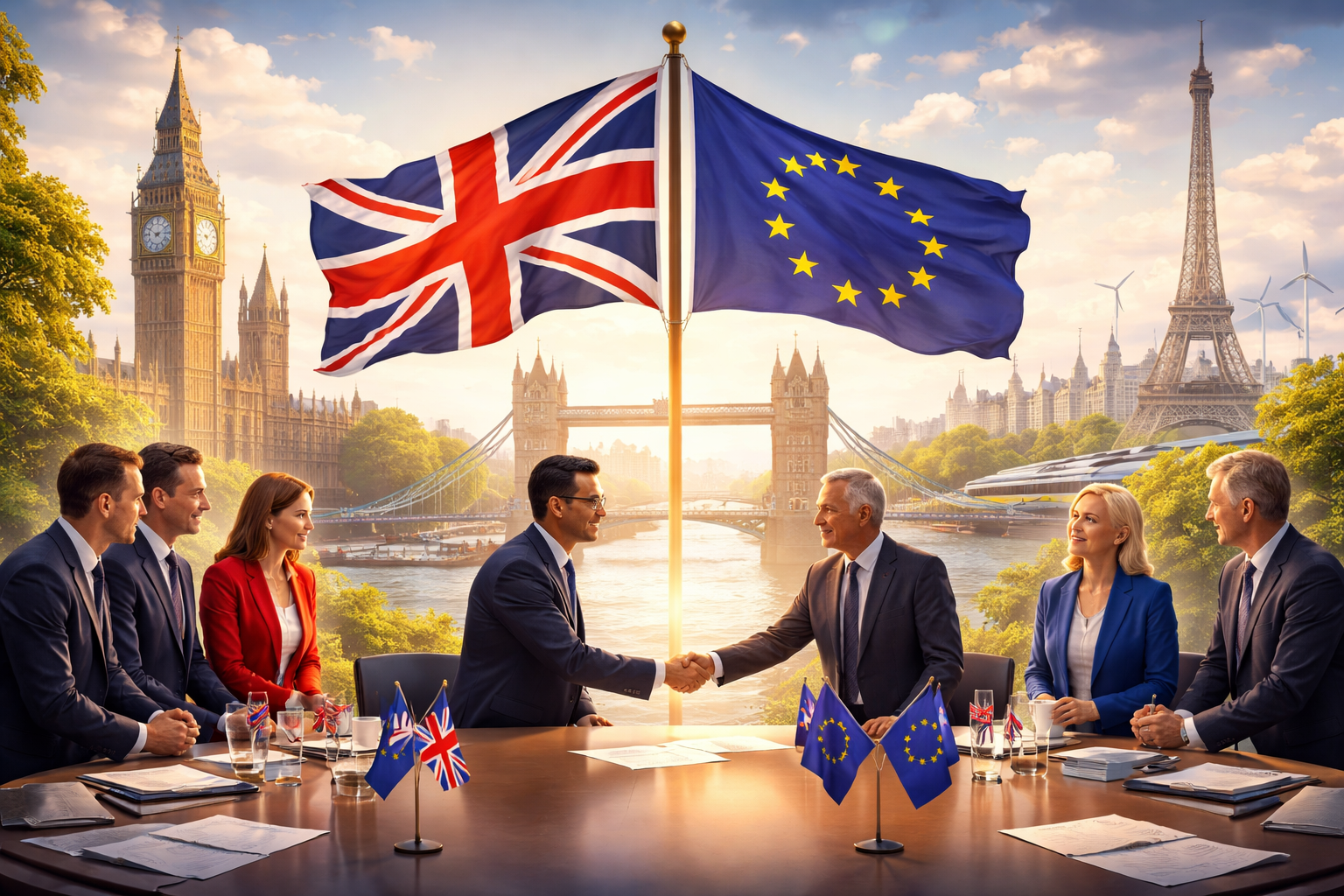


UK representative Andy Burnham headed to Brussels on Friday for a pivotal summit aimed at resetting post-Brexit relations with the European Union. The summit involves negotiations on several fronts, including a new youth mobility scheme, cooperation on migration returns, and trade agreements designed to ease restrictions on food and drink products.
This effort marks a significant progression in UK-EU relations after Brexit, with both sides working toward practical solutions despite ongoing challenges related to sovereignty and regulatory alignment.
Key Agreements and Negotiation Highlights
One landmark provision involves allowing up to 100,000 EU citizens under the age of 31 to come to the UK annually under a new youth mobility scheme. The initiative is designed to support travel, work, study, and exchange opportunities on both sides of the Channel, although the scheme is not expected to be operational until 2030, disappointing some prospective participants in their late 20s.
The summit also expects to finalize a trade deal simplifying rules for food and drink products, facilitating easier trade of animal and plant goods such as meats, cheeses, and wine by establishing a sanitary and phytosanitary common area. To achieve this, the UK has agreed to align itself with EU standards, including abandoning previously planned bans like those on foie gras imports.
In addition, an agreement linking the UK’s emissions trading scheme with the larger EU system aims to reduce charges between UK and EU industries on high-carbon imports like steel and cement.
Migration Cooperation and Returns to Third Countries
For the first time, UK and EU officials plan to launch formal talks on the topic of sending rejected asylum seekers to third-country return hubs. A leaked draft statement reveals an intention to establish “a structured dialogue” regarding returns to countries outside of the UK and EU boundaries.
This approach signals a shift in UK policy, which had previously resisted such measures but now appears open to exploring similar arrangements as those announced recently by five EU nations agreeing with Rwanda to create a migrant return hub by 2027.
Challenges Over Voting Rights and Regulatory Influence
Tensions remain around the issue of UK influence on EU legislation, especially where food standards and public health are concerned. France, in particular, has insisted the UK will not have voting rights during EU legislative processes—a stance that underscores the UK’s nonmember status and limits its ability to shape regulations directly.
This position highlights the EU’s warning against the UK selectively engaging with parts of the single market, suggesting the UK faces a binary choice between maintaining the status quo or considering rejoining the EU to regain broader market access and influence.
Next Steps and Implications
The UK and EU aim to build on these foundational agreements with plans to negotiate UK entry into the energy single market, a move considered mutually beneficial, especially in the context of energy security concerns following the Ukraine conflict.
Despite progress at the summit, some issues such as tuition fees remain unresolved, with commitments to address them within six months. Industry representatives stress the importance of early regulatory consultations, particularly in technical areas like food safety, to ensure smooth trade and cooperation.
As diplomatic efforts continue, this summit represents a key moment in stabilizing and recalibrating UK-EU relations for the coming years.