
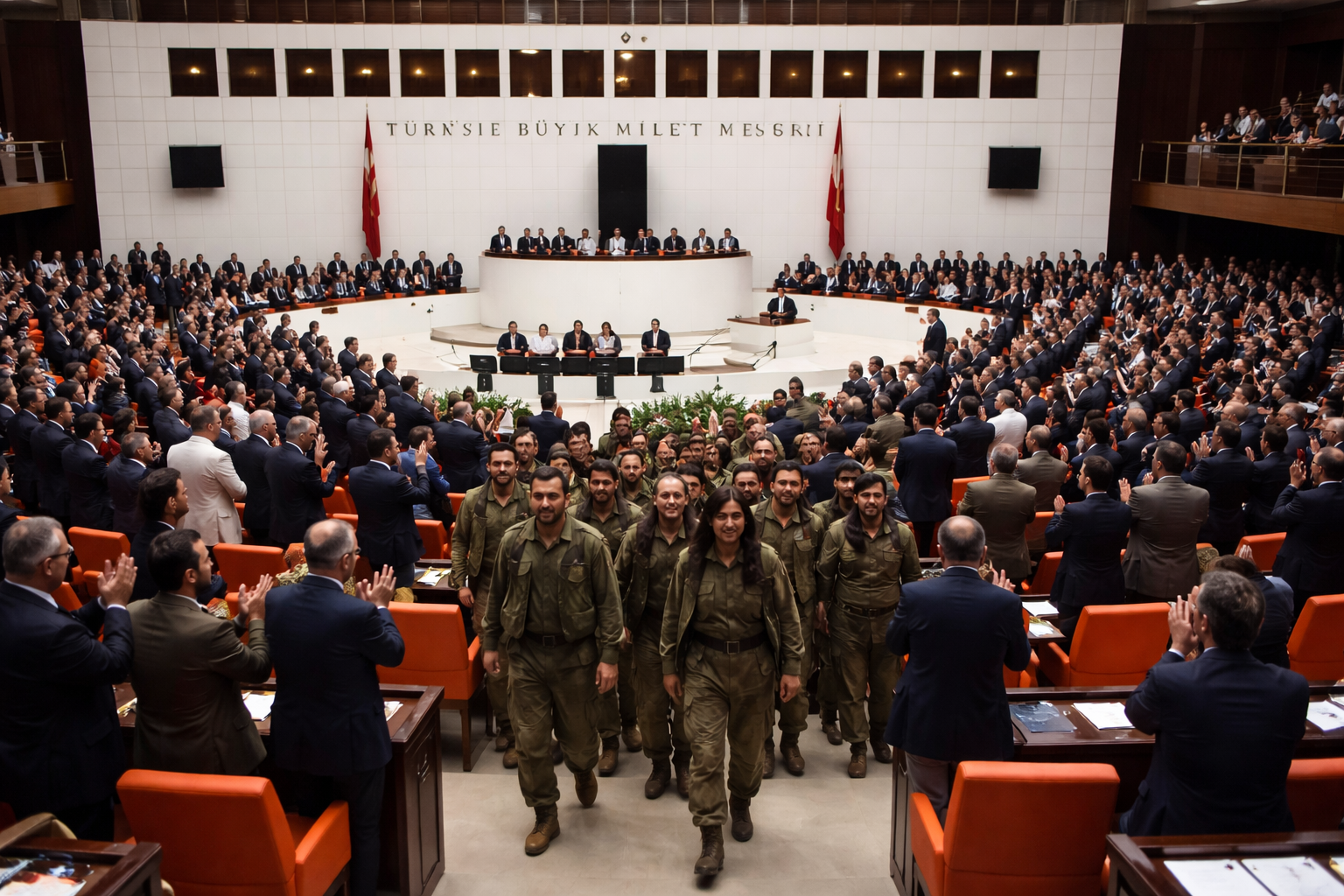
Turkey’s parliament has passed a historic law aimed at reintegrating members of the Kurdistan Workers’ Party (PKK) into civilian life under strict conditions, according to information released by government sources. After a lengthy debate, the bill received overwhelming support with a vote of 468 to 88.
The law details a process for the PKK’s disarmament and formal dissolution, providing conditional pardons and legal safeguards for several thousand detainees connected to the group. Officials have emphasized that this is not a blanket amnesty but part of a structured peace initiative.
Provisions of the PKK Reintegration Law
The legislation outlines procedures to suspend certain prison sentences and delay investigations or trials for intervals of five to ten years depending on the nature of offenses. If individuals covered under the law avoid terrorism-related crimes during this period, legal cases would be dropped, and sentences considered served.
Initial estimates indicate that around 3,500 detained PKK-linked individuals could become eligible for release. The law may also extend benefits to PKK members currently in exile or operating in Iraq and Syria. However, persons convicted of intentional homicide and some life sentence prisoners are excluded from these measures.
Implementation Conditions and Oversight
The law will only come into effect after Turkey’s National Security Council verifies the PKK’s complete disarmament and dissolution. Those eligible will then have six months to apply. The implementation process will be supervised by ministerial and parliamentary committees to ensure compliance and transparency.
Exclusion of Abdullah Ocalan and Ongoing Demands
Imprisoned PKK founder Abdullah Ocalan remains excluded from this law, according to official statements, though officials noted he could still play a role in supporting the peace process. Ocalan had publicly urged the PKK to disarm and pursue Kurdish rights through democratic channels earlier in 2025.
The PKK has recognized the law as a starting point but criticized it for existing shortcomings, insisting on Ocalan’s release and guarantees that returning fighters can engage in political activities without fear of prosecution.
Reactions and Context
Supporters of the legislation, including the pro-Kurdish Democratic Party, highlight the opportunity it presents for lasting peace and democratic progress after decades of conflict. However, nationalist opposition groups argue the government’s concessions are inappropriate, questioning negotiations with a group they describe as terrorists.
The armed conflict between Turkey and the PKK, originating in 1984, has resulted in over 40,000 deaths and significant regional instability. Previous peace efforts have faltered, and this initiative may impact regional relations, particularly with Kurdish-controlled areas in Iraq and Syria.