

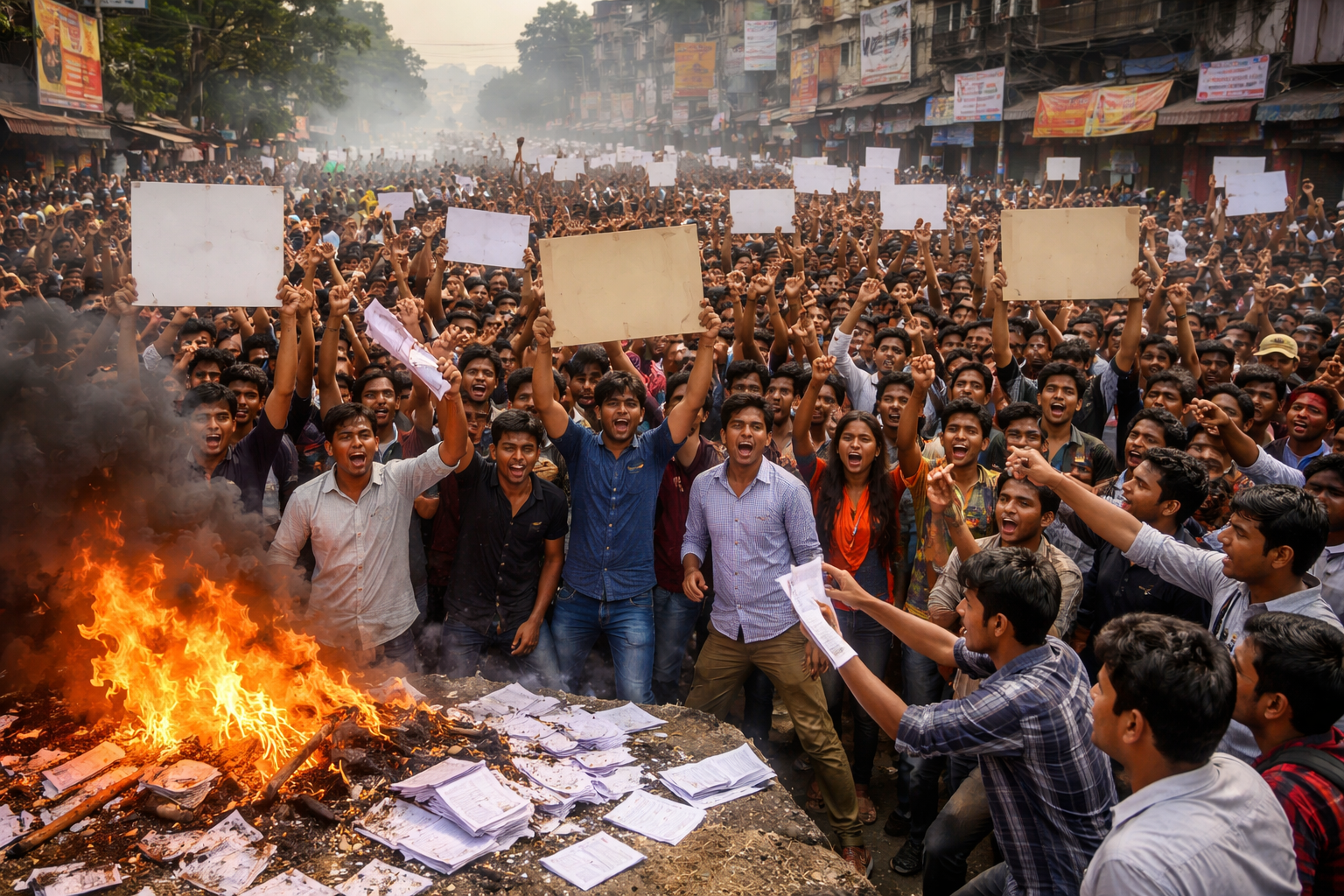
Thousands of protesters in Jharkhand, India, have intensified their demonstrations at the state parliament, calling for a federal inquiry into alleged irregularities in recruitment exams for government employment. The protests, originating on July 25 in Ranchi, the state capital, confront authorities demanding the cancellation of current exams and a more transparent hiring process, according to reports.
Police used water cannons on Monday to disperse protesters attempting to breach security barrages near the Jharkhand Legislative Assembly, signaling a significant escalation in tensions between demonstrators and officials.
The movement gained momentum after an answer sheet surfaced online, allegedly showing a candidate passing a government recruitment exam despite answering very few questions. This incident triggered widespread claims of result manipulation, leading to arrests and the resignation of the recruitment commission’s chair. However, protesters maintain that these actions do not address the deeper issues in the state’s hiring system.
Protests Driven by Unaddressed Allegations
The unrest was ignited by the recent Jharkhand Public Service Commission (JPSC) civil services exam, which offered just 103 posts despite over 2,000 candidates advancing to the next phase. The viral circulation of the questionable answer sheet intensified demands to cancel the exam results and led to calls for a federal investigation by India’s Central Bureau of Investigation (CBI), as protesters doubt the impartiality of a state police inquiry.
Protest leaders also want stricter transparency measures such as biometric verification, clearer publication of answer sheets, and accountability for recruitment agencies involved. Student groups and political activists have joined the cause, emphasizing a broader call for reforms to prevent future examination fraud.
Influence and Scope of the Movement
The Jharkhand protests echo recent demonstrations in New Delhi, where widespread outrage over leaked medical entrance exams led to notable political consequences, including the resignation of the education minister. Supporters from the Cockroach Janta Party have traveled to Ranchi to back the protests, while local student unions have actively participated.
Experts note that while inspired by Delhi’s efforts, Jharkhand’s protests draw from local traditions of political activism centered on youth rights and identity. The coalition government in Ranchi has expressed openness to dialogue, although authorities have temporarily restricted protest areas near the assembly.
Ongoing Demands and Future Prospects
Despite the government agreeing to suspend this year’s controversial JPSC exam and the resignation of three commission members, protesters continue to press for the cancellation and federal investigation of multiple recruitment exams, including the Jharkhand Staff Selection Commission’s Combined Graduate Level examination.
Demonstrators remain resolute, with hunger strikes ongoing and organizers signaling readiness to escalate action if their demands are unmet. The movement highlights widespread frustration among India’s youth over corruption and broken trust in public sector recruitment systems.