

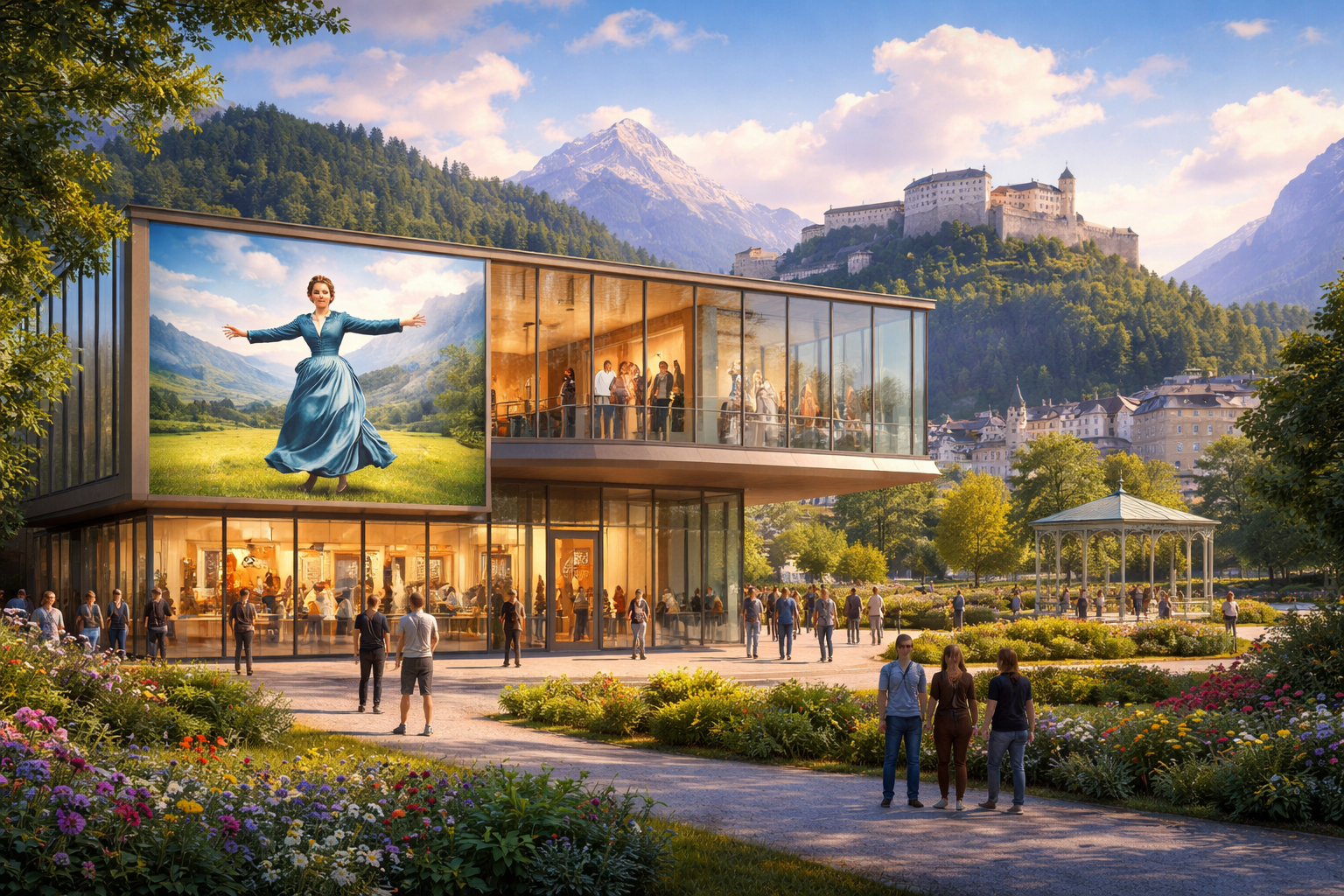
A new museum in Salzburg is inviting Austrians and international visitors alike to rediscover The Sound of Music beyond its status as a beloved musical. The exhibition aims to reconcile the city’s historically ambivalent relationship with the film and the true story behind it.
When The Sound of Music premiered in 1965, it saw a brief and muted reception in Salzburg amid lingering postwar sensitivities. Scenes featuring Nazi symbols and soldiers made local authorities uneasy, and the movie quickly faded from public attention, only resurfacing decades later as tourists flocked to the city.
Highlighting Resistance Amid the Melody
The museum, located in the coach house and hunting lodge of the historic Hellbrunn Palace, showcases original costumes, film memorabilia, and artifacts belonging to the real von Trapp family. It emphasizes the film’s underlying theme of defiance against National Socialism and celebrates the family’s unity and resilience through music.
Co-curator Matthias Bergsmann notes that beneath its sentimental exterior, the film is a story about saying no to Nazi ideology. The von Trapps’ decision to flee Austria in opposition to Hitler, leaving behind their homeland to begin anew in the United States, is at the heart of the exhibit.
Local Memories and Global Appeal
The Sound of Music’s journey in Austria reflects complex postwar cultural dynamics. Many locals initially rejected the Hollywood portrayal, criticizing its historical inaccuracies and the film’s arrival during a time when the country was still grappling with its Nazi past. For instance, the movie’s dramatization of the family’s escape over the mountains diverges from reality, where they traveled by train to South Tyrol.
Visitors from across the globe are drawn to Salzburg to experience the iconic filming locations and the new museum. The exhibit includes a reconstructed glass gazebo and a looping video of the “Do-Re-Mi” scene filmed in Mirabell Gardens, inviting guests to interact and sing along.
Restoring a Homeland Connection
Elisabeth von Trapp, granddaughter of Georg von Trapp, guides tours and appreciates Austria’s renewed embrace of her family’s legacy. She stresses the importance of telling the true story amid Hollywood’s interpretation, noting her family’s role in postwar cultural rebuilding and their clear message against repeating history’s darkest chapters.
With approximately 300,000 visitors annually coming to Salzburg for its ties to the film—on par with its attraction as the birthplace of Mozart—the museum addresses both cultural memory and tourism. It responds to growing interest, especially among younger generations inspired by The Sound of Music’s enduring themes of hope and resistance.