
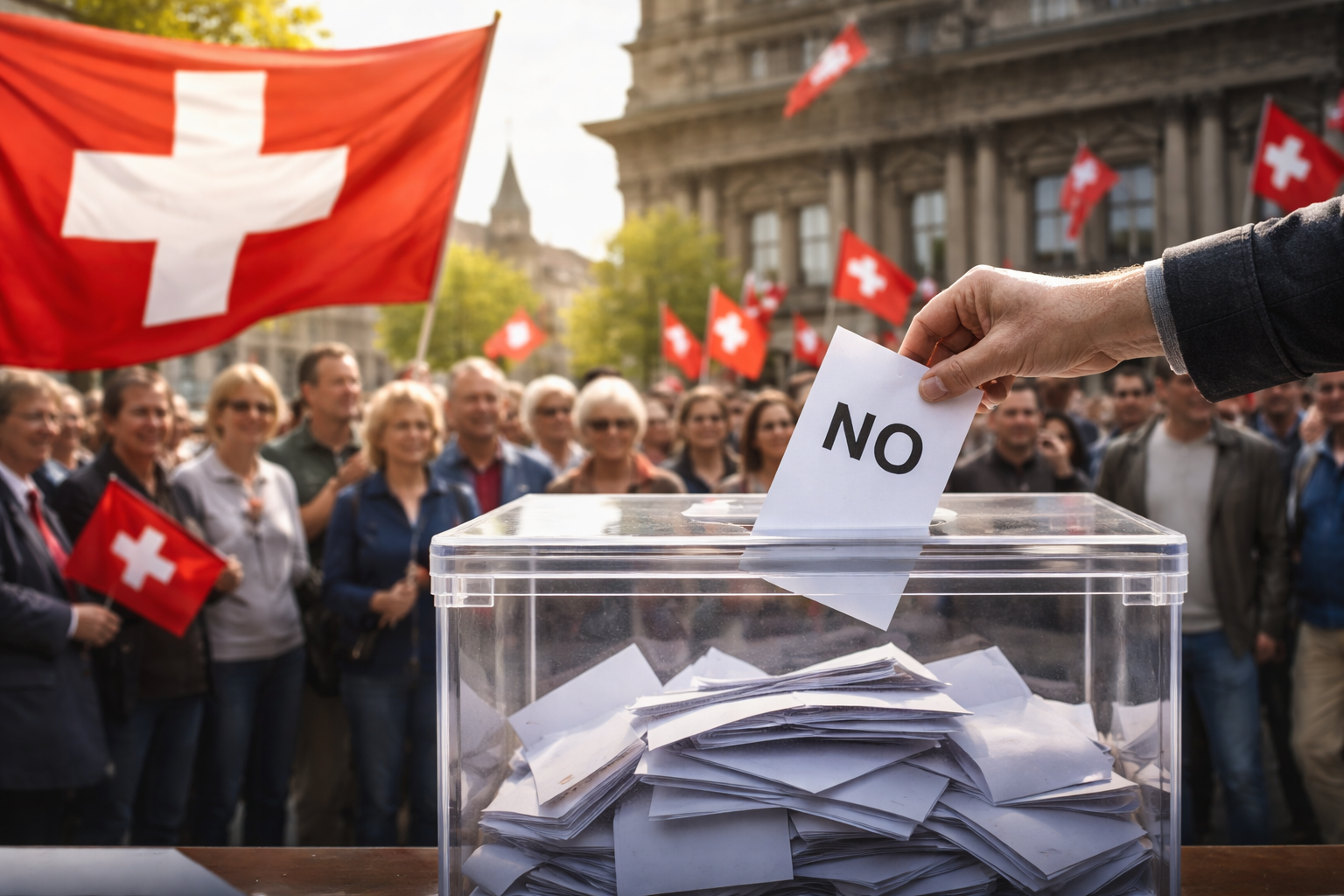
Swiss voters decisively rejected a proposal aiming to impose stricter rules on the country’s longstanding neutrality during a referendum held on Sunday, according to projections by the Swiss state broadcaster SRF. Approximately 71% voted against the initiative, while 29% supported it.
The measure, put forward by the Pro Schweiz association, a right-wing group connected to the Swiss People’s Party, sought to codify neutrality as an unconditional principle and limit Switzerland’s involvement in international conflicts or alliances unless directly attacked.
Background and Goals of the Initiative
Swiss neutrality has been recognized since the Napoleonic Wars ended in 1815 and enshrined in the constitution since 1848, but its application has historically allowed for some governmental flexibility. The Pro Schweiz group criticized what it called a drift toward closer relations with the European Union and NATO, particularly since Russia’s war in Ukraine.
The group’s objectives included enforcing neutrality permanently and unconditionally, maintaining a defensive army, avoiding involvement in third-party conflicts, refraining from joining defense alliances unless defending against an attack, and requiring United Nations approval before participating in sanctions.
Political and Public Response
Most major Swiss political parties opposed the initiative, with the sole exception of the hard-right Swiss People’s Party. The party’s vice president emphasized the importance of armed neutrality to preserve peace and diplomacy.
The Swiss foreign minister argued that neutrality requires a degree of flexibility, noting that in the contemporary international environment, treating victims and perpetrators equally is unrealistic.
Simultaneous Referendum on Food Security
Alongside the neutrality referendum, Swiss voters also rejected a food security initiative aiming to boost domestic production to ensure affordable, high-quality food availability. Similar to the neutrality vote, about 72% opposed the measure, with 28% in favor.