
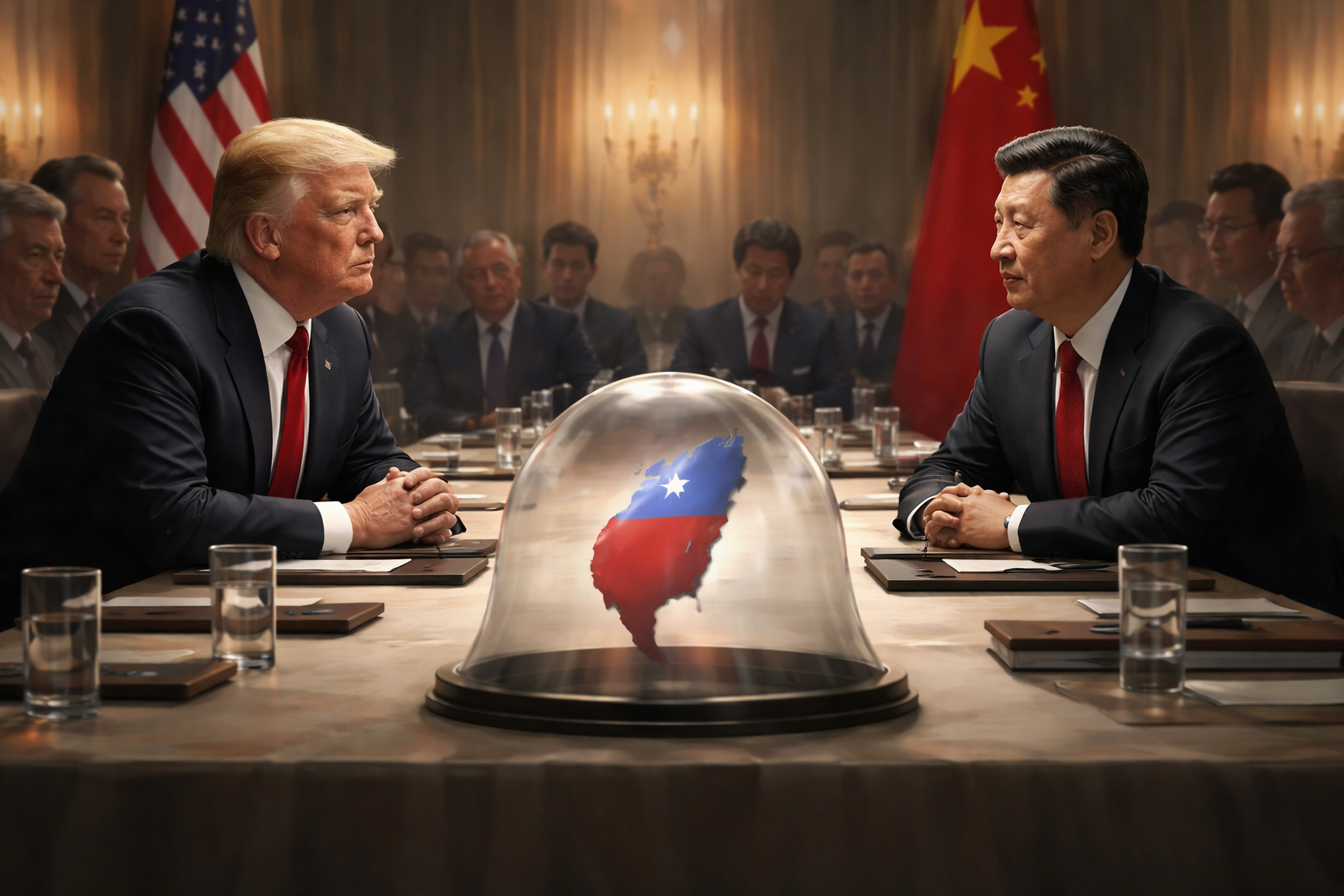
During a high-profile state visit to Washington, Chinese leader Xi Jinping and U.S. President Donald Trump refrained from publicly discussing the sensitive issue of Taiwan. Despite the longstanding tension between Beijing and Washington regarding the island, neither leader addressed it openly in their public remarks.
Trump welcomed Xi directly at the airport and highlighted the shared history during World War II, notably referencing American pilots who fought alongside China against Japan. However, these references pertained to the Republic of China before the establishment of the People’s Republic of China in 1949, now centered in Beijing, while the former government relocated to Taiwan.
Backstage Conversations on Taiwan
Although Taiwan was absent from public discourse, sources noted that the topic was addressed behind closed doors. According to reports, Xi expressed strong opposition to U.S. military support for Taiwan and urged Washington to oppose Taiwanese independence. China’s official news agency conveyed Xi’s insistence on safeguarding China’s national unity and territorial integrity, framing these as clear priorities.
Analysts suggest that Xi used the meeting to influence Trump’s stance regarding American arms sales to Taiwan, which Trump had recently put on hold. The future of a $14 billion arms deal with Taiwan remains uncertain, amidst complex U.S. domestic politics and trade relations with China.
Taiwan’s Strategic Importance and U.S.-China Relations
Taiwan has been a persistent point of contention since World War II. The U.S. acknowledges the ‘one China principle,’ recognizing the government in Beijing as the sole legal representative of China while maintaining unofficial ties with Taiwan under the Taiwan Relations Act. This act permits arms sales to Taiwan and allows the U.S. to act militarily to maintain the status quo in the Taiwan Strait.
The potential for conflict involving Taiwan carries significant risks not only for regional stability in Asia-Pacific but also for the global economy due to intertwined supply chains. Observers caution that military action against Taiwan would trigger severe military and economic repercussions.
Implications for Future U.S. Policy
Trump’s administration faces domestic pressures ahead of upcoming elections, particularly from agricultural sectors reliant on Chinese imports. China’s substantial reduction in U.S. agricultural purchases amid trade tensions underscores these stakes.
Experts note that Taiwan’s population views its status as an existential concern, and they disapprove of Taiwan being used as a bargaining chip in U.S.-China negotiations. Nonetheless, some analysts remain skeptical that China would initiate military conflict over Taiwan, citing the catastrophic consequences of such a move.