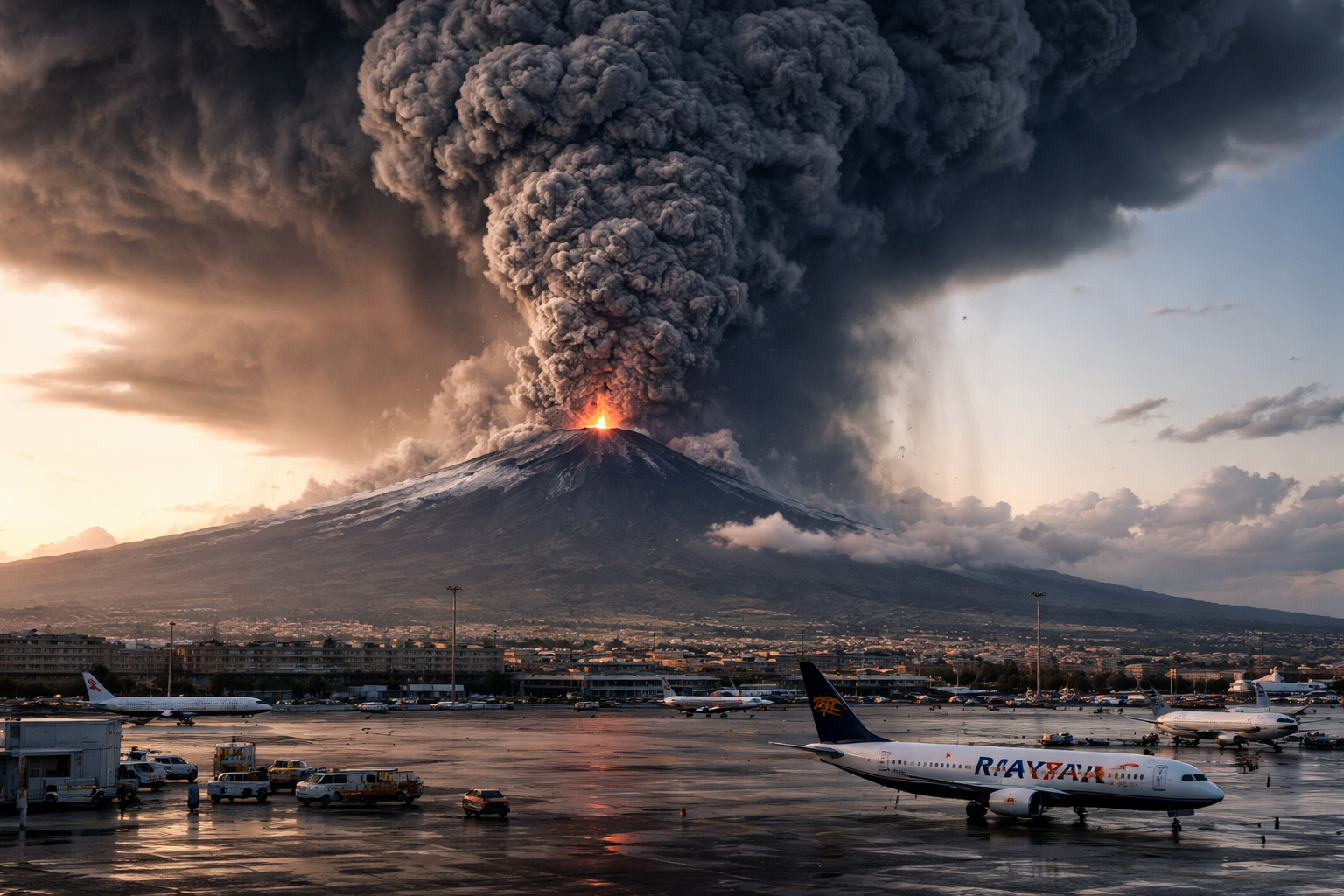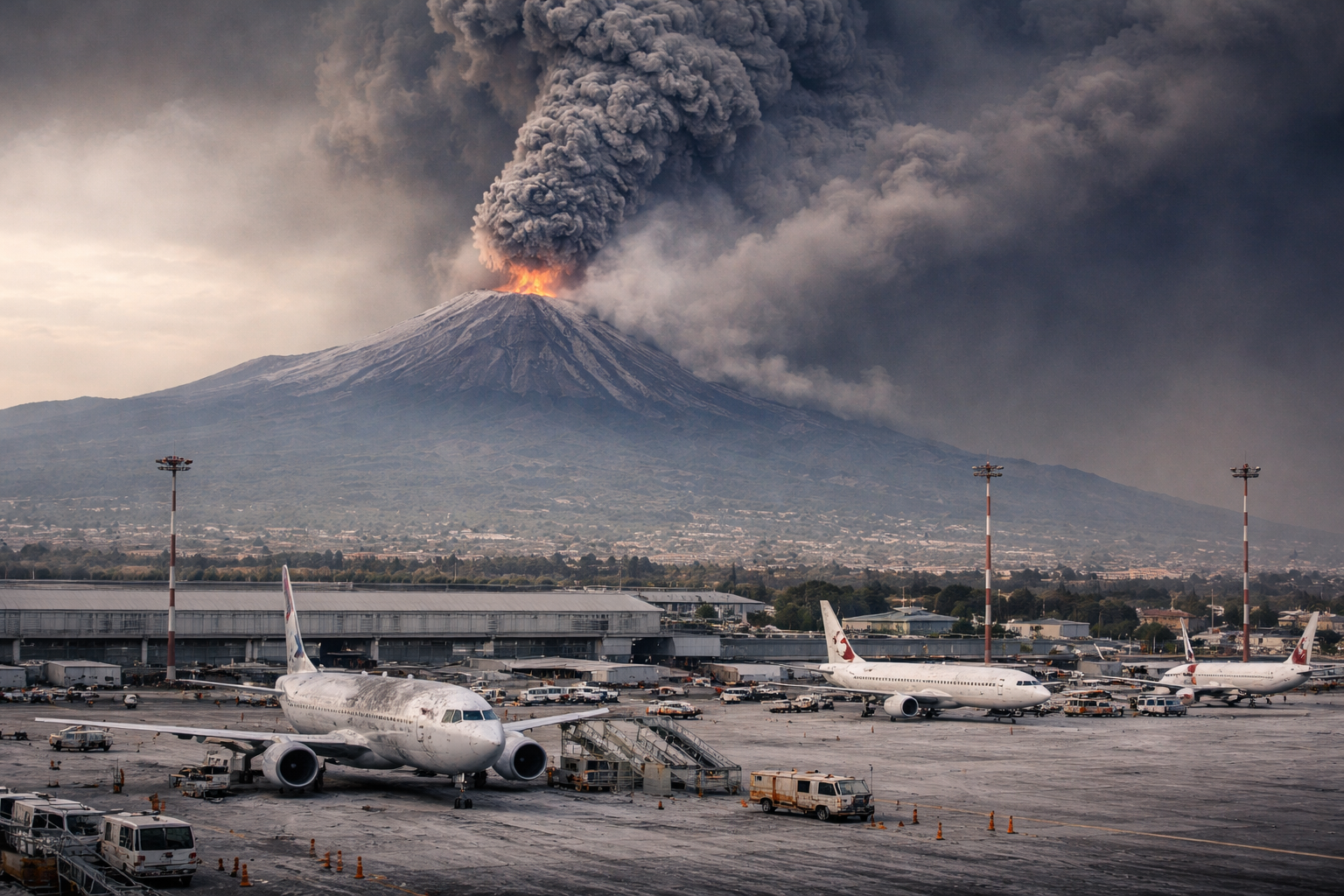

Flight restrictions at Catania Airport in Sicily were extended on Monday as a thick ash cloud from Mount Etna disrupted air traffic once more. The airport operator, SAC, announced a suspension of all flight operations at the airport until at least midnight local time on Monday.
Authorities advised passengers to verify their flight status before heading to Catania Airport, which is the fifth busiest in Italy and the main hub for Sicily. When possible, arrivals and departures are being rerouted to Palermo and Comiso airports.
Volcanic Ash Clouds Prompt Flight Suspensions
The cause of the disruption is ash emanating from the northeast crater of Mount Etna, carried southward by the wind. Although the Italian Institute of Geophysics and Volcanology reported that the ash does not signal an imminent explosive eruption, the presence of volcanic ash in the airspace poses safety concerns for flight operations.
Mount Etna’s Impact on Regional Air Travel
Mount Etna is one of Europe’s tallest and most active volcanoes, located just north of the city of Catania. Its frequent activity has caused recurrent interruptions to flights at Catania Airport this year and in previous years. The island of Sicily is a popular tourist destination, and disruptions caused by Etna’s eruptions and ash emissions have been particularly challenging during the summer travel season.
About Mount Etna
Mount Etna stands approximately 3,400 meters (11,100 feet) tall on Sicily’s eastern coast, though its height varies with volcanic activity. It is Italy’s highest peak south of the Alps and has been active for about half a million years. Recognized as a UNESCO World Heritage Site, the volcano holds cultural significance in Greek and Roman mythology, believed to be the forge of gods Vulcan or Hephaestus.