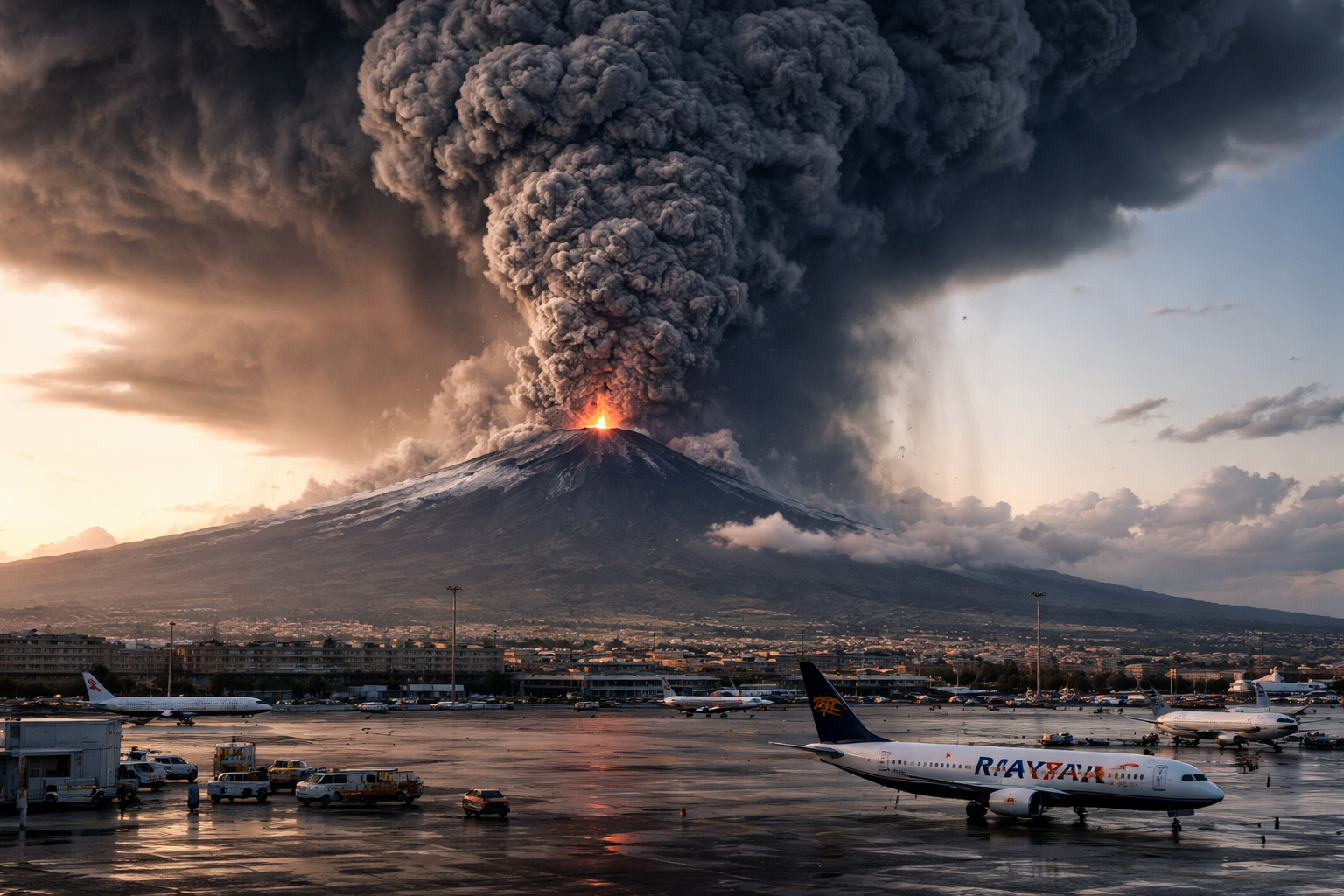

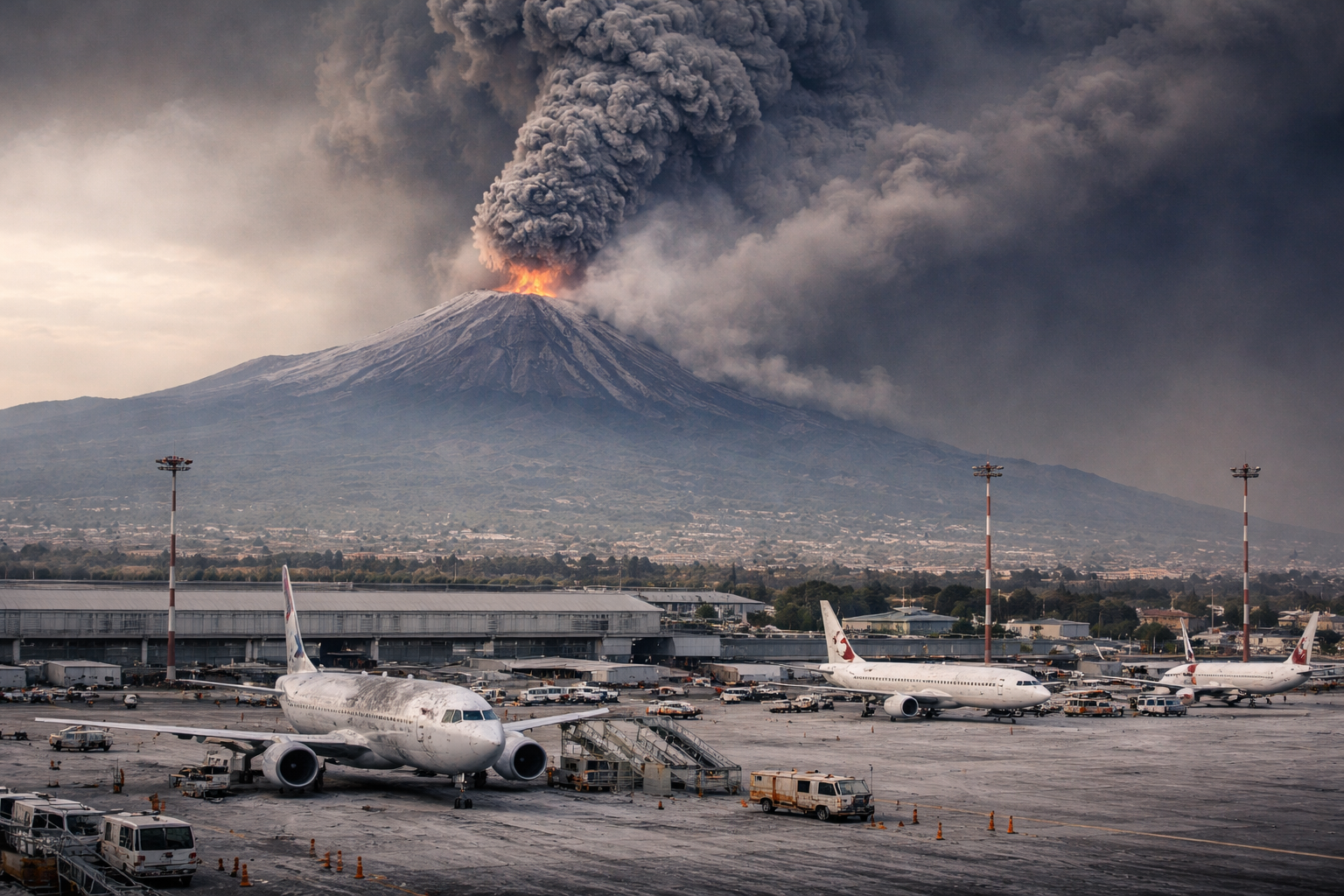
Flight operations at Italy’s Catania Airport were suspended again on Monday due to a dense ash cloud emitted by Mount Etna. The airport’s management company SAC announced that flights would be halted until at least midnight local time, prompting a temporary shutdown of the island’s largest air travel hub.
Passengers were advised to verify their flight status before traveling to Catania, as several arrivals and departures were redirected to Palermo and Comiso airports when possible. Catania Airport ranks as Italy’s fifth-busiest and serves as a critical gateway for tourists visiting Sicily, a popular Mediterranean destination.
Volcanic Activity and Its Effects on Air Travel
The ash cloud originated from Mount Etna’s northeast crater and was carried south by prevailing winds. Despite the disruptions, the Italian Institute of Geophysics and Volcanology (INGV) clarified that the ash emissions do not currently signal an imminent explosive eruption phase.
Mount Etna’s Profile and Historical Significance
Mount Etna is a stratovolcano approximately 3,400 meters (11,100 feet) tall located on Sicily’s eastern coast near Catania. It is among Europe’s tallest active volcanoes and holds the distinction of being Italy’s highest peak south of the Alps. The volcano is known for its nearly constant low-level activity and frequent eruptions, which have caused several flight interruptions at Catania Airport over recent years.
The site holds UNESCO World Heritage status due to its geological importance and has been active for around half a million years. In classical mythology, Etna was believed to house the forge of the blacksmith god, either Vulcan or Hephaestus.