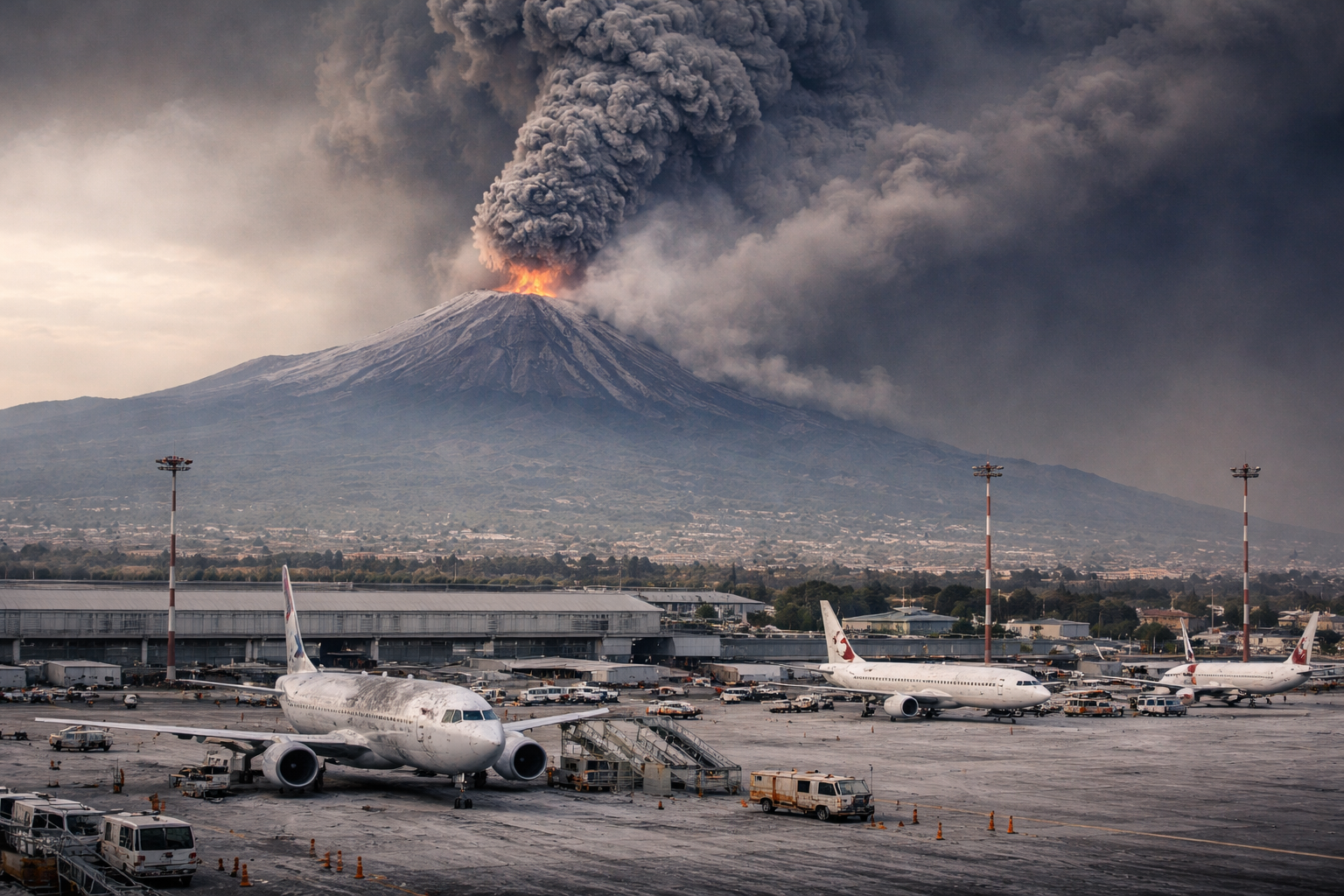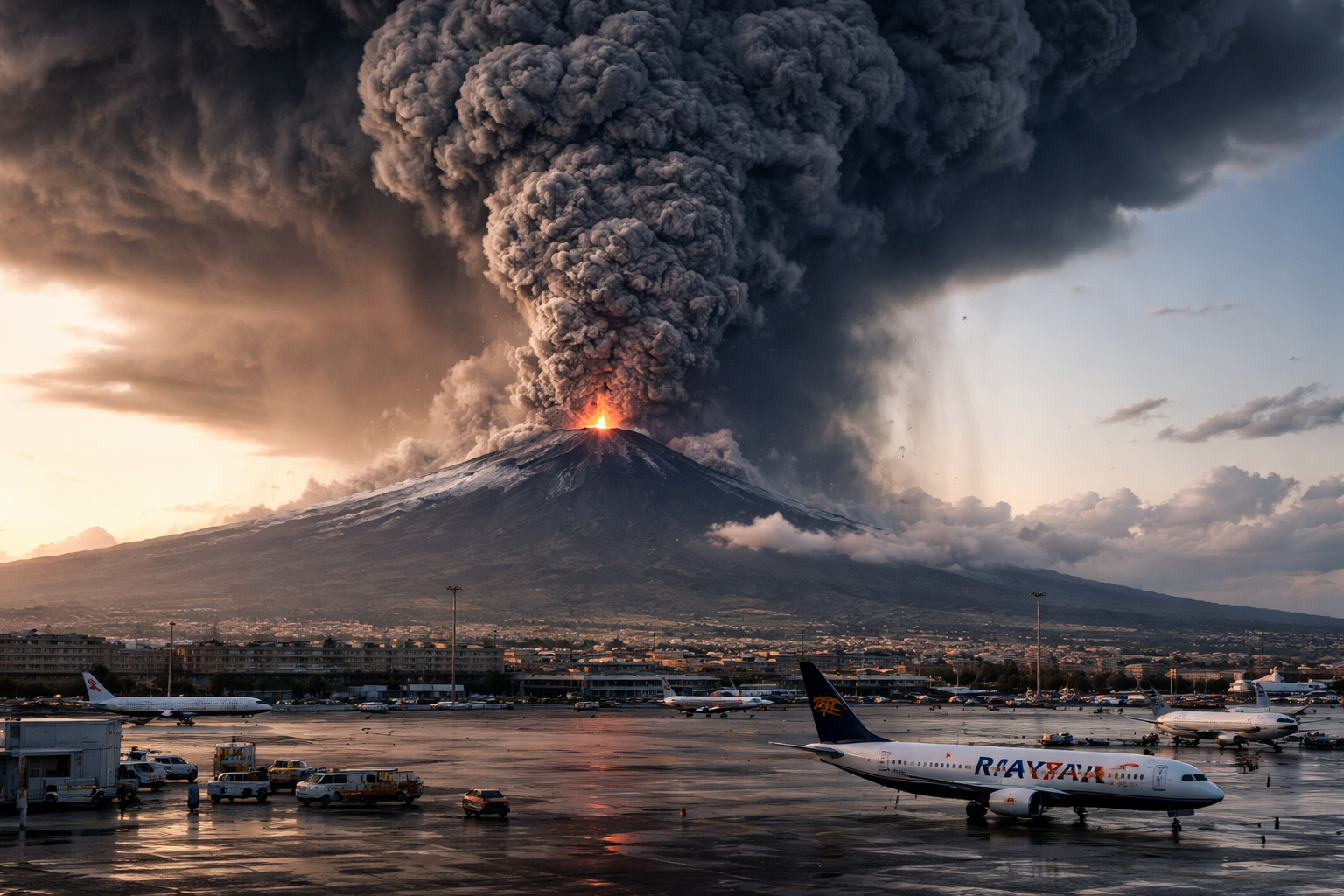
Flight operations at Catania Airport in Italy were suspended until at least midnight local time on Monday due to thick ash clouds from Mount Etna. The airport operator, SAC, halted all flights as a precaution amid the volcanic activity, impacting one of Sicily’s primary travel hubs.
Where feasible, arrivals and departures have been redirected to other Sicilian airports such as Palermo and Comiso. Catania Airport is Italy’s fifth-busiest airport and the largest on the island, making the disruption significant for travelers.
The Mediterranean island attracts many visitors, but volcanic ash from Etna has frequently caused flight interruptions this summer. Authorities advise passengers to verify flight status before traveling to the airport.
Mount Etna’s Activity and Impact on Flights
The ash cloud originates from Etna’s northeast crater and is being carried southward by winds. The Italian Institute of Geophysics and Volcanology (INGV) has reported no signs indicating an imminent explosive eruption despite the ash emissions.
About Mount Etna
Mount Etna is a stratovolcano reaching about 3,400 meters on Sicily’s eastern coast near Catania. It is Europe’s tallest active volcano and Italy’s highest peak south of the Alps. Etna’s elevation can change due to frequent eruptions and volcanic activity.
Having been active for approximately half a million years, the volcano remains in an almost constant state of low-level activity with occasional significant eruptions. This year alone, Etna’s activity has disrupted flights multiple times.
Cultural and Historical Significance
Mount Etna is a UNESCO World Heritage Site with notable cultural ties. In ancient Roman and Greek mythology, the volcano was said to house the forge of the god of blacksmithing, either Vulcan or Hephaestus.