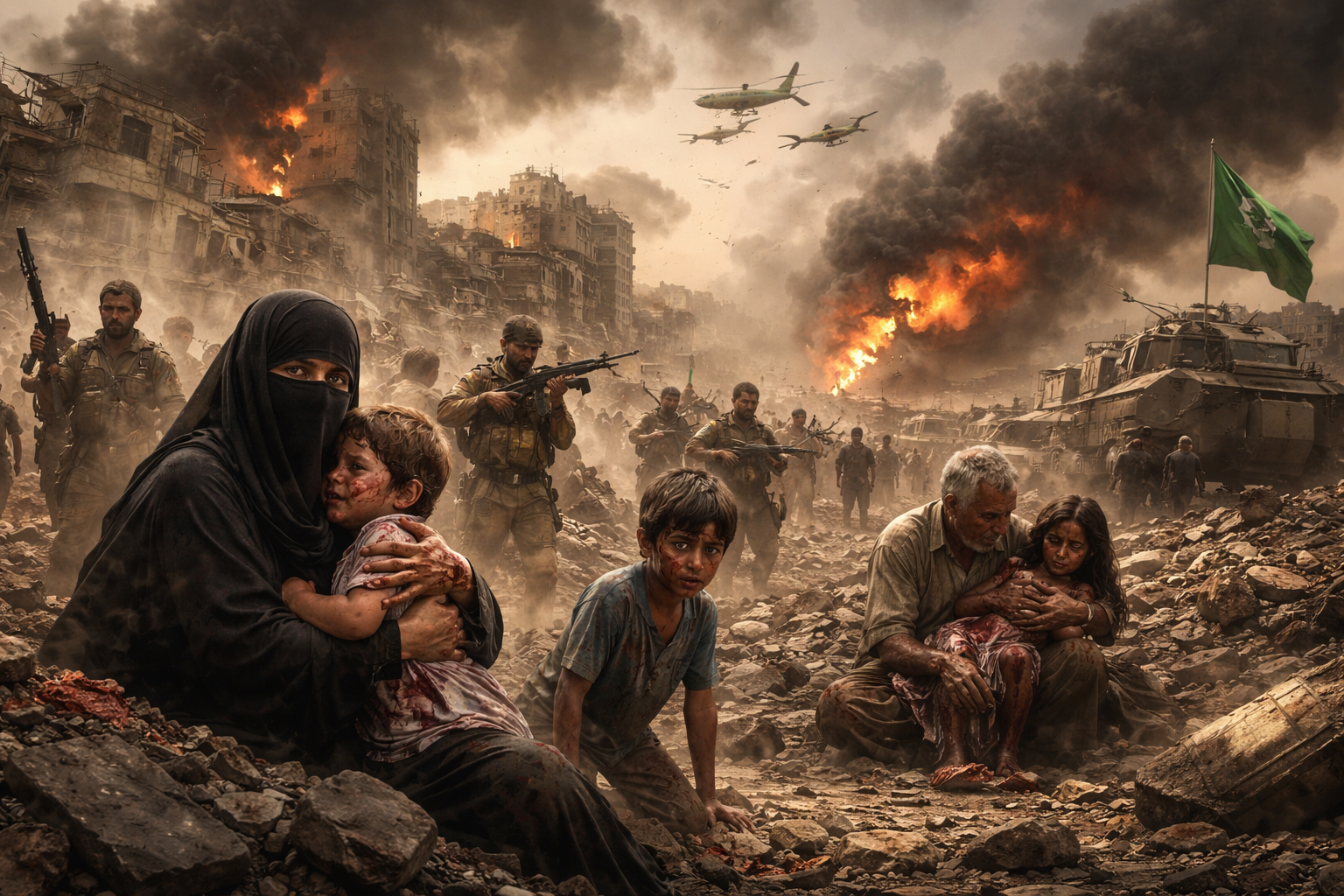

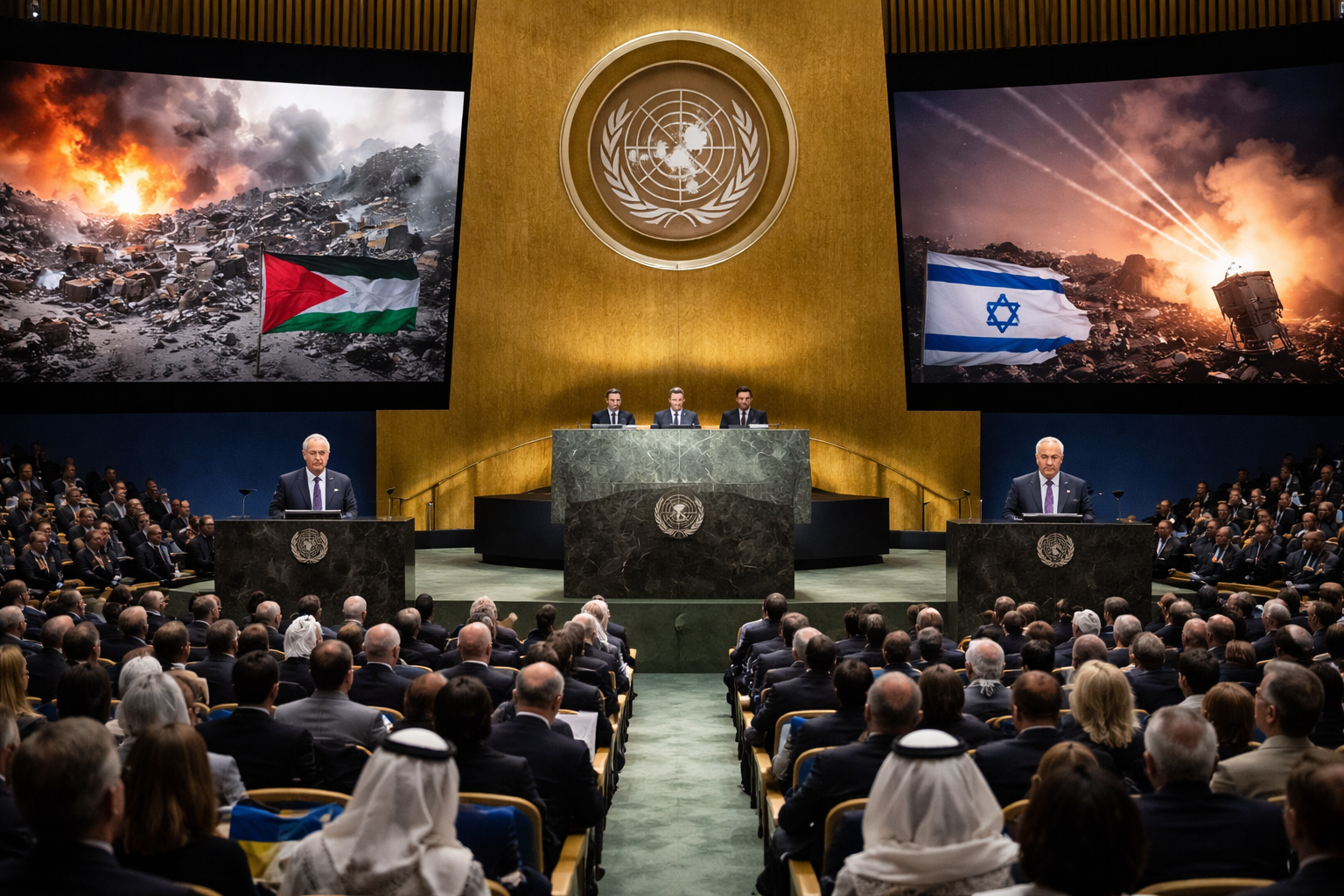
The ongoing conflict in Gaza took center stage on the third day of the United Nations General Assembly, with Israeli leader Benjamin Netanyahu and Palestinian President Mahmoud Abbas addressing representatives on the escalating crisis and prospects for peace. Both leaders delivered statements highlighting starkly contrasting narratives about the situation in Gaza and the broader Israeli-Palestinian conflict.
According to reports, Netanyahu firmly denied allegations of genocide against Israel, describing such claims as “the greatest lie of the century.” He accused Hamas of using Palestinian civilians as human shields and cited Israeli efforts to protect civilians, including the administration of a million polio vaccinations and the delivery of two million tons of food into Gaza. Meanwhile, Abbas condemned Israel’s actions as a “genocidal war” and “ethnic cleansing,” urging support for a two-state solution based on international law and Palestinian self-determination.
Netanyahu’s Speech Highlights Security Concerns and Accusations
Netanyahu opened his speech by recalling his 2012 address to the General Assembly, where he set a “red line” regarding Iran’s nuclear ambitions. He asserted Israel’s successful efforts to prevent Iran from acquiring nuclear weapons, framing this as a vital action for the survival of the region. Addressing criticisms during his speech, Netanyahu responded to a visible walkout by many delegates, challenging those who left as “moral cowards.” He called out New York’s mayor Zohran Mamdani for spreading what he termed an “antisemitic” message linked to accusations against Israel.
Abbas Calls for Protection of Palestinian Rights and Two-State Solution
Speaking remotely due to denied U.S. visas for Palestinian delegates, Abbas emphasized the Palestinian aspiration for a peaceful, democratic state coexisting alongside Israel. He condemned Israeli military occupation, settlement expansion, and settler violence as threats to Palestinian homelands. Abbas called for safeguarding lands intended for a future Palestinian state with East Jerusalem as its capital and reiterated the Palestinians’ commitment to international law and negotiations for lasting peace and security.
Additional UNGA Discussions on Regional and Global Issues
The UN General Assembly also tackled other key global concerns, including rising sea levels threatening nearly 900 million people worldwide. Separately, Nigeria and the United States announced an agreement to boost American investment in Nigeria’s mining sector. The Assembly featured remarks on the Ebola outbreak in the Democratic Republic of Congo and calls by various leaders for reforms at the UN Security Council, emphasizing equitable representation.
The session underscored the complexity and urgency of the Middle East conflict while highlighting the diverse array of challenges the international community faces at this pivotal gathering.