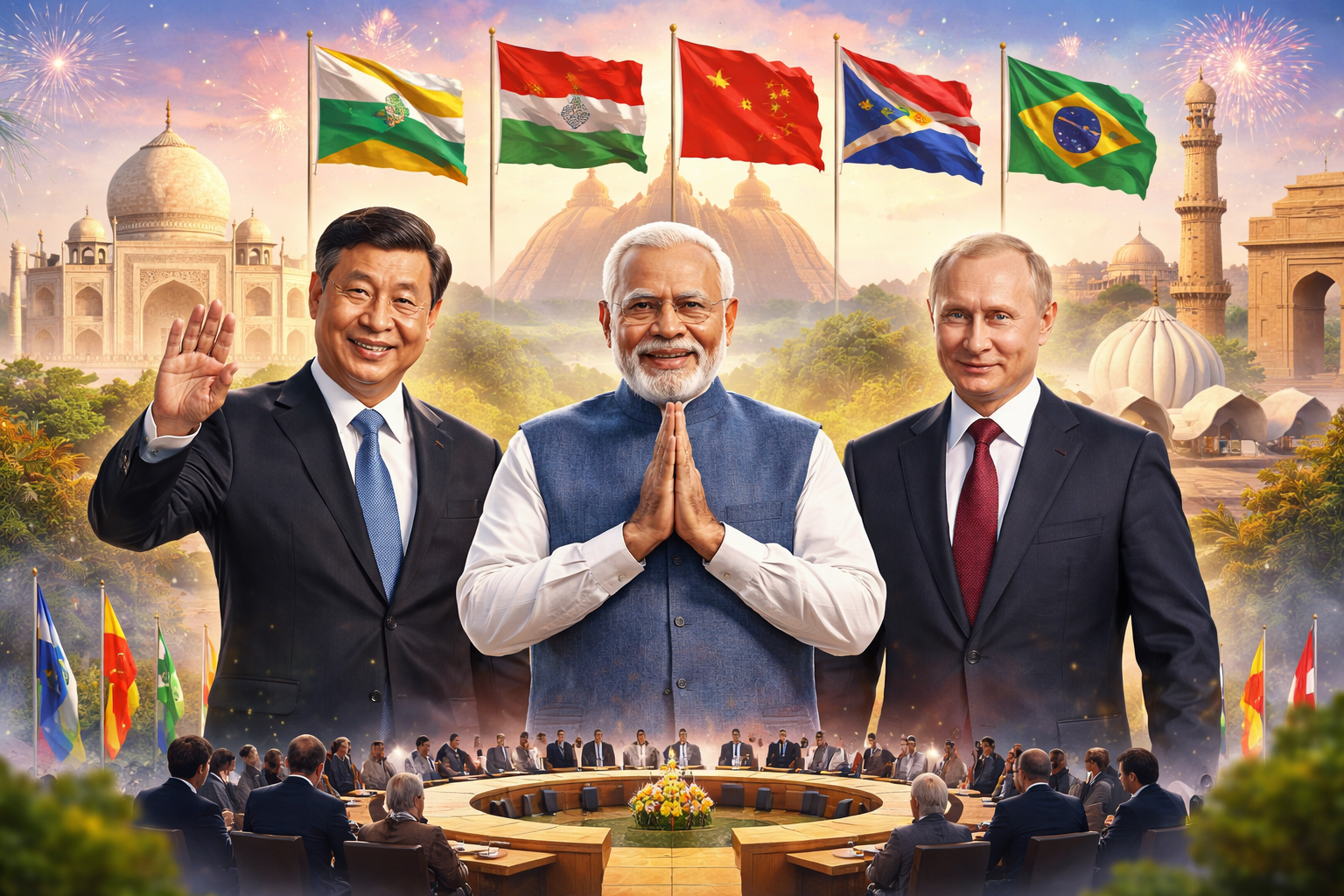
India is hosting the 18th BRICS summit in New Delhi, bringing together key leaders including China’s Xi Jinping and Russia’s Vladimir Putin. The summit marks the first official visit by Xi to India since 2019 and arrives at a pivotal moment as India’s year-long BRICS presidency concludes.
Prime Minister Narendra Modi is intensifying diplomatic engagement with both Beijing and Moscow while maintaining a cautious stance toward Washington amid strained relations. Modi previously met Xi and Putin in late August and early September at the Shanghai Cooperation Organisation summit in Kyrgyzstan, and will now engage with them again at the BRICS summit hosted in Delhi.
Complex India-China Relations in Focus
India and China remain locked in a relationship described as “armed coexistence and managed competition.” Despite a 2024 border patrol agreement that eased a four-year military stalemate, substantial differences persist. Issues such as a significant trade deficit—reported at over $112 billion—and disagreements over market access continue to challenge bilateral ties.
The Modi-Xi meetings are under careful scrutiny for any indications of diplomatic progress, particularly concerning trade and investment. However, experts caution against interpreting the summit as signaling a full reset of relations, noting ongoing border militarization and unresolved security issues.
BRICS Expansion and Internal Divisions
Since its inception with five members, BRICS has expanded to 11 countries, including Brazil, South Africa, Indonesia, Egypt, Iran, and the UAE. This diversification has exposed significant internal divisions, especially conflicting positions regarding conflicts in the Middle East and Ukraine.
Efforts to issue a unified BRICS statement on the Middle East were unsuccessful earlier this year, forcing India to release a unilateral chair’s statement. With Iran’s President Masoud Pezeshkian expected at the summit, these diplomatic fissures are likely to be a major focus of discussions.
Balancing Act Amid Great Power Rivalries
India’s approach to BRICS reflects a strategic autonomy aimed at preserving space to engage with multiple global powers without exclusive alignment. While seeking reforms in economic governance and advocating for greater use of national currencies in trade among BRICS countries, India avoids challenging the dominance of the US dollar or allowing BRICS to become a China-led anti-Western bloc.
Experts describe India’s foreign policy as an “America Plus” strategy, emphasizing deepening economic and security ties with the West alongside maintaining relations with Russia and China for strategic reasons. This approach faces increasing pressure as rivalries among global powers intensify, with uncertainties about how Russia’s closer ties with China might affect regional balances.
The BRICS summit in Delhi will test India’s ability to advance its priorities while managing complex geopolitical relationships and internal divisions within the grouping, highlighting its diplomatic balancing act on the global stage.