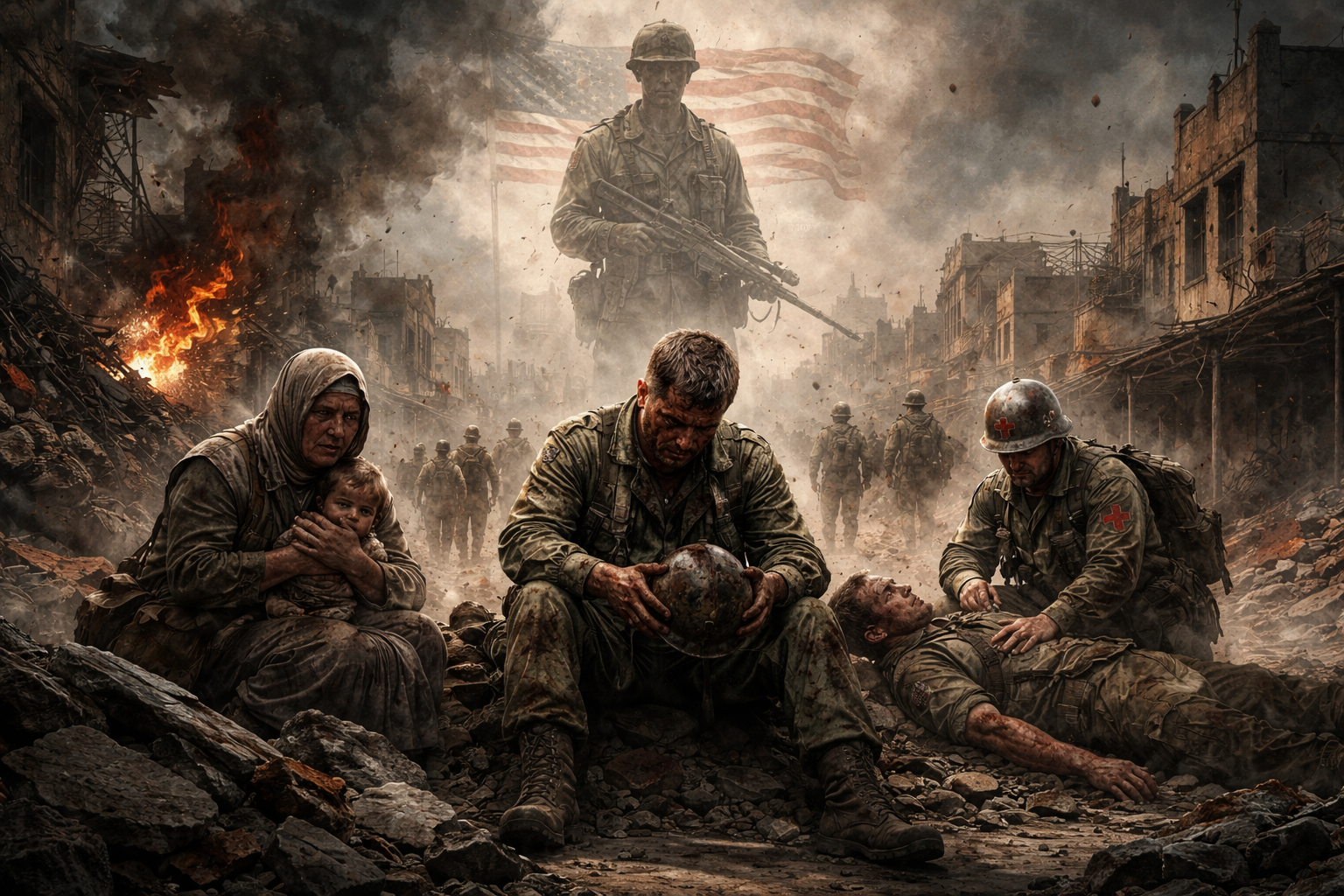
The way wars are narrated influences how they are understood and conducted, a dynamic explored deeply by classical scholar Alice König and reflected in contemporary conflicts from Ukraine to Gaza. Traditional war stories often emphasize heroism and sacrifice, masking the brutal realities faced by individuals, particularly women, and the broader human cost of violence.
Charlotte Higgins, a chief culture writer, highlights that while official commemorations have dignity and respect, they often lack full truthfulness. Poets like Wilfred Owen have historically exposed the grim realities of combat, countering sanitized heroic depictions with haunting images of exhaustion and suffering. This tension between mythic storytelling and lived experience underscores the importance of new narratives that confront war’s complexities honestly.
War Narratives Shape Reality and Culture
König points out that stories about war, whether in poetry, prose, or art, do more than recount events—they shape expectations and behaviors and influence future conflicts. Vladimir Putin’s repeated references to the Second World War to justify the invasion of Ukraine exemplify how dominant war stories can be leveraged politically and culturally to legitimize ongoing violence.
Christina Lamb, a war correspondent, calls attention to the persistent silence around sexual violence in conflict, which has been normalized throughout history despite being recognized as a war crime only in 1998. This entrenched narrative marginalizes the experiences of survivors and perpetuates the use of rape as a tool of warfare.
Artists and Writers Offer New Modes of Remembrance
Amid ongoing wars, Ukrainian artists and writers continue to innovate forms that better capture the fragmented and painful realities of conflict. Sasha Dovzhyk, for example, blends documentary elements with folklore in her book Apocalypse Baroque, creating a “documentary fairytale” that conveys the unsettling texture of life under invasion. Films by Alisa Kovalenko provide intimate firsthand accounts of wartime sexual violence and personal messages to loved ones, deliberately avoiding false heroism.
Artist Dasha Chechushkova’s creation of modest “situational gardens” serves as a poignant act of communal remembrance despite widespread destruction. These ephemeral flowerbeds honor the dead humbly, emphasizing resilience over grandeur. At Edinburgh’s Talbot Rice Gallery, Chechushkova’s etchings after Goya and Palestinian artist Taysir Batniji’s simple soap installation—a stack of bars engraved with the phrase “nothing is permanent”—invite reflection on war’s bleakness and the transient nature of life.
A Call for Truthfulness in War Stories
These artistic interventions challenge dominant patriarchal war narratives by offering honesty and emotional complexity. They resist jingoistic fervor and instead express depression, helplessness, mourning, and the persistence of memory. Through such works, the act of storytelling becomes a vital part of survival and remembrance, proving life’s continuity and honoring those lost.
As wars continue to reshape societies and politics, embracing more truthful and inclusive war narratives is crucial. They not only deepen public understanding but also confront and challenge the misuse of history and mythology in sustaining conflict and power.