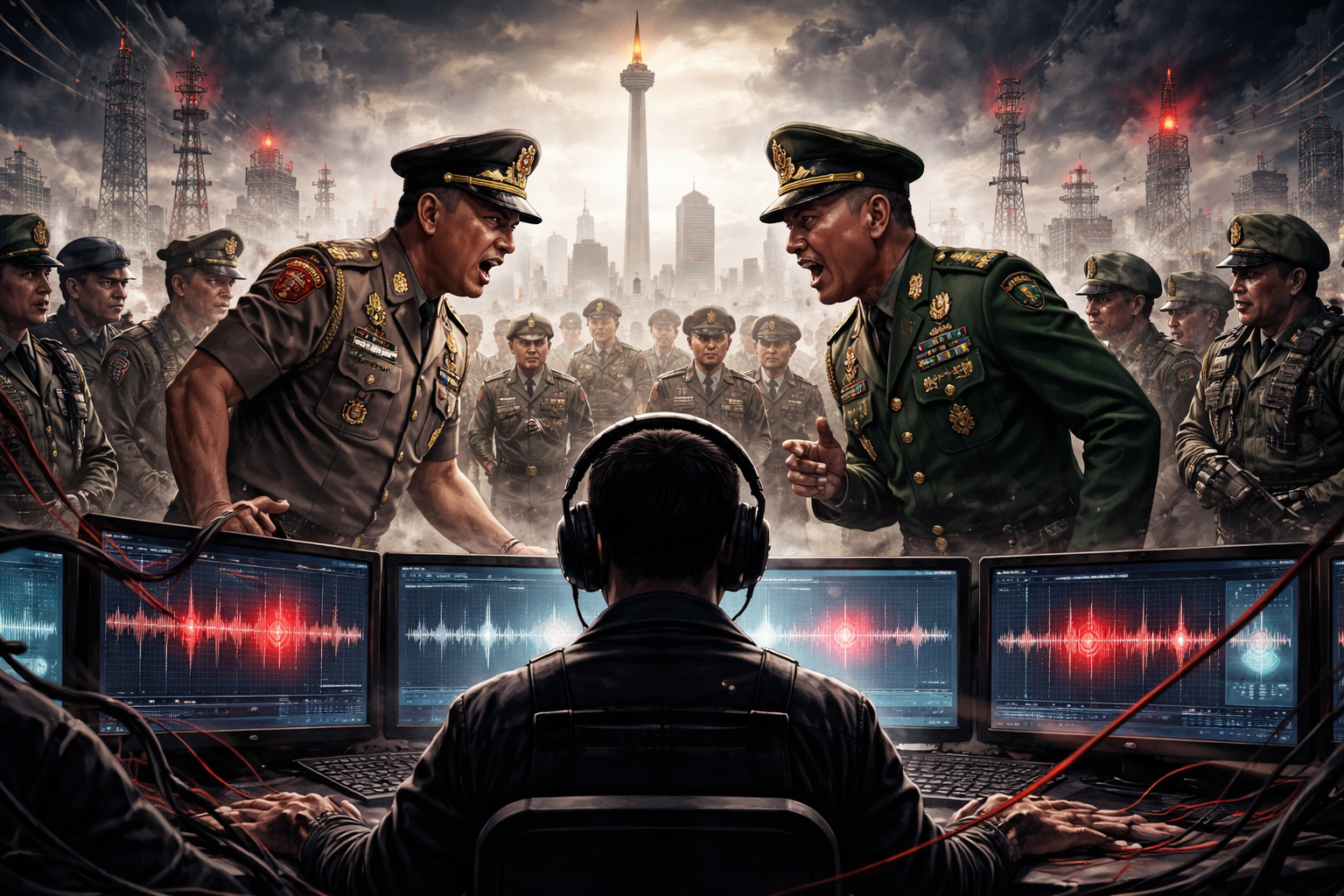
Indonesia is grappling with a political crisis after senior police officers were accused of conducting unauthorized wiretapping targeting President Prabowo Subianto and other prominent figures. Indonesian authorities named four high-ranking officers as suspects in what is described as an illegal surveillance operation from 2025 to 2026.
The scandal has thrust long-standing concerns about the misuse of surveillance by police and intelligence agencies into the political spotlight. Investigators allege these officers intercepted communications without proper permission and subsequently attempted to erase evidence of the operation.
Key Figures and Investigations
Among those arrested is the former national police chief Listyo Sigit Prabowo, who had recently transitioned to become the president’s chief of staff shortly before the allegations became public. The new police chief, Suyudi Ario Seto, revealed to a parliamentary panel that the wiretapping extended beyond the president to include officials in the presidential palace, ministries, state institutions, lawmakers, political party leaders, governors, anti-corruption officials, activists, and students.
A parliamentary commission is currently investigating the motives behind the wiretapping and whether additional senior officials were complicit. Meanwhile, police have opened probes into potential treason-related offenses connected to the case.
Political Fallout and Security Establishment Divisions
This wiretapping controversy has intensified tensions between President Prabowo and his predecessor, Joko Widodo, known as Jokowi. Although Prabowo came to office with support from Jokowi, including a politically significant alliance involving Jokowi’s son as Prabowo’s running mate, the security establishment remains influenced by networks developed during Jokowi’s decade-long administration.
In recent months, President Prabowo has reshuffled top government and police positions, aiming to consolidate control amid these factional divisions. Yet analysts caution that replacing one political faction within security forces with another does not address fundamental institutional problems.
Broader Concerns Over Surveillance Misuse
Experts highlight that Indonesia’s police and intelligence agencies have historically lacked robust legal constraints on eavesdropping activities, making unauthorized surveillance a persistent issue. Amnesty International has urged investigations into the possibility that wiretapping was used to intimidate critics and suppress civil liberties.
Researchers warn the scandal represents a systematic abuse of power enabled by the police’s direct accountability to the president, which risks subordinating law enforcement to political interests rather than the rule of law. Calls are growing for comprehensive reforms to unify Indonesia’s fragmented surveillance laws and strengthen oversight of police and intelligence interception capabilities.
Without meaningful institutional reform, analysts warn that politically divided loyalties within Indonesia’s security apparatus could continue to undermine governance and public trust.