

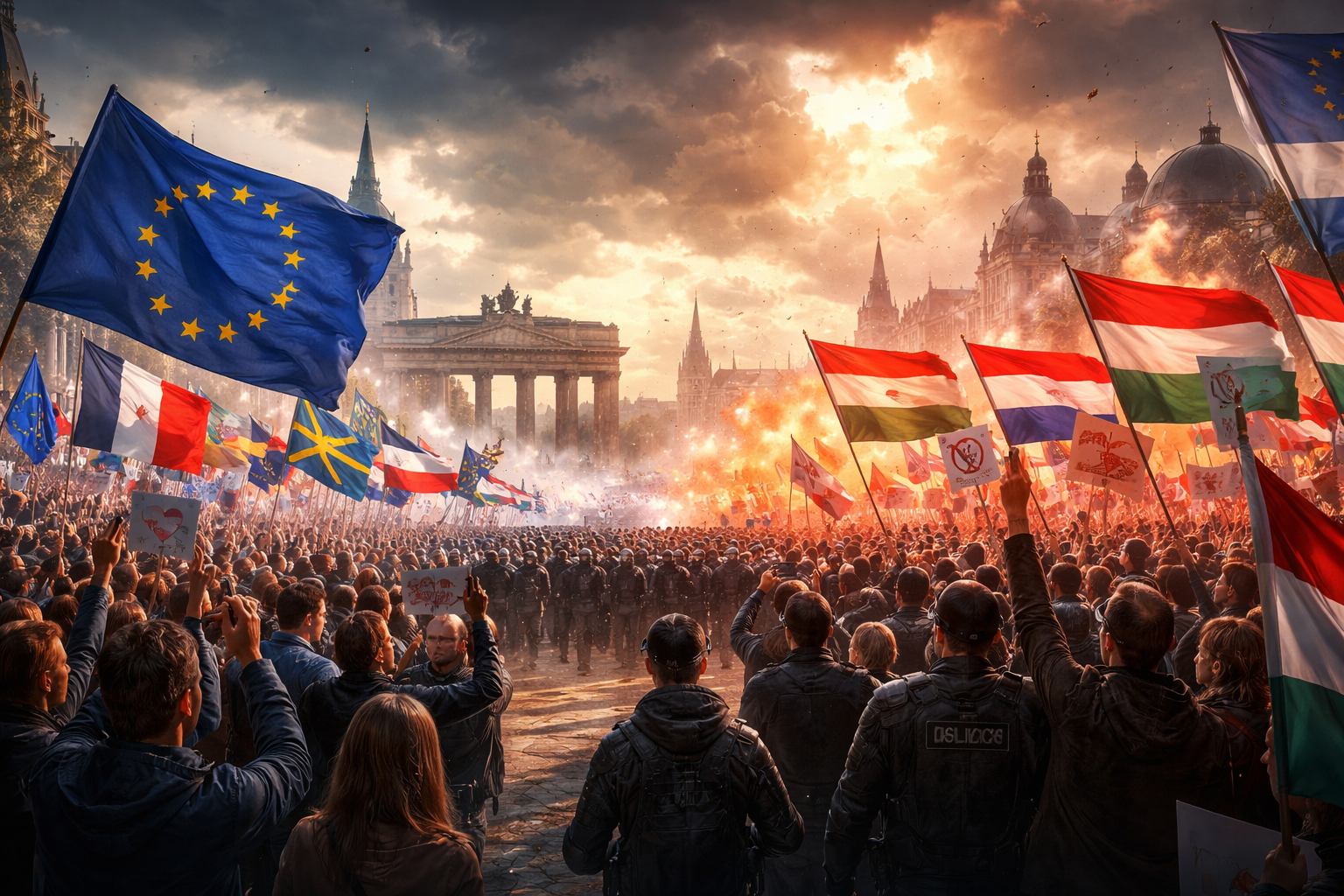
European democracies are confronted with a renewed surge of nationalism and far-right political influence, raising concerns about the resilience of liberal ideals in the region. Recent electoral victories by far-right parties like Alternative für Deutschland (AfD) demonstrate that the momentum is shifting amidst a growing rejection of historical reckoning.
The AfD’s success in Saxony-Anhalt marks a stark moment for Germany, a country that has long led efforts in confronting its nationalist past through a process known as Vergangenheitsbewältigung—coming to terms with a shameful history. This rise is widely seen as a deliberate repudiation of this reckoning, with the party openly flirting with Nazi symbolism and endorsing exclusionary, racist definitions of nationhood.
Far-Right Alliances and International Influence
The AfD’s far-right stance has caused unease even among some nationalist leaders elsewhere in Europe, such as Marine Le Pen in France, who seeks to maintain mainstream legitimacy. Meanwhile, transatlantic connections amplify the party’s reach: Elon Musk’s promotion of AfD messaging on social media and meetings between U.S. Vice President JD Vance and AfD leaders highlight an unsettling international alignment rooted in opposition to immigration and multiculturalism.
In Britain, figures like Nigel Farage have struggled to maintain influence amid competition from parties and activists further to the right, including Reform UK’s declining prominence against ultra-nationalist groups.
Nationalism’s Fragmented and Rivalrous Nature
Despite the apparent strength of nationalist movements, their internal divisions and rivalries undermine the possibility of a unified far-right bloc. Their intrinsic distrust of cross-border cooperation limits their ability to create lasting alliances, providing potential openings for countervailing democratic forces.
Experts warn that the current political turbulence does not indicate an inevitable descent into chaos reminiscent of the early 20th century. Rather, the longstanding ideals of tolerance and conciliation remain viable and essential to European democracy’s survival.
Democratic Resilience on the Horizon
While the resurgence of far-right forces challenges liberal democratic norms, there is no inexorable fate for Europe’s democracies to fall into extremism. The historical lessons and ongoing struggles over identity and governance mean that the choice to embrace or reject polarization remains open.
According to commentators, the rise of nationalist parties is not monolithic and lacks the coherence to destroy Europe’s democratic institutions entirely. The key lies in reinforcing the binding power of tolerance and pluralism to avoid plunging into a new abyss.