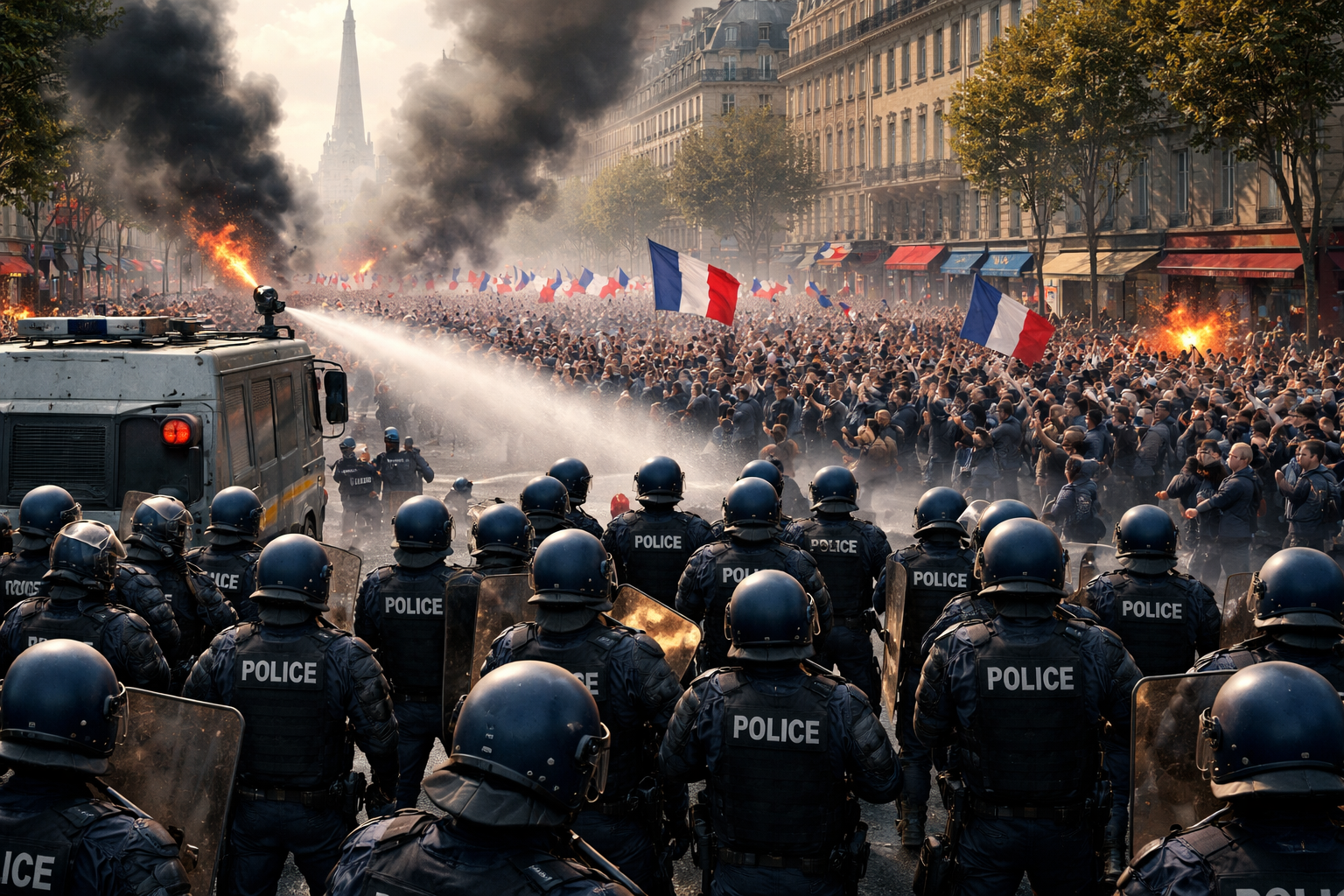
French authorities have deployed 70,000 police officers and soldiers nationwide to manage and contain protests expected across the country. This surge in security comes after two nights of violent demonstrations last weekend, where hundreds of shops in Paris and other cities were damaged or looted.
The protests, now entering their fourth consecutive weekend, involve high school students, union members, and “yellow vest” activists demanding increased government funding for education, as well as support for housing and living costs. Officials have also imposed stricter rules limiting where protests may occur and which groups are authorized to participate.
Heightened Security and Business Precautions
Intensified policing includes elite forces and trainee officers, aiming to prevent the property destruction witnessed in recent demonstrations. In Paris, metropolitan stations, major museums, and tourist sites remain closed. Businesses ranging from opticians to supermarkets and fashion stores are boarding up windows and shuttering for safety, with some owners expressing fears of further damage and looting.
Community Tensions and Wider European Impact
The heightened unrest follows a deadly shooting west of Paris, which authorities have labeled a racist terrorist attack targeting non-white individuals, resulting in one death and several injuries. Meanwhile, France’s far-right National Rally party plans to hold a national conference in Orléans, anticipating up to 30,000 counter-demonstrators.
Protests are not limited to France. Demonstrations are also unfolding today in multiple European nations including Italy, Spain, Austria, Portugal, Albania, and Ireland, reflecting broader regional unrest.