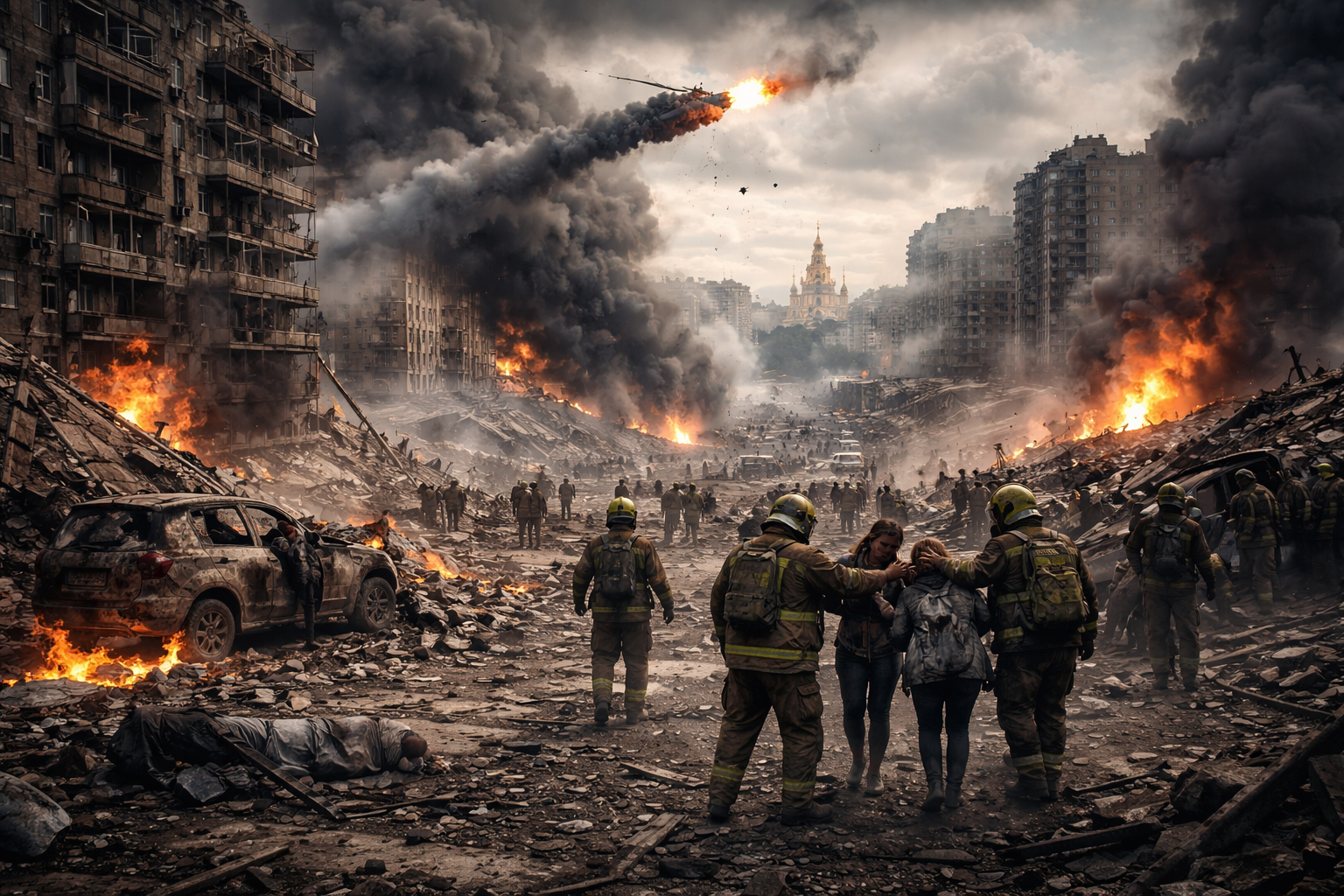
Kyiv, Ukraine’s capital, has increasingly become a front-line city in the ongoing war as Russian attacks escalate in frequency and severity in 2026. According to local military officials, these repeated strikes have made this year one of the deadliest for Kyiv since the conflict began.
Residents face daily uncertainty, taking refuge in makeshift shelters such as subway stations that serve as dormitories due to limited shelter availability. The city’s four million inhabitants grapple with the constant threat to their homes, schools, and essential infrastructure.
Rising Civilian Casualties and Targeted Strikes
Kyiv’s military administration reported 140 deaths in the first eight months of 2026, nearing the total 172 fatalities documented throughout all of 2025. Attacks have also struck civilian spaces, such as a tragic drone strike that killed 14-year-old Daniel Umanskyj while he worked on homework in September. Another drone attack in early October targeted a school building; fortunately, students and teachers were sheltered at the time.
Challenges to Daily Life and Education
School attendance depends heavily on air-raid sirens and shelter accessibility, with some schools able to hold in-person classes using large shelters that fit hundreds of students safely. Nevertheless, parents face difficult choices balancing work and protecting their children. Even journeys to school are perilous due to the unpredictable nature of the attacks near industrial and strategic sites.
Infrastructure Damage and Uncertain Winter Outlook
Repeated strikes on energy infrastructure have caused emergency power outages and disrupted services. Warehouses have been targeted, leading to supermarket shortages not experienced since the war’s early stages. The ability to provide heating, electricity, and water during the approaching winter remains uncertain, compounding the hardship for residents.
Resilience Amid Ongoing Conflict
Despite the heightened danger and destruction, surveys indicate that 72% of Kyiv’s residents remain determined to endure the war as long as necessary. Local authorities have shortened curfew hours and allowed some facilities to operate during moderate threat levels, though during severe alerts, residents must immediately seek shelter from missile and drone attacks. The city continues to strive toward sustaining normalcy in the face of relentless aggression.