

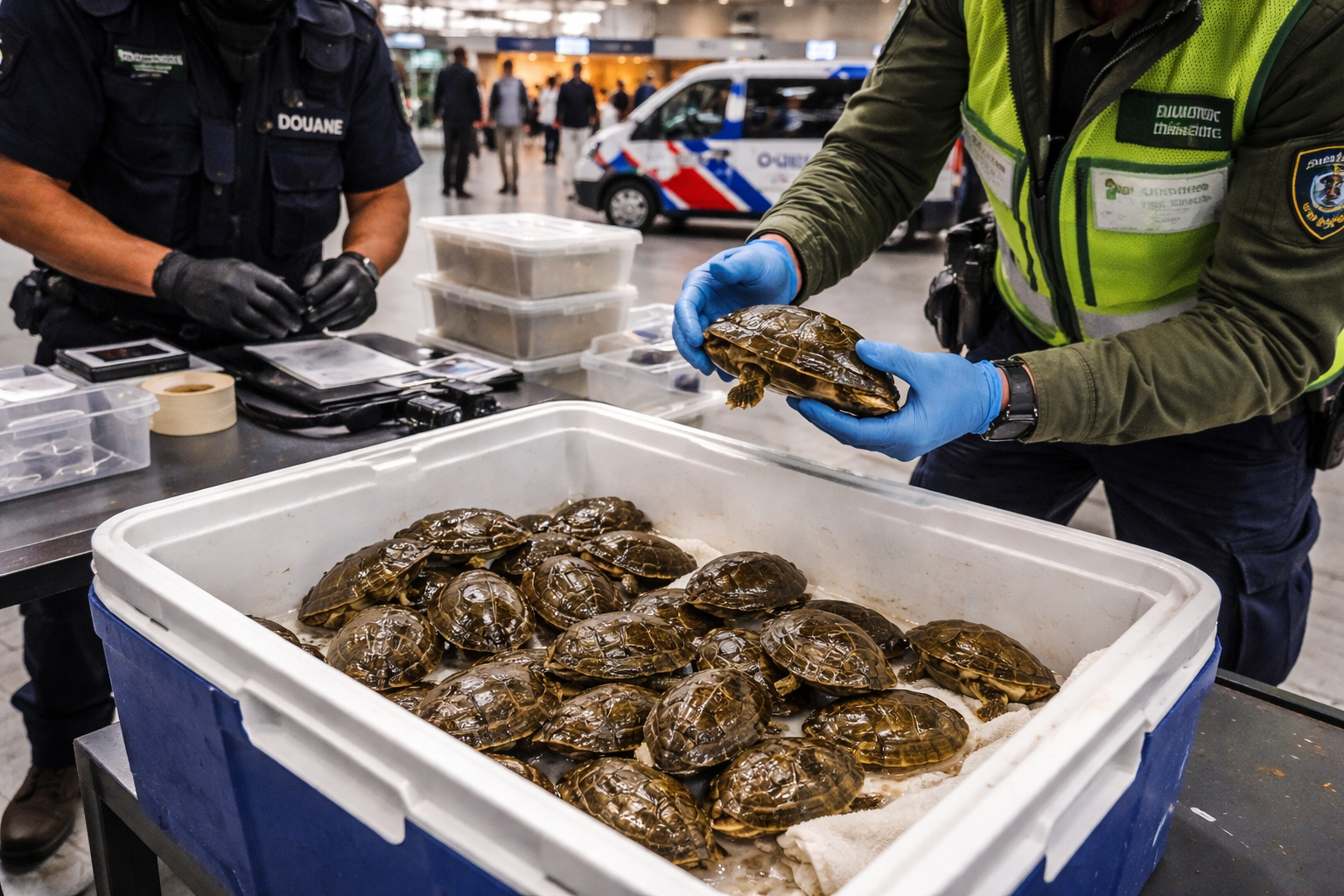
Dutch authorities confiscated 26 Vallarta mud turtles, a critically endangered species, from a passenger’s luggage at Amsterdam’s Schiphol Airport. The turtles, native to western Mexico, were discovered during a routine customs inspection on November 21, according to the Netherlands Food and Consumer Product Safety Authority (NVWA).
The turtles were hidden in a suitcase, with some packed in a box alongside a toy car, while others were concealed inside a sealed sock. They were wrapped in duct tape to restrict movement, but all survived the journey. The man carrying them was arrested and remains in custody as investigations continue.
The NVWA highlighted that these turtles are estimated to number around 300 in the wild, making the seizure significant as it potentially removed nearly 10 percent of the population. The agency is calling on the public to report suspected illegal trade of protected species.
About Vallarta Mud Turtles
Vallarta mud turtles are among the smallest freshwater turtles, officially recognized only in 2018. They are endemic to a small region in the Mexican state of Jalisco. Their habitats have been severely impacted by urban development and tourism, with over 99 percent lost to such changes.
The species is listed as critically endangered on the International Union for Conservation of Nature (IUCN) Red List and receives the highest protection under the Convention on International Trade in Endangered Species of Wild Fauna and Flora (CITES).
Conservation Efforts and Risks
Due to their diminutive size and distinctive appearance, Vallarta mud turtles are vulnerable targets for illegal collectors despite strict protections. Conservation groups like Turtle Island in Austria have started breeding programs to serve as genetic reservoirs and support future rewilding initiatives in Mexico.
Besides poaching, the turtles face risks from habitat urbanization and road traffic. Authorities emphasize the importance of monitoring and reporting illegal wildlife trade to safeguard such endangered species.