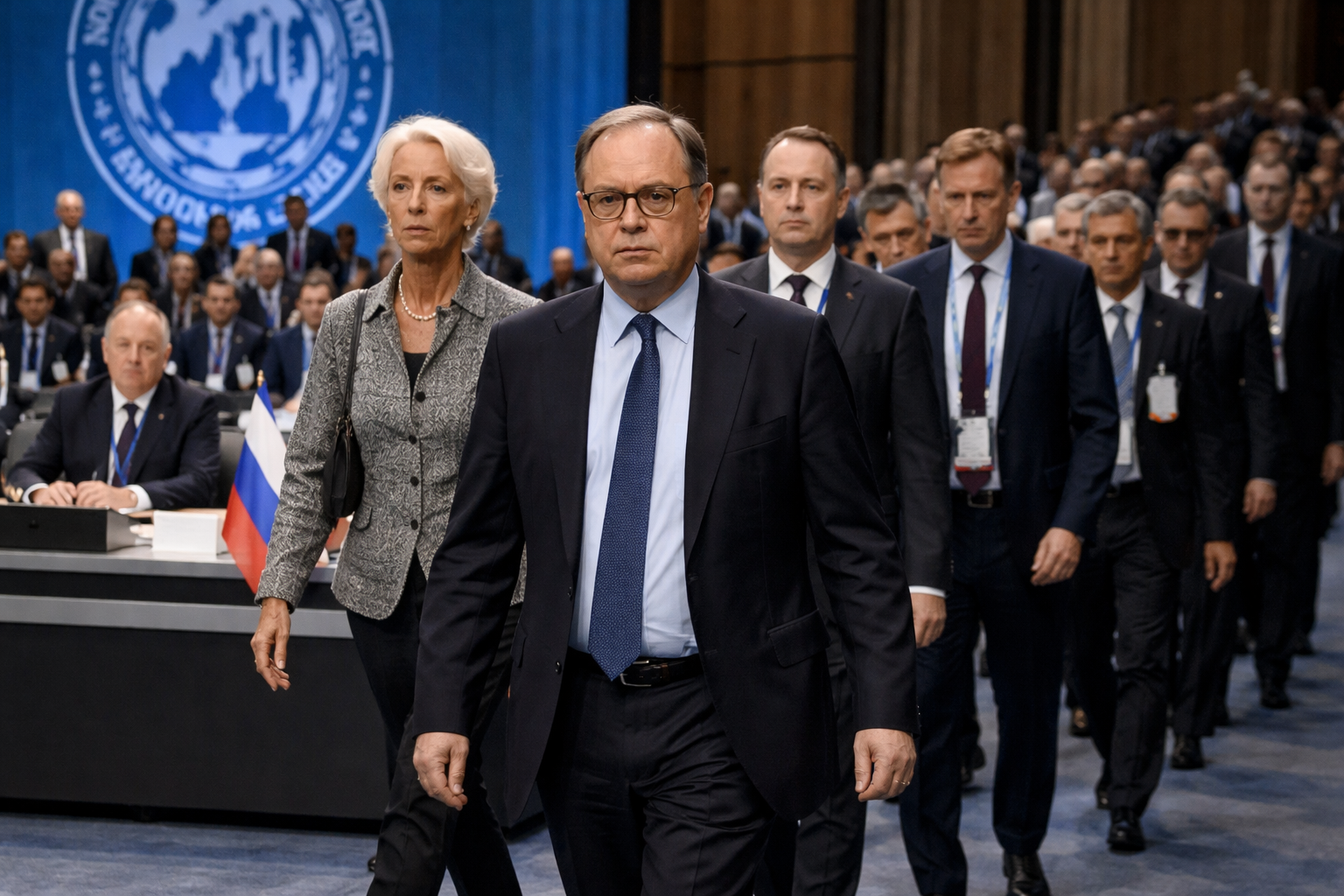
The Bank of England governor, Andrew Bailey, participated in a walkout of finance officials during an International Monetary Fund meeting in Bangkok, signaling protest against Russia’s involvement in the session. Bailey left alongside finance counterparts from France, Germany, and multiple Scandinavian and Baltic nations after Russia’s Finance Minister Anton Siluanov began speaking in Russian.
This coordinated departure reflects strong opposition among many European delegates to normalizing relations with Russia amid the ongoing war in Ukraine. Joachim Nagel, president of Germany’s Bundesbank, estimated that nearly half of the meeting’s participants joined the walkout when Siluanov addressed the group.
International Responses and IMF Remarks
The walkout was recognized by the chair of the IMF’s steering committee, Saudi Finance Minister Mohammed al-Jadaan, who emphasized that the group’s unified statement remained the key outcome of the summit. Al-Jadaan warned against complacency given public debt pressures and high bond market rates, highlighting ongoing risks from escalating conflicts and trade tensions that might disrupt trade routes and worsen energy and food security.
However, the United States Treasury expressed support for Russia remaining present at international financial meetings, despite Europe’s concerns. Earlier this year, Siluanov also attended a G20 meeting of finance ministers and central bankers, demonstrating Russia’s continued involvement in global financial dialogues despite tensions.
Context of the Walkout and Economic Outlook
A European diplomat said the war in Ukraine represents an existential threat for Europe, underscoring why finance leaders opposed Russia’s presence. The IMF meeting discussed the global economy’s surprising resilience amidst the conflict and other challenges such as disruptions in the Strait of Hormuz caused by U.S. military actions.
Following the gathering, al-Jadaan noted that while the global economy has endured recent shocks better than expected, resilience should not be taken for granted, especially in light of potential risks tied to geopolitical conflicts and commodity prices.