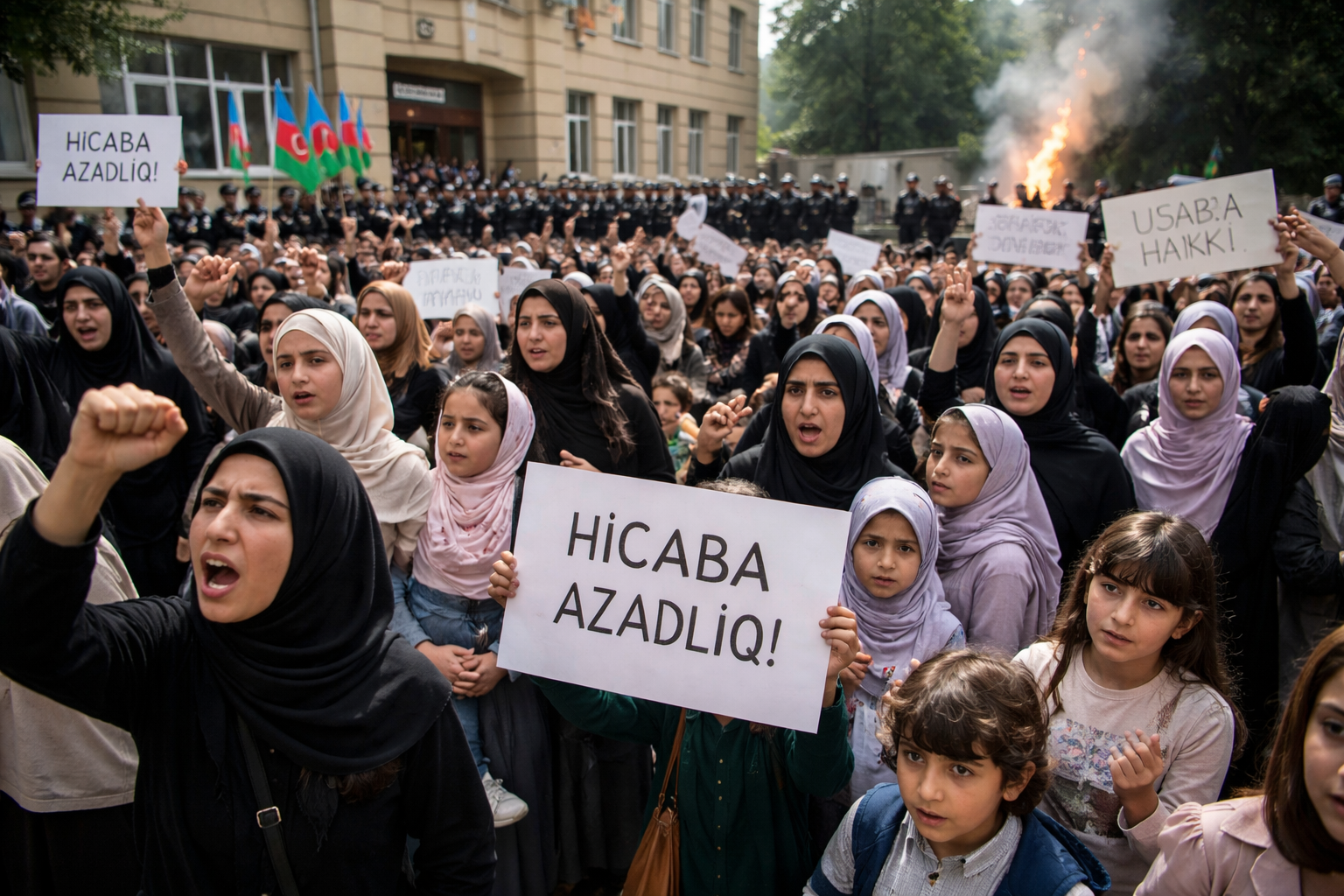
Unprecedented protests involving children have erupted in Azerbaijan after schools began enforcing dress code rules interpreted by some as a ban on Islamic headscarves, despite the government’s official policies not explicitly forbidding hijabs. The demonstrations have raised important questions about religious freedom, secular education, and foreign influence in the predominantly Muslim South Caucasus nation.
The protests, ongoing for nearly a week, involve girls wearing hijabs being turned away from classes, alongside boys and classmates showing solidarity. They have drawn significant attention domestically and have sparked criticism from Turkey, a close Azerbaijani ally. The government has responded by detaining dozens of protesters and restricting access to popular social media platforms.
Background on School Uniform Rules and Hijab Enforcement
On July 7, 2023, Azerbaijan amended its general education law to emphasize the principle of secular education and require adherence to dress codes for students and teachers. Subsequently, on September 21, a government resolution tightened school uniform regulations, forbidding clothing that disrupts standardized uniforms or contradicts secular education.
Although these rules do not mention hijabs explicitly, school administrators in several cases have interpreted them as banning headscarves, leading to exclusion of girls who wear them. Similarly, a separate decision on October 6 imposed dress requirements on teachers, resulting in reports of teachers prevented from working due to wearing hijabs.
Reactions and Impact on Families and Teachers
Families and educators are divided on the measures. Some support uniformity rules, arguing children are too young to decide on religious dress, while others decry the actions as violations of constitutional protections for freedom of conscience and education. The dispute crosses typical political lines in Azerbaijan, with both government opponents and non-religious citizens expressing differing views.
Reports include cases of students forced to remove hijabs, stay home, or switch to home schooling, and teachers losing positions for non-compliance with dress regulations. The Interior Ministry said 37 people were detained related to protests, citing incidents of confrontation and disorder, though it did not clarify whether children were among those detained.
Broader Implications and International Response
The controversy is partly understood as part of Azerbaijan’s efforts to counter religious influences from neighboring Iran and growing domestic religious groups. Officials warn against foreign interference, though no independent confirmation of such involvement has been established. Amnesty International criticized the exclusion of hijab-wearing students and called for the release of those detained for peaceful protests.
Turkey, traditionally a close ally, witnessed protests outside Azerbaijan’s consulate in Istanbul, with Turkish officials deeming the restrictions unacceptable. Azerbaijani ruling party representatives responded by emphasizing respect for Azerbaijan’s sovereignty and rejecting external interference.
Current Situation and Outlook
The immediate concern remains whether affected children can attend school while wearing headscarves. The dispute highlights tensions between secular state education policies and religious freedom rights in Azerbaijan. It also reflects regional geopolitical dynamics influencing domestic education policies. The government’s handling of protests, including detentions and internet restrictions, illustrates the sensitive nature of the issue within Azerbaijan.