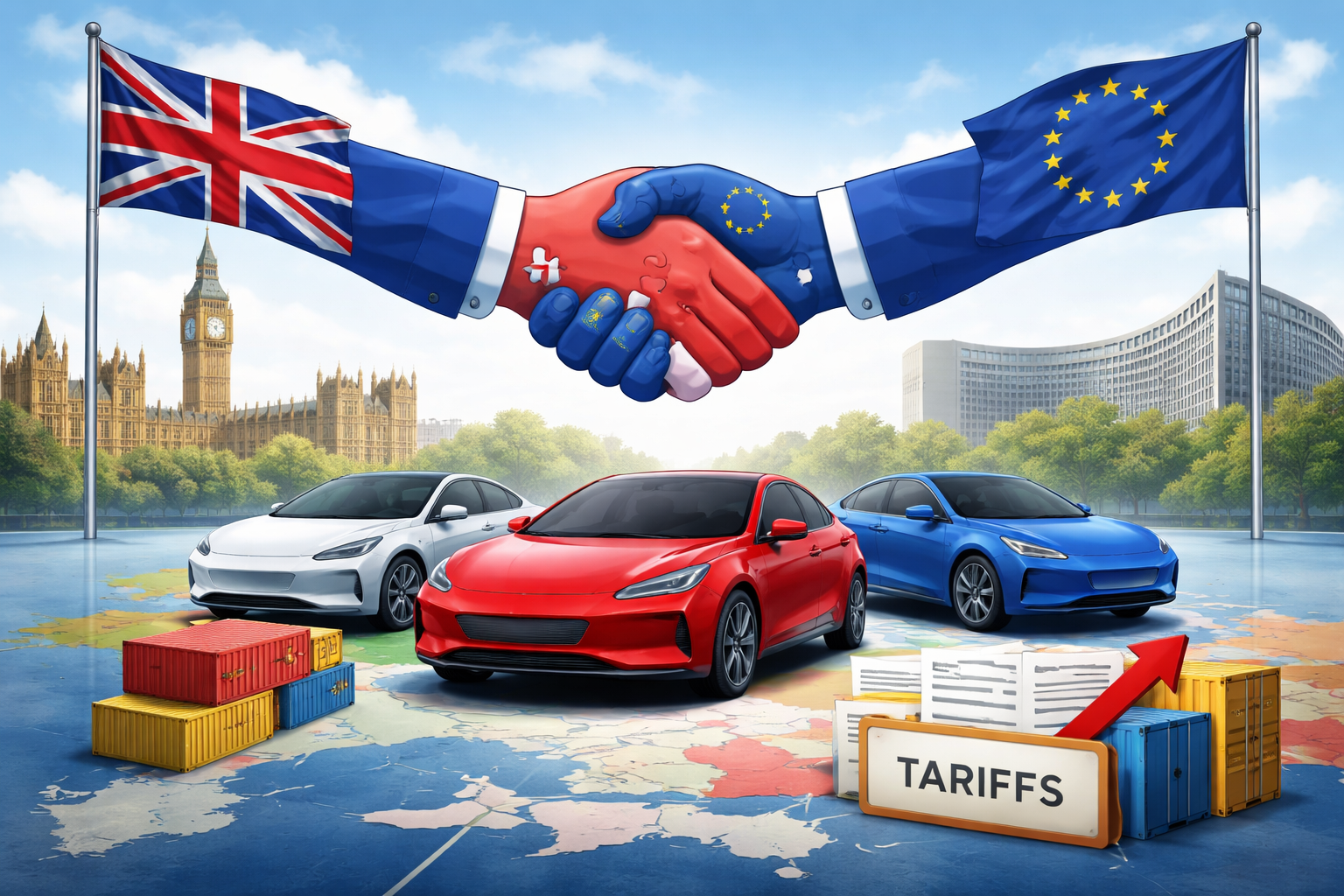
The UK government has left open the possibility of imposing tariffs on Chinese-made electric vehicles (EVs) if it joins the European Union’s new trade scheme, the Made in Europe package, which aims to curb subsidized imports from China. This development follows France’s decision to drop its opposition to the UK’s inclusion in the EU Industrial Accelerator Act, which prioritizes EU-made products within automotive supply chains.
Downing Street welcomed the objective of including the UK in the scheme but described it as premature to speculate on specific terms. According to a Franco-German proposal, any third country joining the package, including the UK and Norway, would need to align dynamically with the EU’s trade defense measures, notably EU tariffs on Chinese EVs starting in 2024. The UK government emphasized it would maintain its own trade policy and continue reviewing tariffs to protect British automotive interests.
Chinese Response and Industry Concerns
The Chinese Embassy in London strongly opposed any discriminatory tariffs or restrictive measures on Chinese products, warning that such actions clash with World Trade Organization rules and market principles. China has previously threatened trade retaliation over EU plans imposing quotas on Chinese hybrid cars and opposes expanding tariffs on Chinese EVs.
British officials acknowledge the complex trade-offs involved. Tariffs might protect domestic manufacturers by deterring low-cost Chinese imports but could also lead to higher prices for consumers and potential harm to UK exports to China, which represent about 6% of UK-made vehicle sales. The UK car industry heavily relies on exports, with approximately 80% of cars built in Britain sold abroad, more than half destined for the EU.
Political and Industry Perspectives
Business Secretary Jonathan Reynolds has resisted coercion into aligning with EU policy, though trade officials like Minister Anas Sarwar have supported close coordination with the EU to counter China’s dominance in automotive manufacturing. Meanwhile, key figures such as the head of European car association ACEA have warned that excluding the UK from the Made in Europe legislation could severely damage the car industry across Europe.
Members of the European Parliament have submitted thousands of amendments to the legislation, including proposals to expressly include the UK. Liam Byrne, chair of the parliamentary business committee, described tariffs on Chinese EVs as a reasonable step to preserve automotive manufacturing on both sides of the Channel, criticizing the UK government’s current China strategy as inadequate.
Next Steps and Ongoing Developments
EU lawmakers plan to finalize the Industrial Accelerator Act by late 2026 or early 2027. The UK remains engaged in ongoing discussions regarding participation and conditions but has not committed to tariff alignment yet. Any move to impose tariffs would involve formal investigations and compliance with WTO procedures, likely extending over a year before enforcement.
The outcome will shape the future of UK-EU automotive trade relations and the broader effort to manage the impact of subsidized Chinese imports on the European and British car industries.