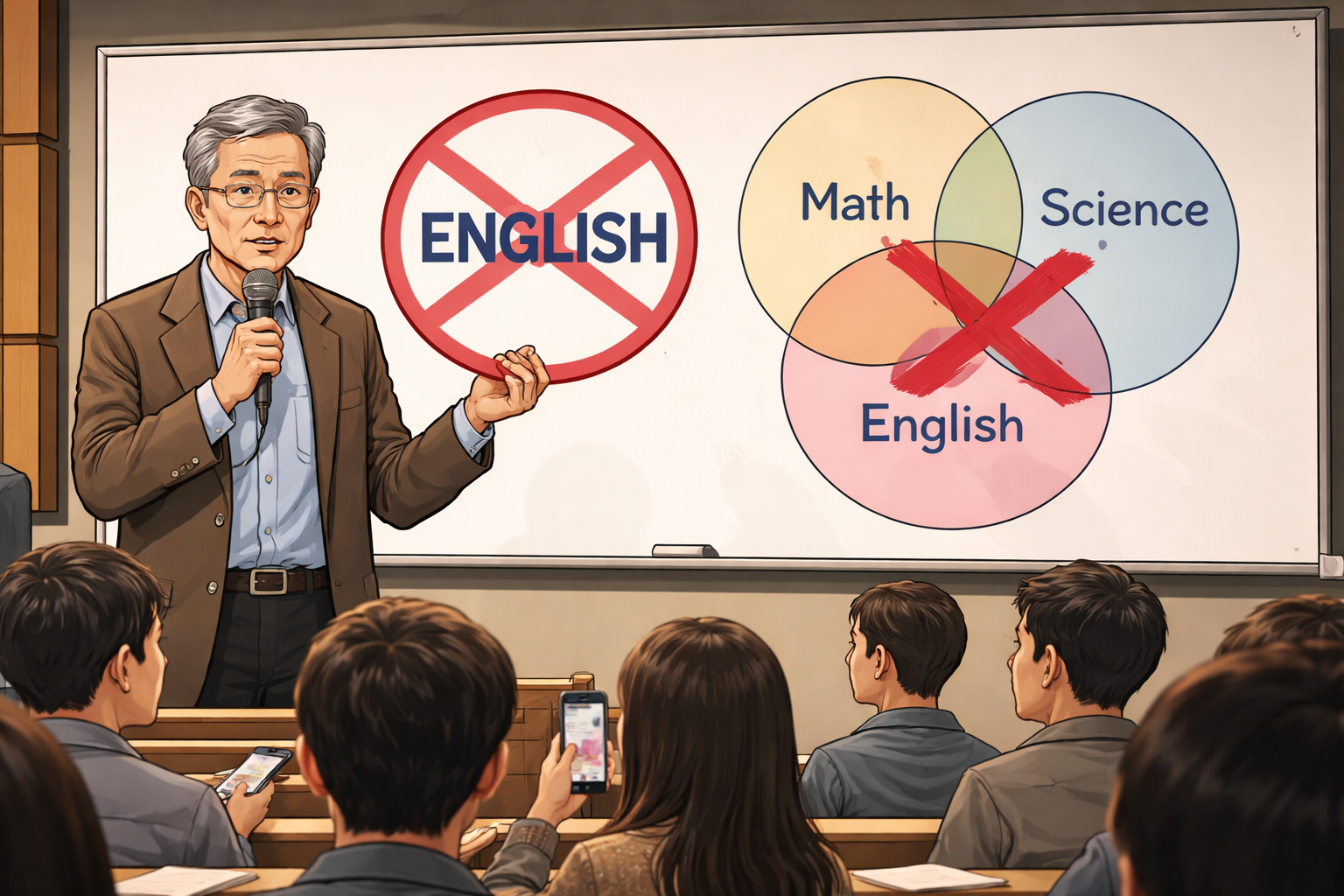
A mathematics professor in China, Tang Jiafeng, has publicly challenged the role of English as a core graded subject in the Chinese education system. Tang advocates removing English from graded core subjects in elementary schools, secondary schools, and universities, arguing that the emphasis on English education is excessive and misaligned with China’s cultural heritage and practical needs.
English has been a required subject in China since the third grade and is graded alongside Chinese and mathematics through key national exams, including the secondary school entrance exam, the 9th-grade central exam, and the high school graduation exam, where it can account for up to 150 points. Despite this, Tang points to the significant investment of time and resources by children, parents, and schools on English—a language he considers largely irrelevant to most students’ future careers—especially since artificial intelligence can now translate languages rapidly.
Opposing Views on English Education
While Tang’s opinion has gained traction online, there remains strong advocacy for maintaining English as a core subject. Some suggest scaling back the scoring weight of English on exams rather than removing it entirely. Additionally, all bachelor’s degree students in China must pass an English exam to proceed to graduate study, a policy Tang believes could hinder capable young scientists who lack English proficiency.
Defenders of English education, like Hu Xijin, former editor-in-chief of the state-run Global Times, emphasize the importance of foreign language skills in today’s globalized world. Hu argues that English promotes equal opportunity, including for children in rural areas, by granting access to international knowledge, research, and collaboration. He warns that framing the debate as a choice between foreign languages and traditional Chinese culture risks politicizing education and misprioritizing public dialogue.
Changing Trends and Cultural Context
Chinese universities focusing on foreign languages are adjusting to shifting student interests, with fewer high school graduates enrolling in German language studies and a growing emphasis on combining English proficiency with specialized majors such as law, information technology, or economics. This reflects broader cultural dynamics about learning from abroad while preserving national identity, a conversation that has historical roots dating back to the 19th-century Self-Strengthening Movement.
Despite calls to reduce English’s prominence, experts acknowledge that English remains the dominant language of global science and technology, particularly for STEM research publications. Observers fear that diminishing English education could affect China’s competitiveness in key innovation sectors.