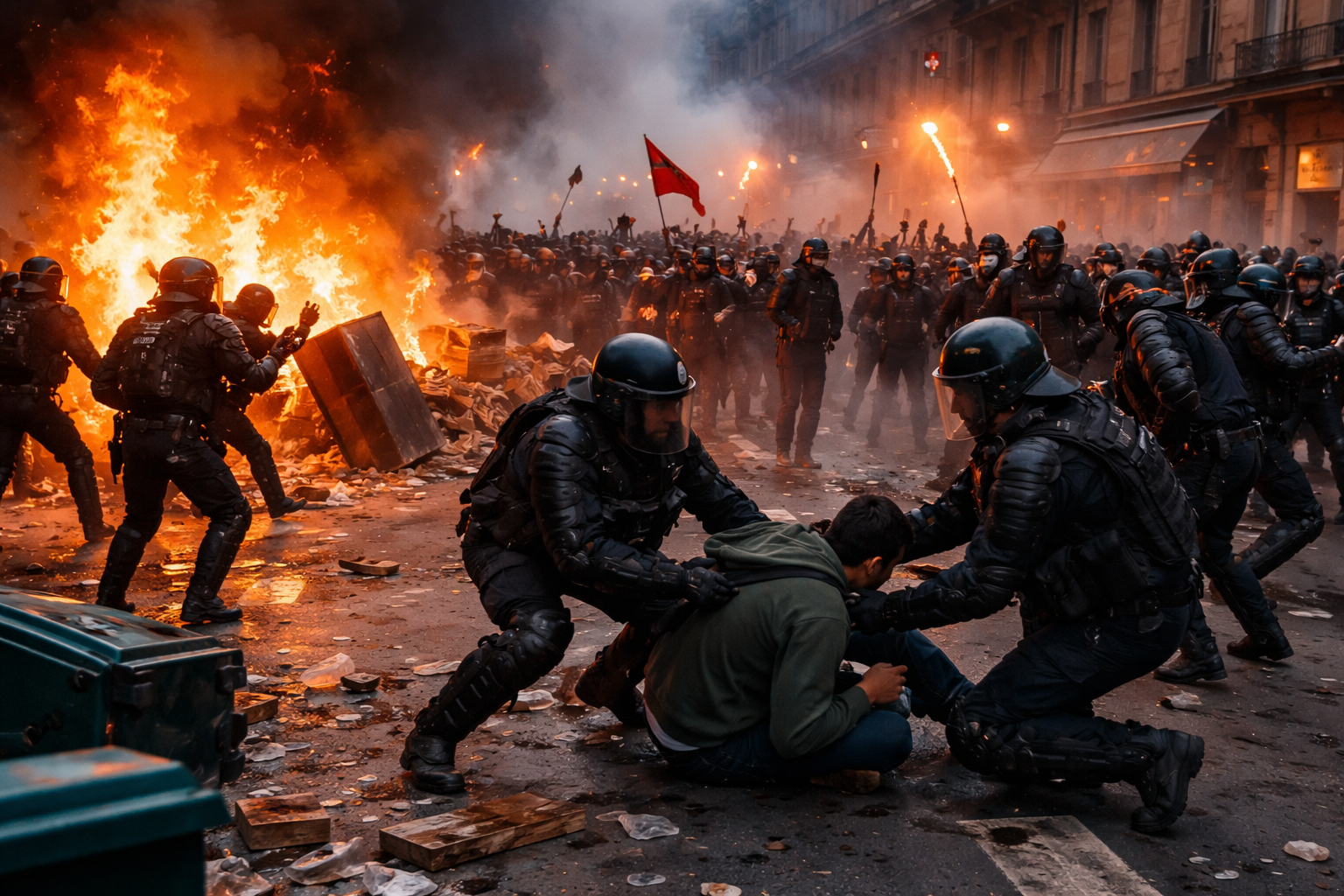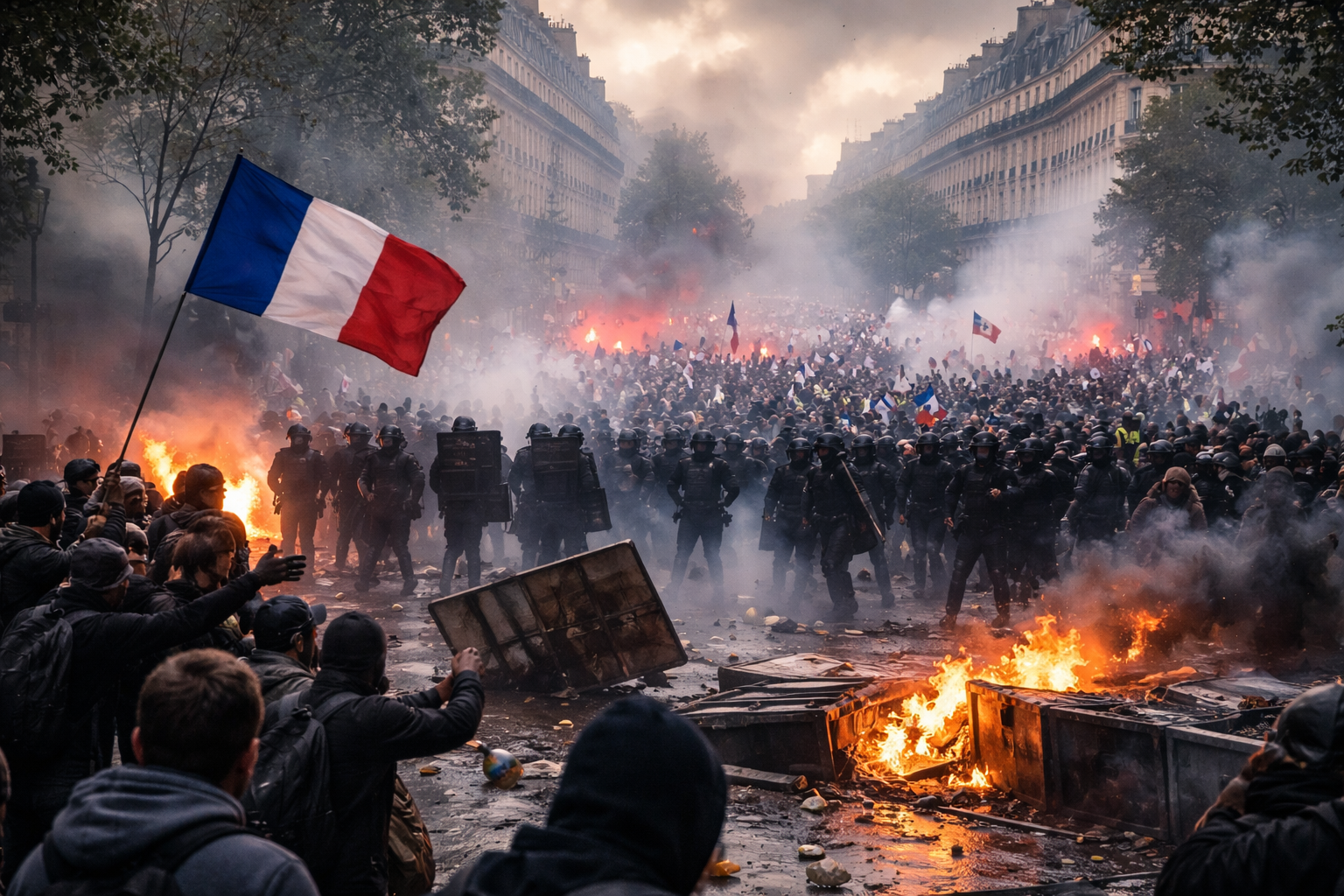
Tens of thousands of people took to the streets Saturday throughout France to protest soaring living costs, social inequalities, and the state of the education system. The nationwide protests sparked clashes between police and demonstrators in several cities, resulting in approximately 400 arrests, according to the Interior Ministry.
Authorities estimated that around 550,000 individuals participated in the demonstrations, which unfolded in major urban centers including Paris, Marseille, Rennes, Toulouse, Angers, Lyon, Limoges, and Lille. The unrest escalated with violent incidents, causing damage to public buildings, media offices, and vehicles.
Violent Clashes and Property Damage Escalate
Police used tear gas to disperse protesters during confrontations in Paris and Marseille. In western Paris, protesters broke windows of the broadcasting offices of CNews and Europe 1, while cars were set ablaze. In Lyon, the city’s tourism office was engulfed in flames, sending thick black smoke into the air. Similarly, the town hall in Limoges caught fire after a blaze spread across multiple parts of the building. In Lille, demonstrators forcibly entered the town hall, vandalizing the premises before leaving, as confirmed by riot police.
Government Response and Allegations
French President Emmanuel Macron condemned the violent actions on social media, emphasizing that individuals responsible for attacks on government buildings, businesses, and town halls would face prosecution and punishment. The Interior Ministry attributed much of the unrest to extremist elements associated with the far-left, particularly condemning attempts at looting and arson.
The protests included students, trade unionists, and members of the Yellow Vests movement, a group known for previous anti-fuel price demonstrations that broadened to encompass broader economic inequality issues. The hard-left political leader Jean-Luc Mélenchon publicly supported the student-led protests, although his party denied governmental accusations of fueling the unrest.
Context and Restrictions
The demonstrations follow a recent wave of student protests over difficult conditions in schools, such as teacher absences and deteriorating facilities. Over 600 protests were scheduled nationwide, with authorities anticipating a large turnout. However, Paris imposed restrictions banning rallies near key locations including the presidential palace, prime minister’s office, Champs-Élysées, and the city center. Despite the limitations, clashes erupted in areas around Saint-Denis and Gare du Nord.
Before the protests began, Macron called for calm and respect, reminding citizens that the right to protest must coexist with respect for people and property.