
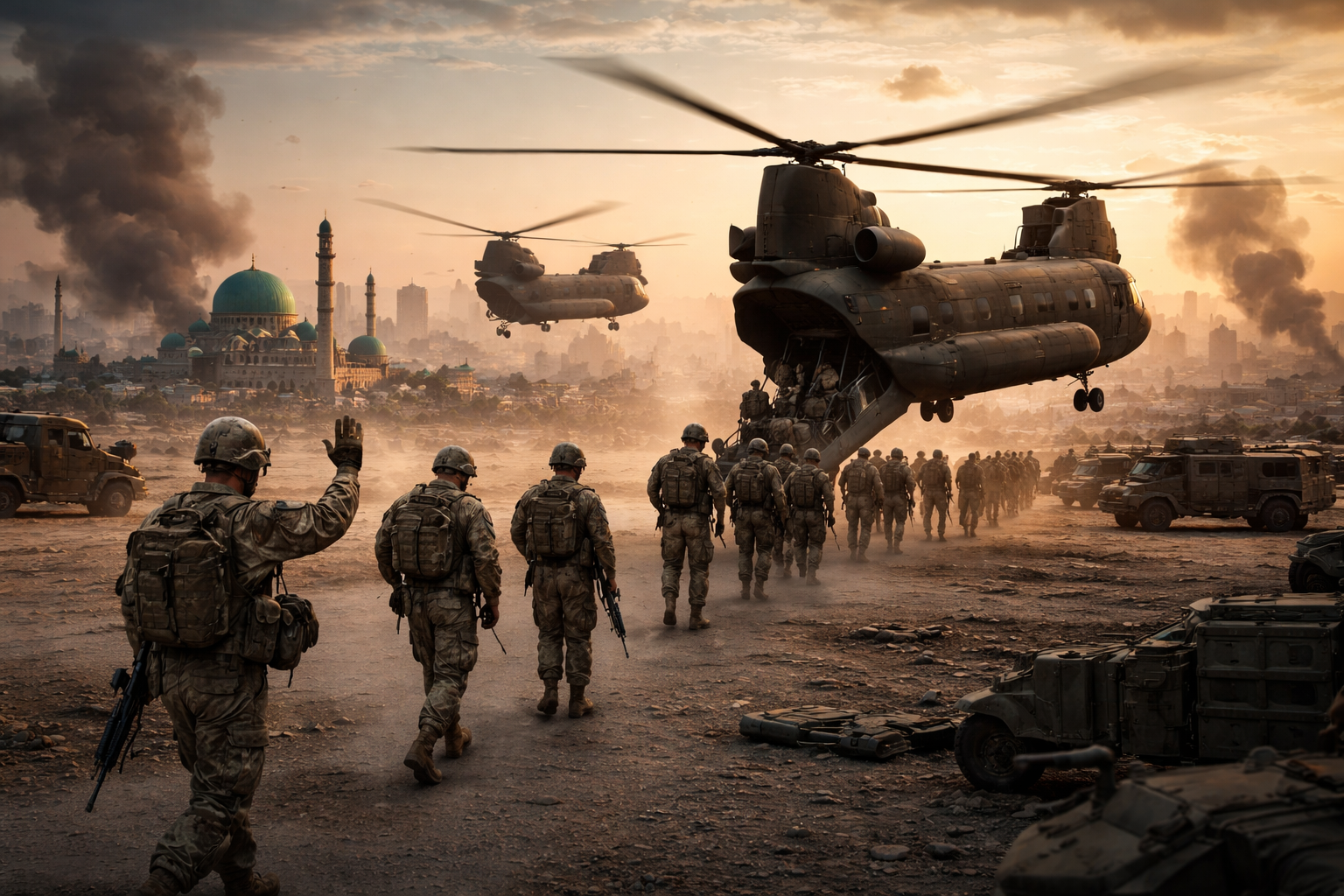
On September 30, 2026, Iraq marked the end of a significant era with the complete withdrawal of the remaining 2,500 US troops from its territory, concluding a 12-year US-led campaign against ISIS and over two decades of American military presence. The Iraqi government hailed this milestone as a restoration of full national sovereignty, ushering in a period marked by the absence of foreign military forces on its soil.
The withdrawal followed a 2024 agreement between Baghdad and Washington aimed at normalizing their relationship, with a shift from military cooperation to economic and diplomatic ties. Despite the US troops’ exit, other foreign forces, including Turkish troops, remain deployed in parts of Iraq, signaling that the country’s security environment remains complex.
Political and Security Challenges Ahead
Iraq’s Prime Minister Ali al-Zaidi has extended the deadline for disarming armed militias to June 30, 2027. The plan includes a phased approach where militias would cease attacks for 90 days before beginning to hand over weapons to state control. However, several powerful Iran-backed militias, such as Kata’ib Hezbollah and Harakat al-Nujaba, have rejected disarmament or set conditions that could prolong their armed autonomy.
Experts highlight Iraq’s fragmented political landscape, where many political parties maintain close ties with armed groups, complicating efforts toward security sector reform. This dynamic suggests that many militias may remain independent of Baghdad’s control in the near future.
Concerns for Iraq’s Minorities and Regional Stability
The US withdrawal also includes the removal of military support systems in the Kurdistan Region’s capital, Erbil. Kurdish leaders have expressed concerns over increased missile and drone attacks attributed to Iran-backed groups amid ongoing US-Israeli conflict with Iran. Recent drone strikes targeting Kurdish opposition camps have exacerbated tensions.
Vulnerable ethnic and religious minorities, including Christians and Yazidis, face heightened risks as the withdrawal removes a buffer provided by foreign troops. Analysts warn that these communities could become more exposed to local and regional power struggles moving forward.
Future US-Iraq Relations
While the military relationship between the US and Iraq ends, officials emphasize that bilateral ties will continue, focused more on economic and commercial cooperation rather than security. US Defense Secretary Pete Hegseth noted that a stable and sovereign Iraq is essential to resuming mutually beneficial defense partnerships but stressed that this depends on Iraq’s ability to maintain a secure environment free of terrorist threats.
Iraq thus stands at a crossroads, balancing its aspiration for full sovereignty with persistent internal divisions and regional security challenges following the US military departure.