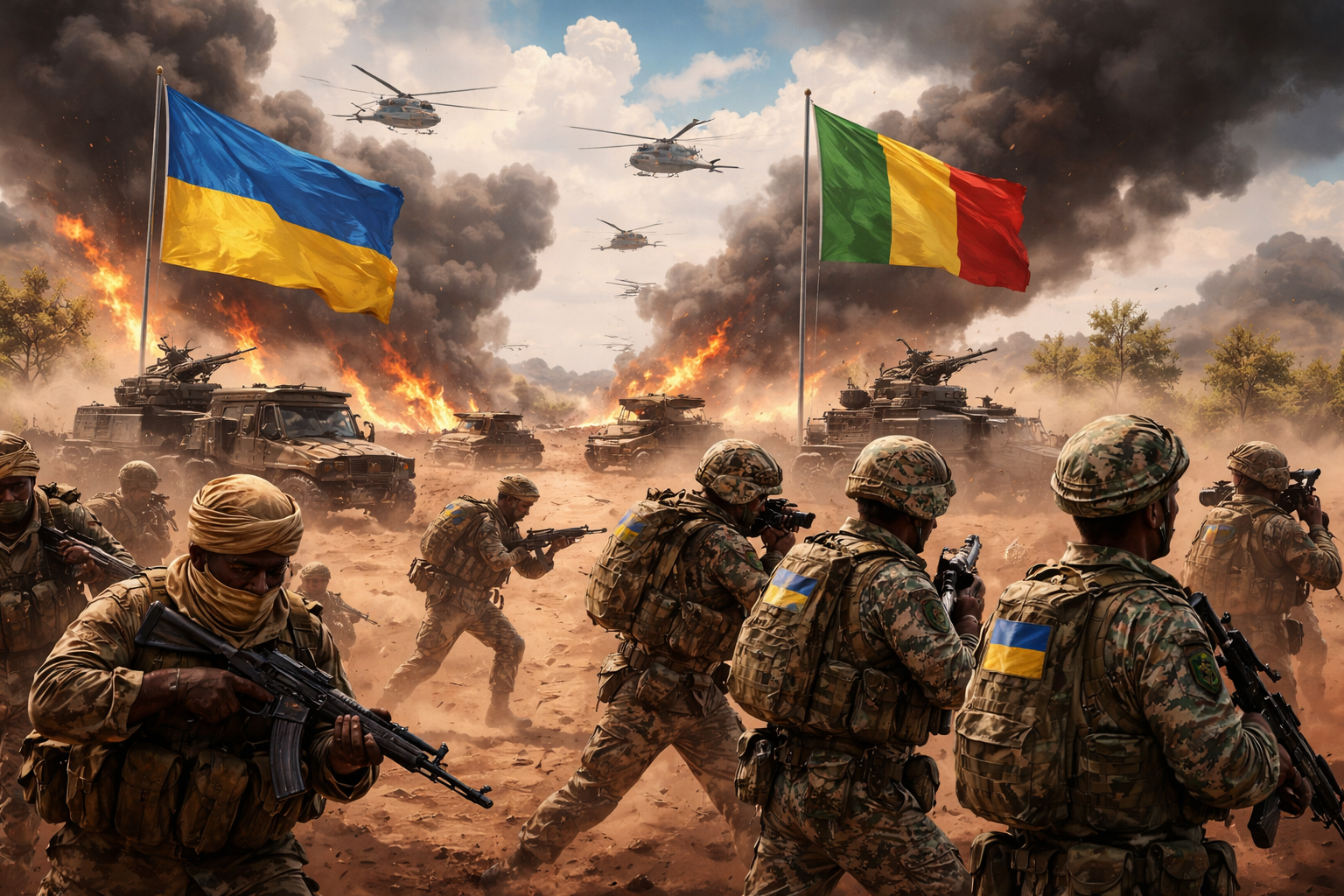
Amid the ongoing conflict with Russia, Ukraine is reportedly extending its influence to Africa’s Sahel region, where it may be assisting Tuareg rebels in northern Mali. An investigation by CNN this month claimed that about 15 Ukrainian drone specialists are supporting these rebels, whose common adversaries include Mali’s military government and its Russian backers.
While the exact extent of Ukraine’s involvement remains unclear and unconfirmed, such claims underscore the expanding dimensions of the Russia-Ukraine war beyond Europe.
Key Facts and Current Developments
In mid-2024, reports emerged linking Ukraine’s military intelligence to an ambush on Russian mercenaries from the Wagner Group in northern Mali. At that time, Ukrainian officials denied direct involvement but acknowledged passing information to Tuareg forces.
Recently, Kyrylo Budanov, former head of Ukraine’s military intelligence and a close aide to President Zelenskyy, hinted on social media that Ukrainian intelligence operations extend globally, including Africa, but did not explicitly confirm activities in Mali.
Attempts by journalists to obtain official confirmation from Ukraine’s military intelligence service have not yielded clear responses. Thus, the nature and scope of Ukrainian support—reported to include drone training, operational planning, and remote assistance—remain unverified.
Strategic Motives and Regional Dynamics
Experts see strategic reasons behind Ukraine’s possible involvement. Marta Oliynyk-D’omochko of the National University of Kyiv-Mohyla Academy suggests Ukraine aims to counter Russian influence worldwide, knowing that weakening Russia’s military reach could also reduce its economic leverage.
Russia continues to consolidate its foothold in the Sahel, supporting Mali’s military government alongside paramilitary forces like the Africa Corps, which replaced the Wagner Group in 2025. Moscow’s expanding operations reportedly use transit points in Syria and Libya to maintain African deployments.
Ukraine’s potential support for Tuareg rebels, who fight for autonomy in northern Mali, could serve to tie down Russian resources far from the European front. However, this assistance is described as a tactical alignment against a shared enemy rather than a formal alliance.
Political and Security Risks
The Tuareg rebel group reportedly cooperating with Ukraine has established ties with Jama’at Nusrat al-Islam wal Muslimeen (JNIM), a jihadist organization affiliated with al-Qaeda. Though Ukrainian support likely targets the Tuareg separatists, jihadist groups could indirectly benefit from shared operations or equipment.
This association carries political risks. Many African governments view the Tuareg as separatists undermining national sovereignty. Mali, Niger, and Burkina Faso have publicly accused Ukraine of backing armed groups threatening their territorial integrity and severed diplomatic ties with Kyiv. However, no concrete evidence has been provided to substantiate these allegations.
The cooperation between Tuareg and Islamist groups has deep historical roots, intensified after Libya’s 2011 upheaval. Analysts caution that Ukrainian engagement with Tuareg factions could damage Ukraine’s efforts to foster balanced partnerships across Africa.
Implications for Ukraine and the Sahel Region
Ukraine’s involvement in Mali, if confirmed, reflects an effort to challenge Russian influence on a global scale while making strategic use of limited resources. Yet, the complexities of local alliances and the risk of empowering extremist groups pose significant challenges.
For Ukraine, sustaining positive relationships across Africa is crucial. Allegations of supporting separatists and indirect links to jihadists could undermine this goal and complicate its international standing.
Meanwhile, the Sahel region remains a volatile theater where competing foreign interests, insurgencies, and political instability converge—factors that could prolong conflict and deepen regional insecurity.