Thousands of Serbians filled the streets of Belgrade and Novi Sad in jubilant celebrations after Aleksandar Vučić conceded defeat in a landmark election, signaling a dramatic political change driven by a student-led movement. The election results showed the Students’ List securing between 135 and 140 of the 250 parliamentary seats, while Vučić’s right-wing SNS party captured 105, according to preliminary counts.
This victory marks a remarkable reversal on the very streets where protesters had once faced violent police repression, including beatings and tear gas. For many, it represents a triumph over years of authoritarian tendencies and a government known for intimidating critics and restricting press freedoms.
Massive Celebrations Mark the End of an Era
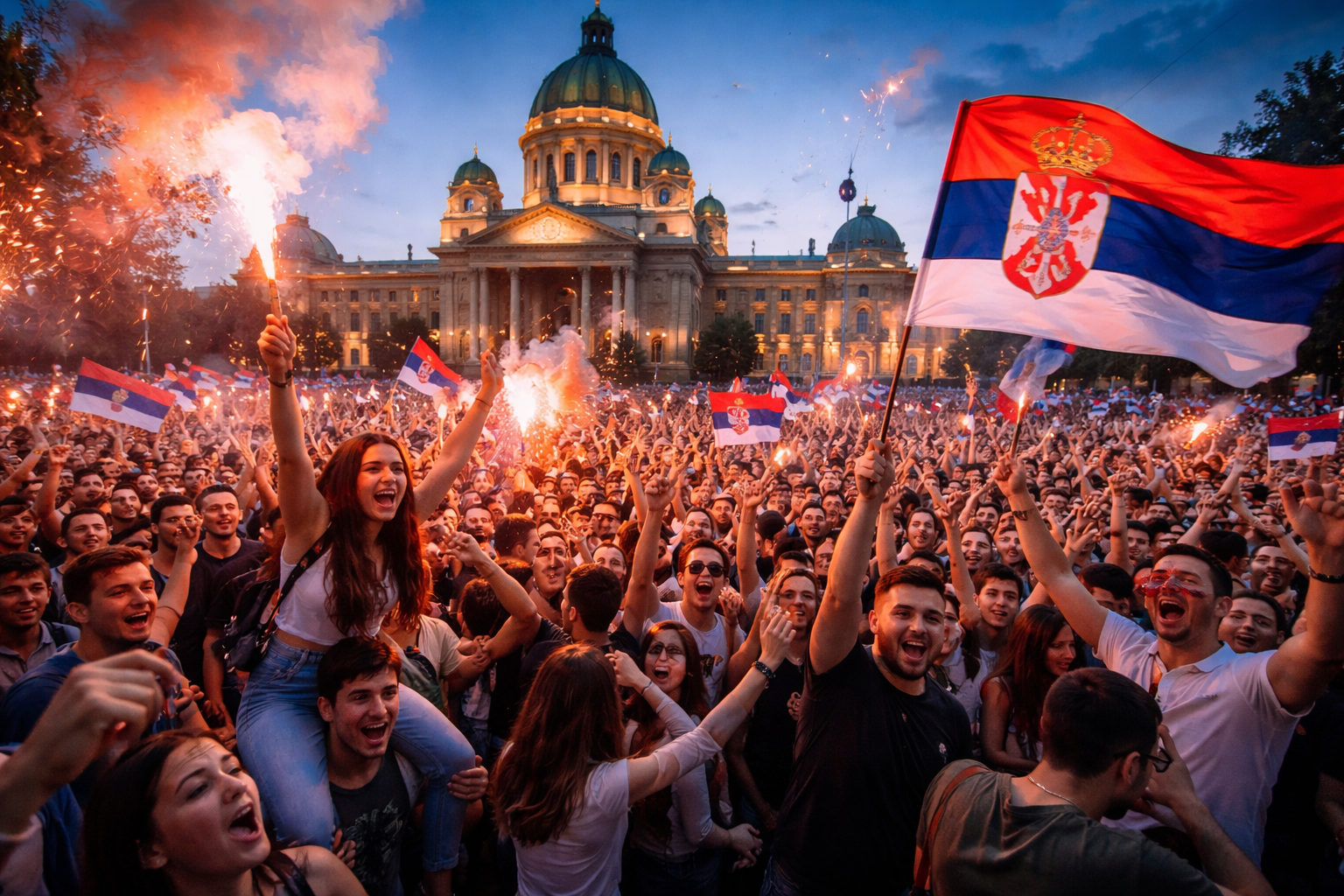
Tens of thousands of supporters gathered in Belgrade’s main boulevards, waving flags, chanting, and lighting flares amid continuous car horns. In Novi Sad, where the protests began in November 2024 following a deadly train station collapse, jubilant crowds also celebrated the electoral success. Participants recalled the harsh crackdowns they endured while demanding change but felt energized by the election outcome.
“It’s very strange that on the same streets where the police beat us, we now stand as victors,” said Sara, a 24-year-old protester, emphasizing the movement’s journey from repression to triumph. Fellow resident Tamara expressed a mix of relief and determination, acknowledging the challenges ahead despite the hopeful transition.
Challenges Ahead for Serbia’s New Political Landscape
The newly elected parliament includes more than 160 candidates holding doctorates, alongside farmers, athletes, and others, signaling a diverse approach to governance. However, the student movement has thus far adopted a cautious stance on divisive issues such as European Union membership, opting to leave that question to a referendum, while affirming Kosovo as an integral part of Serbia.
Despite the victory, the movement faces the daunting task of reversing decades of authoritarian drift and entrenched corruption. Supporters remain aware that the transition to democracy and transparency will be difficult but view the election as a beacon of hope for Serbia’s future.
Symbolism Resonates Beyond Serbia
Observers like Duško Suvajac see the election as a symbolic moment for Europe and the broader world, demonstrating how grassroots mobilization and peaceful protest can challenge authoritarianism. As celebrations swept through the streets, including dismantling the barricades set up by Vučić’s loyalists, many felt they were witnessing a historic turning point.
The scene of joyous hugs, tears, and traditional Serbian dance underscored the deep significance of reclaiming public space from a once-oppressive regime. For those involved, this moment will be remembered as the realization of a long-held dream for freedom and democratic governance.