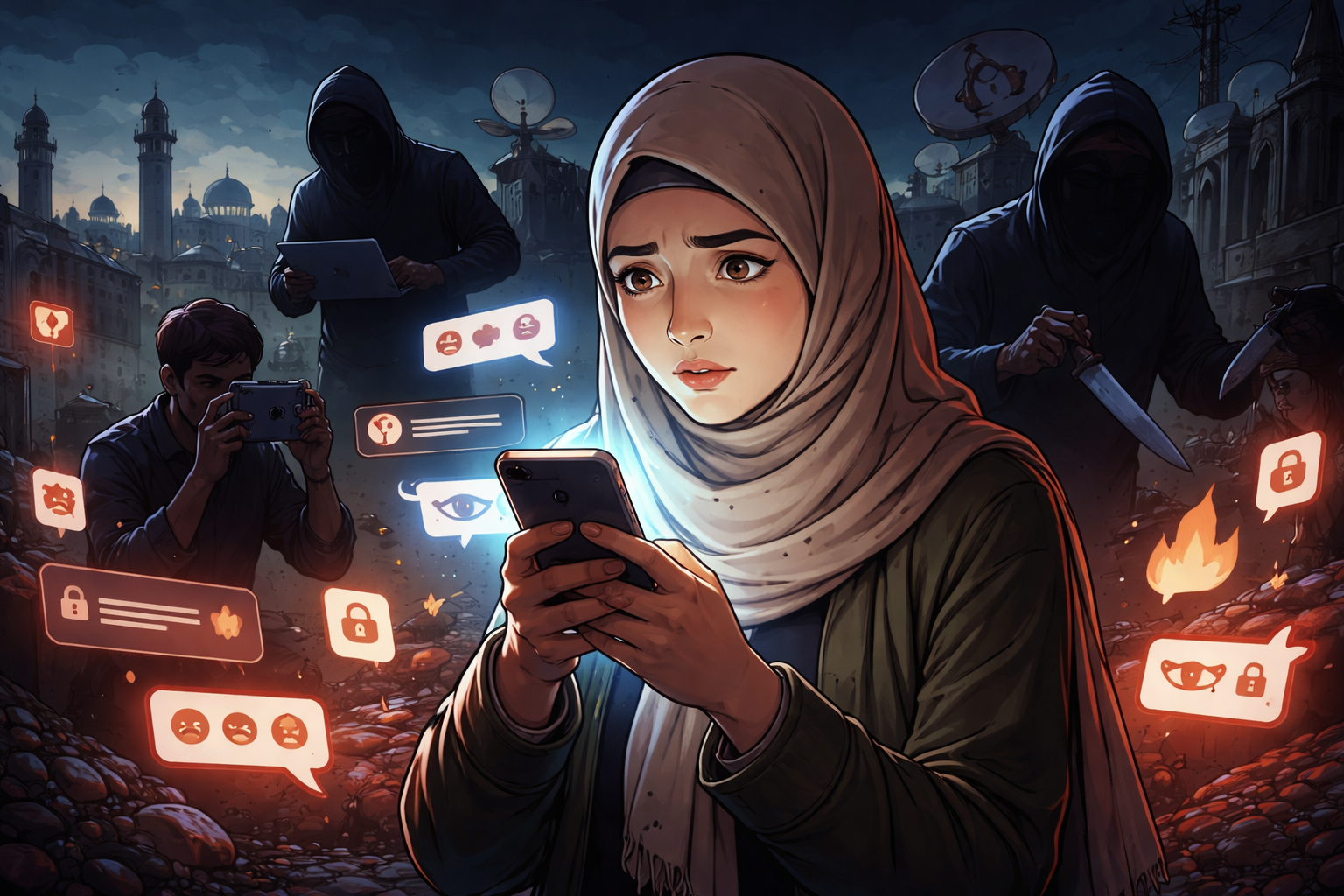
Women in the Middle East face a rising tide of online harassment, amplified by new digital technologies that enable the creation and spread of harmful content. Journalists, activists, and other publicly visible women regularly receive abusive messages, threatening comments, and digitally-manipulated images that put their safety and reputations at risk.
According to Iraqi journalist Kholoud al-Ameri, female reporters frequently deal with unsolicited advances online, often from men who mask their harassment as supportive interest. Similar experiences are reported by Syrian activist Yaman Amer, who notes that critiquing women’s rights online attracts hundreds of hostile and degrading responses, some severe enough to warrant reporting.
High rates of gender-based online abuse
Studies by the United Nations and related organizations reveal an alarmingly high level of technology-facilitated gender-based violence (TFGBV) in the Middle East. UN Women research indicates that 68% of women in the region have experienced such abuse, while nearly 100% have witnessed it. Nearly half of women internet users report feeling unsafe, with that figure rising to nearly 70% for activists, journalists, or politicians.
Technology enabling more dangerous harassment
Recent advancements in digital tools have made it easier to create hyper-targeted and scalable harmful content, including non-consensual imagery. As analyst Siddharth Venkataramakrishnan explains, the democratization of such technology allows attackers to produce manipulated images that can deeply damage women’s reputations, especially in conservative societies where modesty norms are strictly enforced.
One incident involved an AI-powered chatbot manipulated to generate near-naked images of fully dressed individuals, sparking controversy and service restrictions. Despite some safeguards, users often discover ways to bypass protections, exacerbating risks for women in the region.
Offline consequences and lack of legal protections
Abuse online often leads to real-world harm in the Middle East, where concepts of honor, family reputation, and male control can turn digital attacks into physical punishment or social ostracism. UN surveys have found that a third of women facing online violence are told to ignore it, while others are blamed or even physically punished by families due to such harassment.
Legal frameworks across the region often lack specific provisions addressing gender-based online violence, particularly in the context of emerging digital threats. Reporting rates remain low, hindered by cultural taboos and inadequate legal protections. Many women respond by blocking harassers or withdrawing from social media altogether.
Conflict and social change increase vulnerabilities
Ongoing conflict and instability in Middle Eastern countries exacerbate women’s vulnerability to online abuse. In Syria, for instance, the collapse of strict digital censorship has unleashed a wave of unregulated social media activity, with female activists bearing the brunt of sustained smear campaigns and targeted defamation. Similar dynamics appear in rapidly digitizing conservative societies like Saudi Arabia.
Organizations such as the Syrian Women’s Political Movement highlight the urgent need for laws criminalizing digital violence to protect women exercising their right to free expression.