
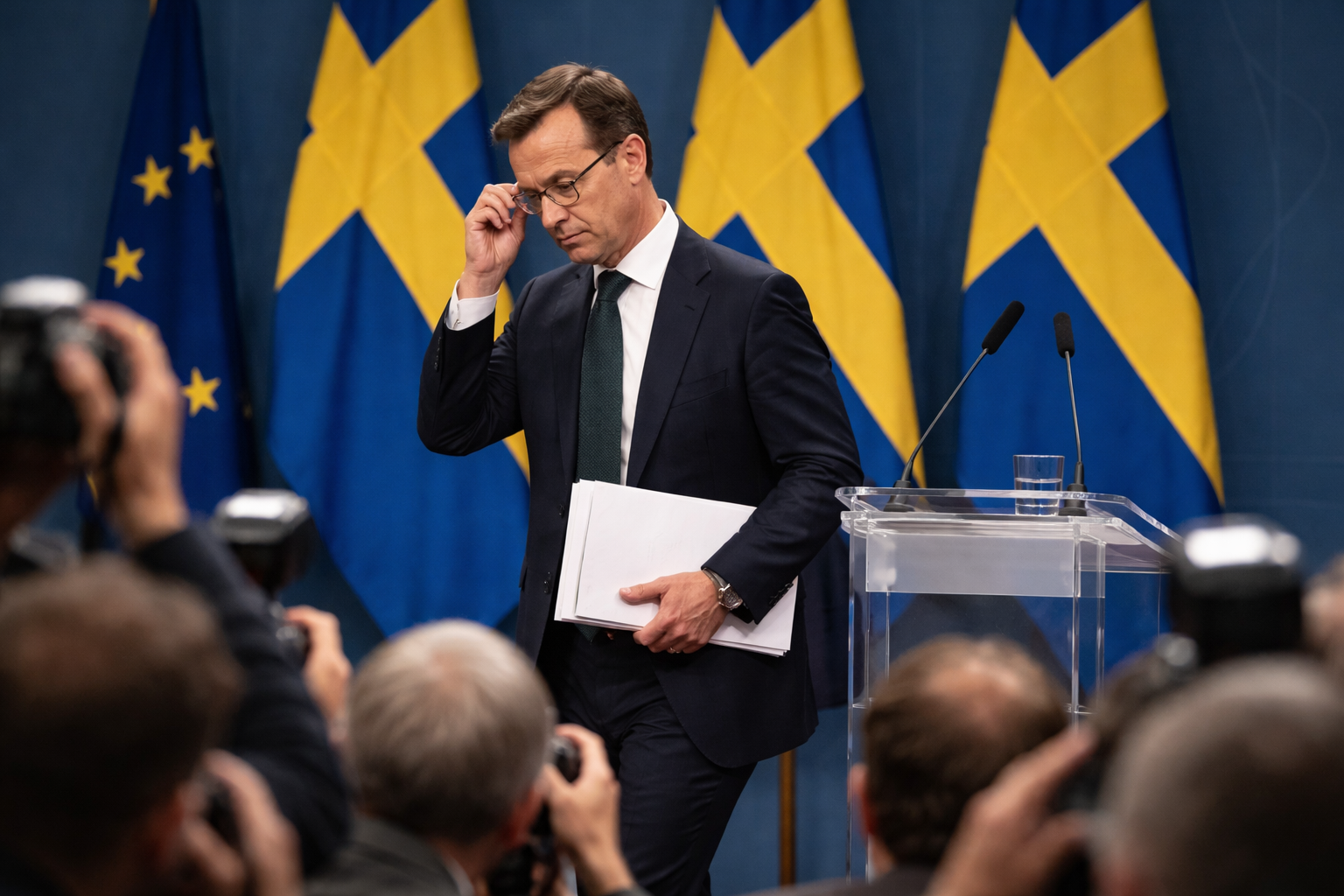
Sweden’s prime minister, Ulf Kristersson, officially resigned his post after the final election results confirmed that his right-leaning coalition lost the parliamentary vote held last Sunday.
The election saw the four left-leaning parties, led by the Social Democrats under former prime minister Magdalena Andersson, narrowly win by 50,359 votes. This bloc secured 176 seats in the new parliament, just surpassing Kristersson’s coalition and allied far-right Sweden Democrats, known as the Tidö bloc, which together hold 173 seats.
Kristersson’s Resignation and the Road Ahead
In a letter posted on social media platform X, Kristersson acknowledged that the tight election results “may have complicated the conditions for the new government to be formed,” citing inconsistent statements from various parties about their stances.
He emphasized the need for “constructive openness from the parties in parliament” to approve a prime minister and support a government budget. Kristersson also highlighted the necessity of cross-party discussions to overcome political deadlocks and lay the foundation for a stable and effective government.
He concluded by stating that the next steps in forming a new government will be led by the parliamentary speaker and formally requested to be relieved of his duties to allow that process to begin immediately.