

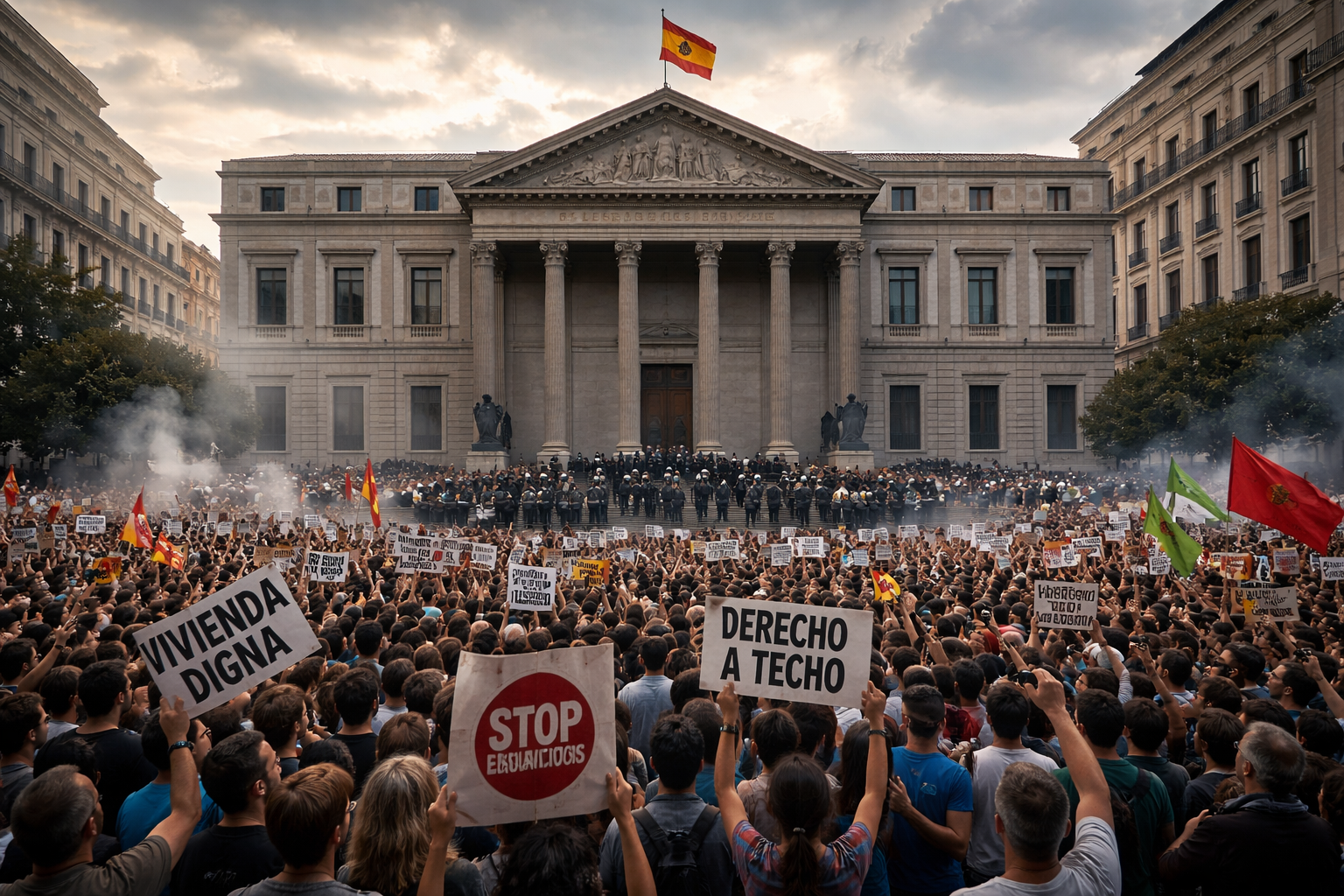
Spain’s parliament narrowly rejected two emergency government decrees intended to address escalating rent prices and prevent evictions, marking a significant setback for the minority administration. The vote capped a marathon five-hour debate amid widespread public protests demanding action on housing affordability.
Hundreds of demonstrators gathered outside the parliament in Madrid, chanting slogans against rising housing costs and government inaction. Public outrage was intensified by the eviction of an 87-year-old pensioner, which became a focal point for the broader issue of unaffordable housing.
Details of the Emergency Decrees and Parliamentary Vote
The first decree aimed to halt evictions of vulnerable individuals, discourage real estate speculation, and introduce tax incentives to encourage renting. This measure failed by a slim margin, 178 votes against to 172 in favor. The second decree proposed allowing tenants to automatically renew residential leases. It was defeated by a wider margin of 184 to 166.
Although the minority government, led by Pedro Sanchez, often relies on opposition parties for support, the center-right Catalan group Junts sided with opposition forces to oppose the measures. Critics argued the decrees might worsen the housing supply problem and pushed for possible early elections as an alternative.
Protests and Public Response
The evictions and rising rents have sparked protests for approximately a week, including a tent city established in central Madrid. The Tenants’ Union, a leading organizer of the demonstrations, announced plans to sustain rallies and expand protests into other neighborhoods with the aim of a general strike.
Maricarmen Abascal’s eviction—despite being later reversed by the building’s investment company—has symbolized growing frustration with the increasing cost of housing. Her lawyer emphasized the urgent need for structural reforms to solve the housing crisis.
Housing Market Challenges and Next Steps
Rents in Spain have roughly doubled over the past decade, forcing many young adults to live with family due to one of Europe’s toughest labor markets. The government has not ruled out introducing new emergency legislation, but faces the same parliamentary hurdles.
So far, Prime Minister Sanchez has ruled out calling early elections, leaving the future course of addressing housing affordability uncertain amid ongoing demonstrations and political deadlock.