

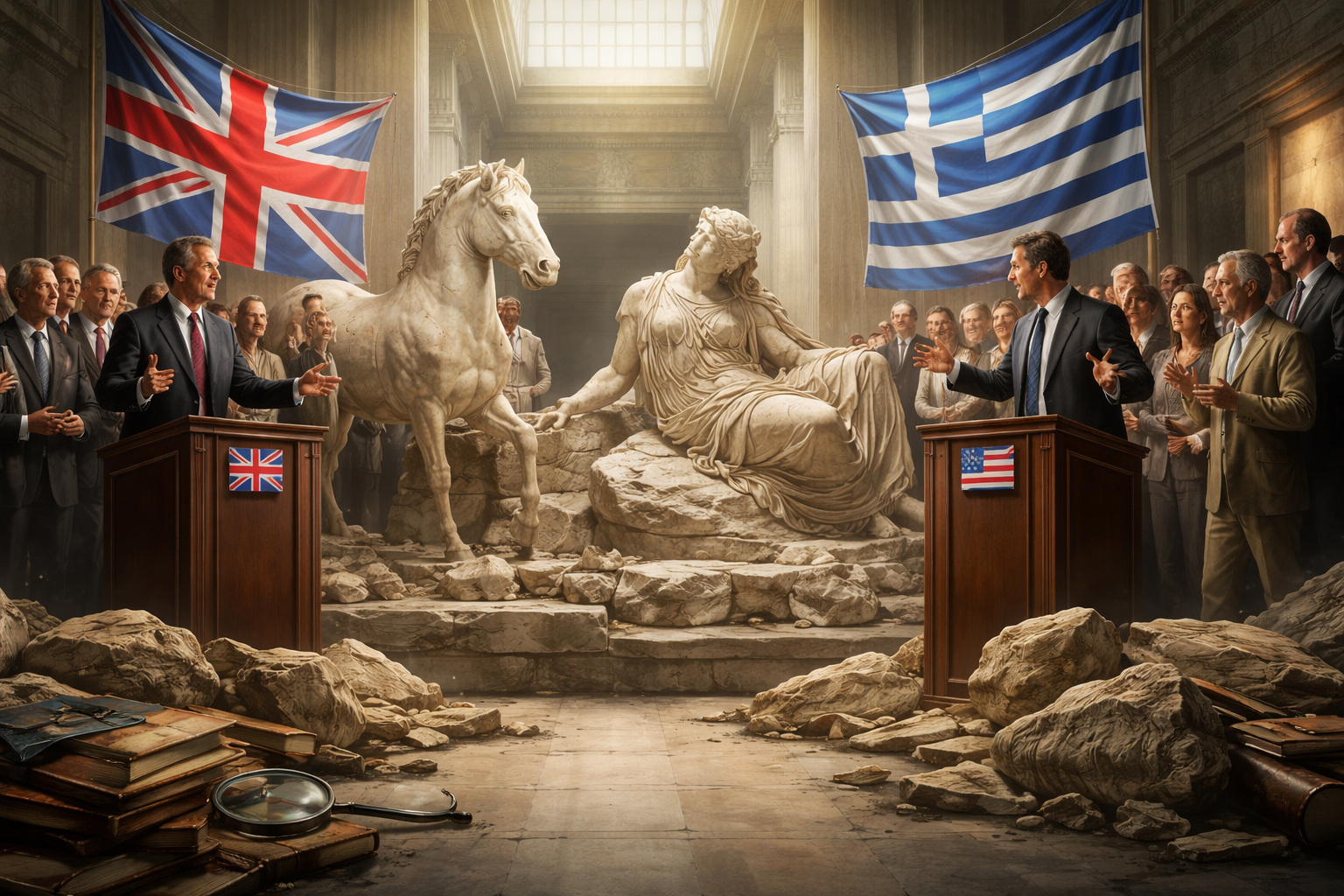
The longstanding dispute over the Parthenon marbles has resurfaced with renewed calls for the British Museum to return the priceless sculptures to Greece. The controversy is often compared to the Bayeux tapestry’s status, which firmly remains in British hands despite debates over its rightful home and provenance.
Simon Jenkins, a columnist for The Guardian, highlights the paradox by illustrating how the Bayeux tapestry—frequently argued to be British-made and depicting key moments in British history—is rightfully housed in London. Yet, the Parthenon marbles, acquired by the British Museum in 1816, continue to be withheld despite mounting pressure from Greece and significant public opinion favoring their return.
Ownership Debate and Political Challenges
The British Museum’s leadership has shown signs of openness to negotiations, with former Director Nicholas Cullinan describing the tapestry’s loan as a “glimmer of possibility” for a deal on the marbles. Nonetheless, legal obstacles persist, as any de-accessioning of the marbles would require legislative changes—a prospect neither Boris Johnson nor Rishi Sunak supported while in office.
This political hesitation contrasts with past advocacy by figures like Andy Burnham, a former culture secretary and mayor, who once championed the marbles’ return. However, he has reportedly changed his stance, demonstrating the complexities and pressures influencing British political leaders on this cultural issue.
Recent Developments and Diplomatic Stalemates
Negotiations reached a hopeful stage in 2022 with George Osborne’s chairmanship of the British Museum, engaging directly with Athens and fostering public debate over the marbles’ future. Yet, diplomatic friction remains, exacerbated by the British Museum’s recent decision to lend two minor Parthenon fragments to a German exhibition. This prompted Greece to withhold nine fragments from the same exhibition, reflecting sensitivity over any display perceived to undermine efforts for reunification in Athens.
Cultural Significance and Calls for Cooperation
The Parthenon marbles are seminal to Western artistic heritage and Greek national identity, and many experts argue their sculptural integrity should be restored by reuniting them at their site of origin. Jenkins criticizes the British Museum’s approach as an outdated form of empire-building and hoarding that neglects cultural and historical responsibility.
Despite political and legal challenges, there are calls for pragmatic solutions, such as indefinite loans to Greece independent of formal ownership recognition. Such cooperation could set a precedent for shared cultural stewardship, fostering European unity while honoring the artwork’s historical context.