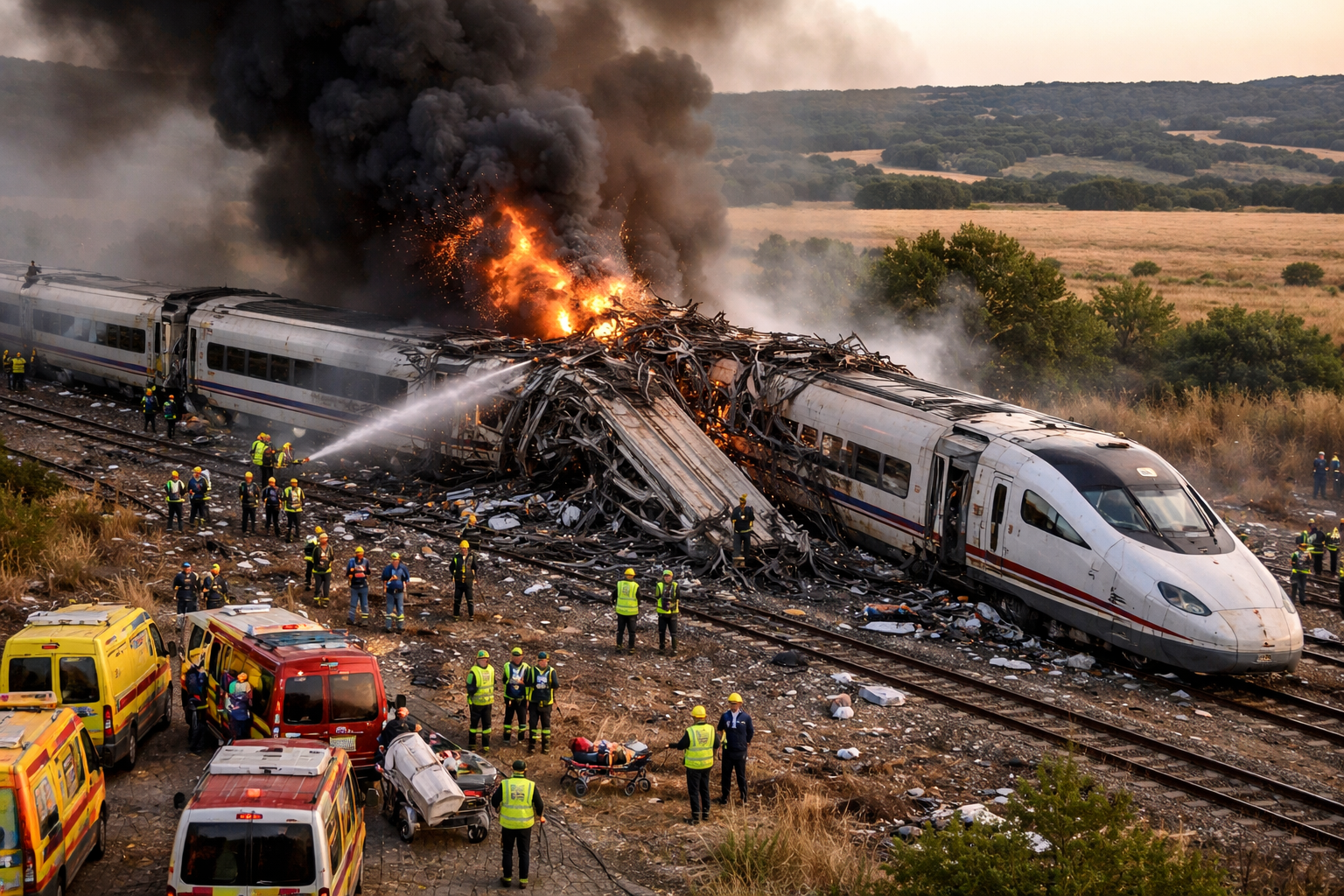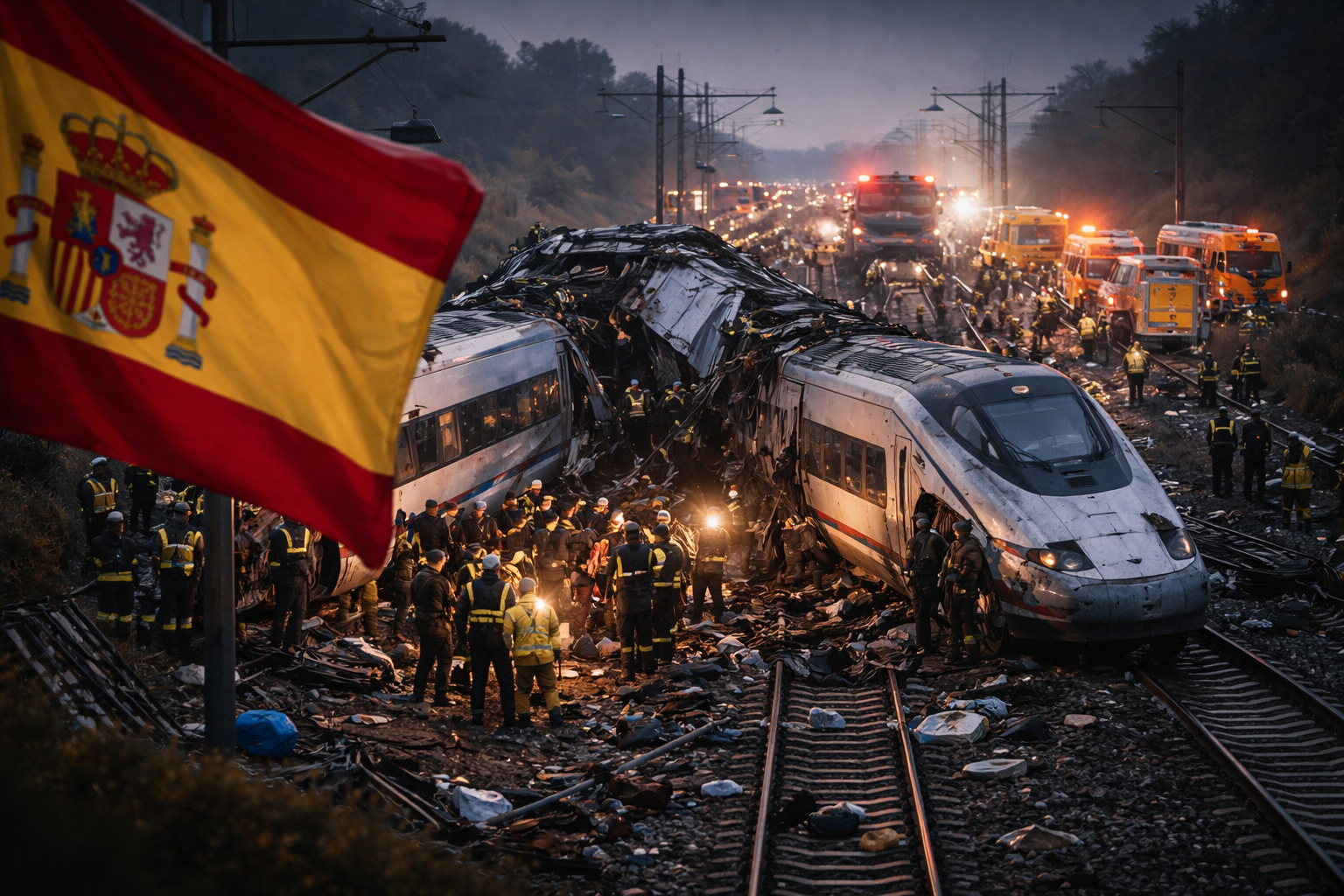
Spain has entered a three-day mourning period after a tragic high-speed train collision near the town of Urda killed 68 people and injured over 100 others. The crash involved a state-run Renfe train and a private Iryo train that collided after the latter stopped, causing multiple carriages to derail.
Emergency responders worked through the night to search the wreckage for victims, while authorities set up DNA collection sites to aid in identifying the deceased. Hospitals reported treating 107 injured passengers, with 15 in critical condition.
Details of the Collision and Response
The accident occurred on a rail line connecting Madrid with Andalusia on Wednesday morning when the Iryo train came to a halt. The Renfe train then collided with its rear, forcing several carriages off the tracks. Castilla-La Mancha regional leader Emiliano García-Page said rescue teams have not been able to access the lower parts of the affected carriages, indicating that more victims might still be discovered.
The Civil Guard established multiple offices in Madrid, Toledo, Córdoba, and Seville to facilitate DNA sample collection for victim identification. Blood donation centers were also activated in Madrid and Castilla-La Mancha. A local school in Urda is serving as an information center where relatives can inquire about their loved ones, supported by Red Cross personnel offering psychological assistance amid widespread shock and grief.
Official Reactions and Safety Concerns
Transport authorities described the cause of the crash as an “error” under “inexplicable circumstances,” prompting renewed scrutiny of Spain’s rail safety. This is the second fatal high-speed train accident in Spain within six months, following a January collision on the same route near Adamuz that killed 46.
Spanish Prime Minister Pedro Sánchez condemned the accidents as “unacceptable” for the country and vowed severe action if investigations confirm negligence or systemic failures. Opposition leader Alberto Núñez Feijóo has called for a thorough, independent review of Spain’s entire rail infrastructure system to prevent future tragedies.
Victims and Ongoing Investigation
Among the first publicly identified victims is José Manuel Chacón, a 31-year-old Civil Guard officer. The national law enforcement agency expressed deepest condolences to his family and colleagues. Reports indicate that missing persons include a former minister from the People’s Party and several foreign tourists visiting Spain.
The cause of the crash remains under investigation. Authorities are carefully examining all aspects to determine if security lapses or human errors contributed to the collision.